Price
Price Specification
 Review
Xiaomi 18 Fold


-
Market Status Upcoming
-
Category Mobiles
-
Xiaomi


-
 SCREEN SIZE 2364×1672 px
 -
 CAMERA 200 MP + 50 MP + 50 MP
 -
 RAM 16 GB
 -
 BATTERY 6000 mah


Xiaomi 18 Fold Specifications (Expected)
 Performance
| Processor Name | Xiaomi XRING O3 |
|---|---|
| Max Clock Speed (Big Core) | 4.35 GHz |
| Max Clock Speed (Small Core) | 3.68 GHz |
| Processor Cores (Big) | 2 |
| Processor Cores (Small) | 8 |
| Internal Storage |
1000 GB |
| RAM |
16 GB |
 Display
| Screen Size | 7.58 inches |
|---|---|
| Display PPI | 382 |
| Display Type | OLED |
| HDR Support | Yes |
| Resolution | 2364×1672 px |
| Refresh Rate | 120 Hz |
 Camera
| Front Camera (Resolution) | 16 MP, f/2.2, Cover + 16 MP, f/2.2, Inner display |
|---|---|
| Rear Camera (Resolution - Highest) | 200 MP, f/1.7, Wide, 50 MP, f/2.8, Telephoto, 50 MP, f/2.4, Ultrawide |
| Number of Front cameras | 1 |
| Type of Secondary Rear Camera | Ultrawide |
| Stabilisation | Yes |
| Primary Camera Aperture | 1.7 |
| Front Facing Aperture | 2.2 |
| Max Video Resolution | 8K |
 Battery
| Battery rating (mAh) | 6000 |
|---|---|
| Fast Charging | Yes |
| Fast Charging Wattage | 67 |
| Wireless Charging | Yes |
| Wireless Charging Wattage | 50 |
| Reverse Wireless Charging | Yes |
| Charging Type Port (MicroUSB/Type-C) | USB Type-C |
| G Status (5G/4G/3G) | 5G,4G |
| OS Version | Android v17 |
 Build And Design
| Glass Protection front (brand) | Xiaomi Shield Glass 2.0 |
|---|
-
 PERFORMANCE
- Xiaomi XRING O3
- Deca-core (4.35 GHz, Dual core, C1-Ultra + 3.68 GHz, Quad core, C1-Premium + 3.15 GHz, Quad core, C1-Pro)
- RAM: 16 GB
- Storage: 1000 GB
-
 DISPLAY
- 7.58 inches
- OLED
- 2364×1672 px
- 120 Hz
-
 CAMERA
- Front Camera: 16 MP + 16 MP
- Rear Camera: 200 MP + 50 MP + 50 MP
- Number Of Rear Cameras: 3
- Max Video Resolution: 8K
-
 BATTERY
- 6000 mAh
- Fast Charging: Yes
- Charging Type Port: USB Type-C
 PERFORMANCE
 DISPLAY
 CAMERA
 BATTERY
- Range Phones
- All Phones
Xiaomi 18 Fold Review
Xiaomi officially unveiled the 18 Fold in Beijing on September 7, 2026, alongside the Xiaomi Pad 9 Pro Max, positioning it as the company's first "wide" or "mid-size" foldable and a direct rival to the Samsung Galaxy Z Fold 8. The launch landed two days before Apple's own "Surprise and shine" event, where Apple went on to unveil its first foldable iPhone, and weeks after Huawei's double-folding Mate XT2. Retail sales in China began on September 10, 2026. As of this writing, Xiaomi has not announced international pricing, availability, or a launch date for any market outside China, including India — this page will be updated if that changes.
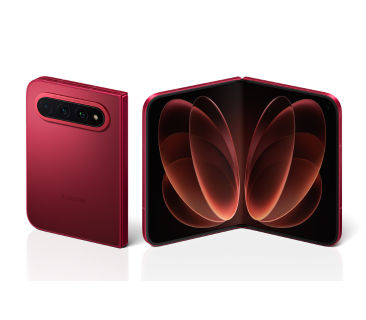
The Xiaomi 18 Fold is built around Xiaomi's own in-house XRING O3 chip, the company's first flagship processor of its own design, built on a 3nm process with a 10-core all-big-core CPU, a 16-core GPU, and 24 billion transistors. It pairs a 5.38-inch outer AMOLED display (1712x1168) with a larger 7.58-inch inner display (2364x1672), both offering a 120Hz refresh rate, up to 4,000 nits of peak brightness, and a shared 2:1 aspect ratio designed so content carries between the two screens without reframing. Folded, the phone measures 117.8 x 83.6 x 10.68mm and weighs 219g — lighter than Apple's iPhone 17 Pro Max — while unfolding to just 5.02mm thick. RAM options include 12GB with LPDDR5X or 16GB with either LPDDR5X or the newer, faster LPDDR6 standard, alongside 256GB, 512GB, or 1TB of UFS 4.1 storage. The camera system is Leica-branded, led by a 200MP main sensor, a 50MP periscope telephoto lens with 3.5x optical zoom (up to 7x optical-quality zoom), and a 50MP ultra-wide lens, with 16MP selfie cameras on both the cover and inner displays. A 6,000mAh battery with 20% silicon content supports 67W wired and 50W wireless charging, and the phone runs HyperOS 4 on Android 17.
Confirmed China-Market Features of the Xiaomi 18 Fold
- Xiaomi XRING O3 chipset (3nm, in-house design), 10-core CPU, 16-core GPU
- 5.38-inch outer AMOLED and 7.58-inch inner AMOLED display, both 120Hz with up to 4,000 nits peak brightness and a shared 2:1 aspect ratio
- Leica-branded triple rear camera: 200MP main + 50MP periscope telephoto (3.5x optical) + 50MP ultra-wide, plus 16MP selfie cameras on both displays
- 6,000mAh silicon battery with 67W wired and 50W wireless charging
- Up to 16GB RAM with LPDDR6 support (a global first) and up to 1TB UFS 4.1 storage
- IP58 and IP59 dust and water resistance, Dragon Crystal Glass 3.0 and dual-layer UTG protection
- HyperOS 4 on Android 17, side-mounted fingerprint scanner, stereo speakers with Dolby Atmos
- Available in Black, Warm Gold White, Nishino Red (Cabernet Red), and a limited Ceramic Special Edition
Xiaomi 18 Fold China Price
| Variant | RAM | Storage | Official Price (China) |
|---|---|---|---|
| Base Variant | 12GB | 256GB | CNY 10,999 (~$1,640) |
| Top Variant | 16GB | 1TB | CNY 14,999 (~$2,240) |
| Ceramic Special Edition (Limited) | 16GB | 1TB | CNY 15,999 (~$2,384) |
Pros and Cons (Based on China-Market Specifications)
| Pros | Cons |
|---|---|
| Genuine periscope telephoto camera (3.5x optical) is a rare inclusion among book-style foldables | No confirmed international or India availability, unlike Xiaomi's numbered flagship phones |
| 6,000mAh battery in a 5.02mm-thin unfolded body is a genuine engineering achievement | Buyers outside China would face uncertainty around cellular bands, warranty, and app support |
| In-house XRING O3 chip marks a significant step in Xiaomi's silicon independence | Starting price already crosses the CNY 10,000 threshold, a first for Xiaomi, suggesting a steep global price if it arrives |
| First smartphone globally to support LPDDR6 memory, offering a real bandwidth jump over LPDDR5X | No stylus support has been confirmed, unlike some rival foldables |
| Both displays hit an unusually bright 4,000 nits peak brightness | HyperOS 4 (China version) may behave differently with apps and services common outside China |
Xiaomi 18 Fold vs Samsung Galaxy Z Fold 8
Xiaomi has positioned the 18 Fold as a direct answer to the Galaxy Z Fold 8, and the two make for a natural comparison on paper, even though the Xiaomi remains unavailable outside China for now.
| Feature | Xiaomi 18 Fold | Samsung Galaxy Z Fold 8 |
|---|---|---|
| Processor | Xiaomi XRING O3 (3nm, in-house) | Snapdragon 8 Elite Gen 5 for Galaxy |
| Inner Display | 7.58-inch AMOLED, 120Hz, up to 4,000 nits | 7.6-inch Dynamic AMOLED 2X, 120Hz, up to 3,000 nits |
| Cover Display | 5.38-inch AMOLED, 120Hz, up to 4,000 nits | 5.5-inch cover display |
| Camera | 200MP main + 50MP telephoto (3.5x) + 50MP ultra-wide | 50MP wide + 50MP ultrawide, no telephoto |
| Battery | 6,000mAh, 67W wired / 50W wireless | 4,800mAh, 45W wired / 20W wireless |
| Weight | 219g | Approx. 215g |
| Availability | China only (confirmed) | Global, including India |
| Price | CNY 10,999 (~$1,640, China) | ₹1,79,999 (India) / $1,899 (US) |
FAQs
Is the Xiaomi 18 Fold available in India?
No. The Xiaomi 18 Fold has only launched in China, and Xiaomi has not announced an India launch or confirmed whether one is planned.
What chip does the Xiaomi 18 Fold use?
It uses the XRING O3, Xiaomi's first in-house flagship chip, built on a 3nm process with a 10-core CPU and 16-core GPU.
How big is the Xiaomi 18 Fold's battery?
It has a 6,000mAh silicon battery with 67W wired and 50W wireless charging support.
Does the Xiaomi 18 Fold have a telephoto camera?
Yes. It includes a 50MP periscope telephoto lens with 3.5x optical zoom (up to 7x optical-quality zoom), alongside a 200MP main camera and a 50MP ultra-wide lens — a feature the Galaxy Z Fold 8 lacks.
Will the Xiaomi 18 Fold get a global release?
Xiaomi has not confirmed international availability, and some industry reports suggest the company may not plan a global launch at all, continuing its pattern with previous book-style foldables.