
The Apple Store blueprint: What happens when Apple moves into your city?
 Follow Us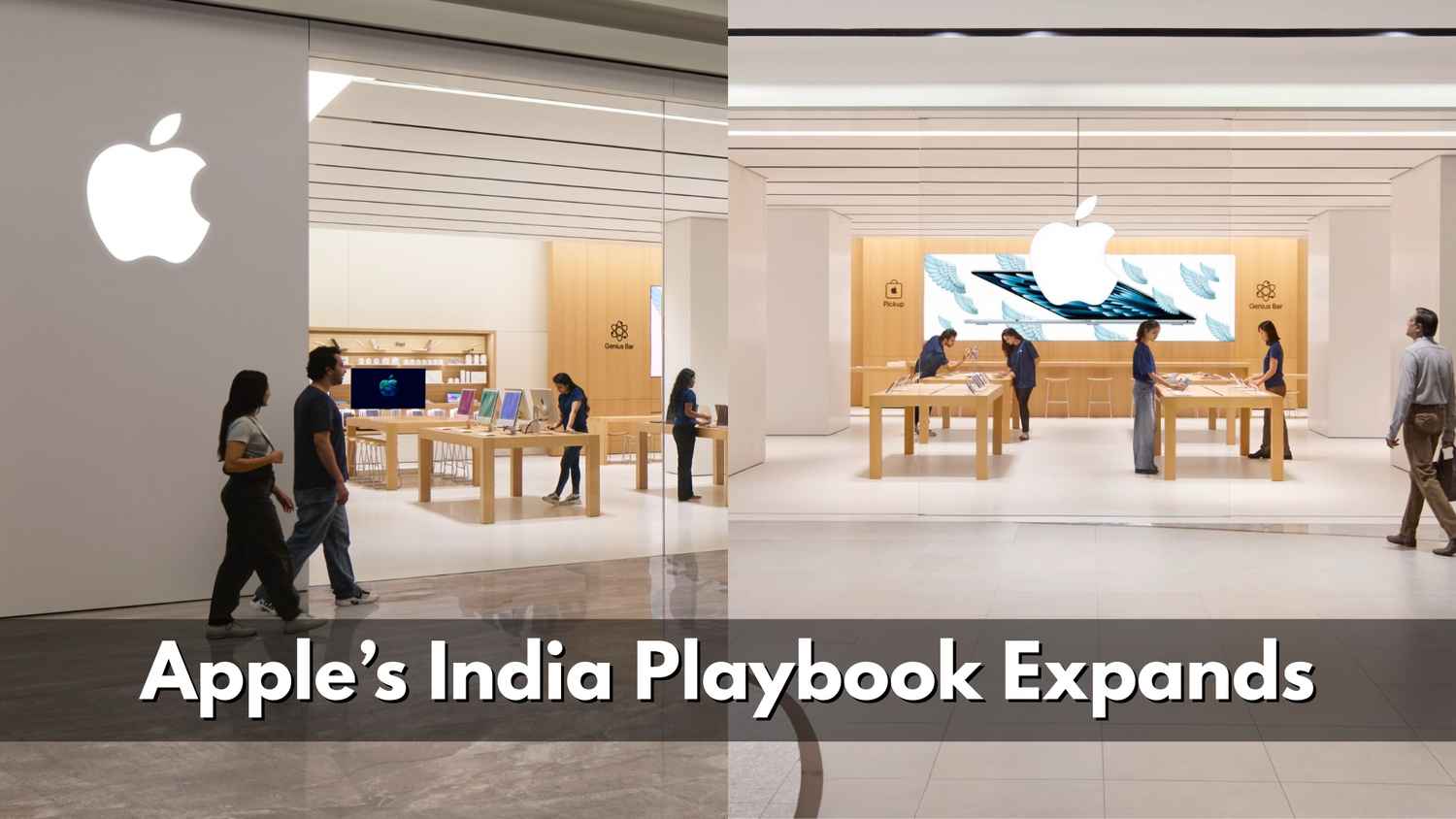

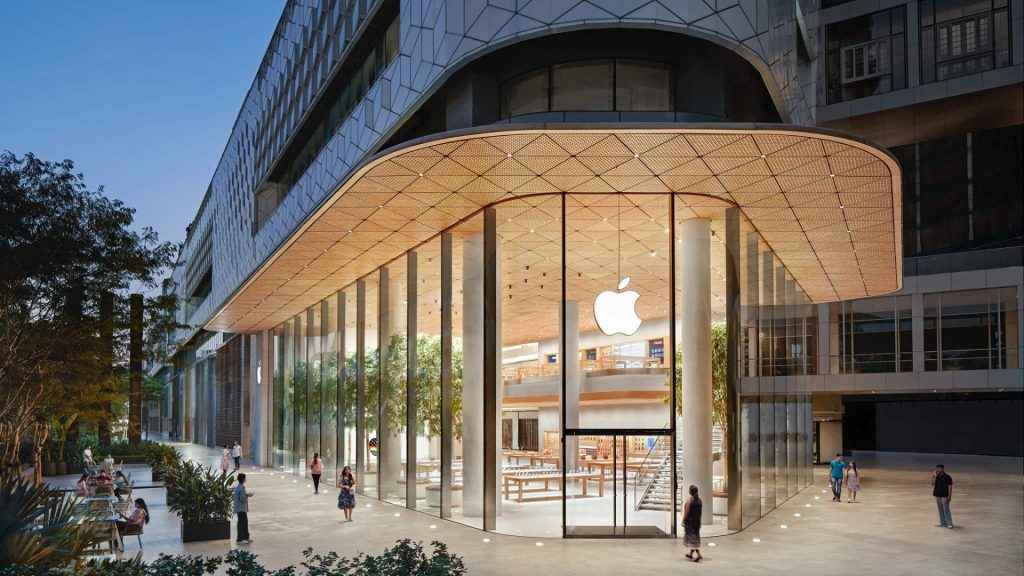
Apple has cut the ribbons. With Koregaon Park in Pune and Hebbal in Bengaluru now open to the public, those iconic glass doors are no longer a rumour or a render, they’re here, buzzing with curious students, tech workers, families, and the odd selfie brigade. An Apple Store is really a city-level project. It is part theatre, part classroom, part distribution node, and part signal to the market that the brand is here to play a long game.
 Survey
But the more interesting question is: what does it really mean when an Apple Store lands in your city in 2025? If Mumbai and Delhi taught us anything over the past two years, it’s that an Apple Store isn’t just a retail touchpoint. It’s a switch that flips something larger in a city’s economy, culture, and buying behaviour.
The Economic Engine
Look back at BKC and Saket, and you see why malls fight to land Apple. In their first full year, those two stores notched up over Rs 600 crore in revenue, with some reports putting it closer to Rs 800 crore, making it one of the fastest retail scale-ups of any brand in India. For Apple, that’s just one piece of the puzzle. The halo effect boosted sales across online and authorised resellers in NCR and MMR, helping India’s Apple revenue cross $8 billion.
Pinpointing that halo effect is tricky, but tech analyst and market insights expert Yogesh Brar told me the uplift is real: “In the Mumbai and the NCR region, I have observed a regional sales uplift of approximately 15–20% across all channels in the quarters following the store launches. Anecdotally, traffic to Apple’s India online store from IP addresses in Mumbai and NCR saw a sustained spike of nearly 25% post-launch.”
The fear that official stores would cannibalise reseller business never materialised. As Brar put it: “Resellers in high-traffic areas near the official stores reported a significant increase in footfall, with many consumers coming in with purchase decisions already made, effectively turning those resellers into fulfillment centers.” Kailash Lakhyani, Founder Chairman of AIMRA, agreed: “The opening of new Apple stores tends to increase customer traffic across all sales channels… Their primary purpose is to serve a specific type of customer: those who prefer to buy from an official, company-owned store for the unique experience and prestige it offers.”
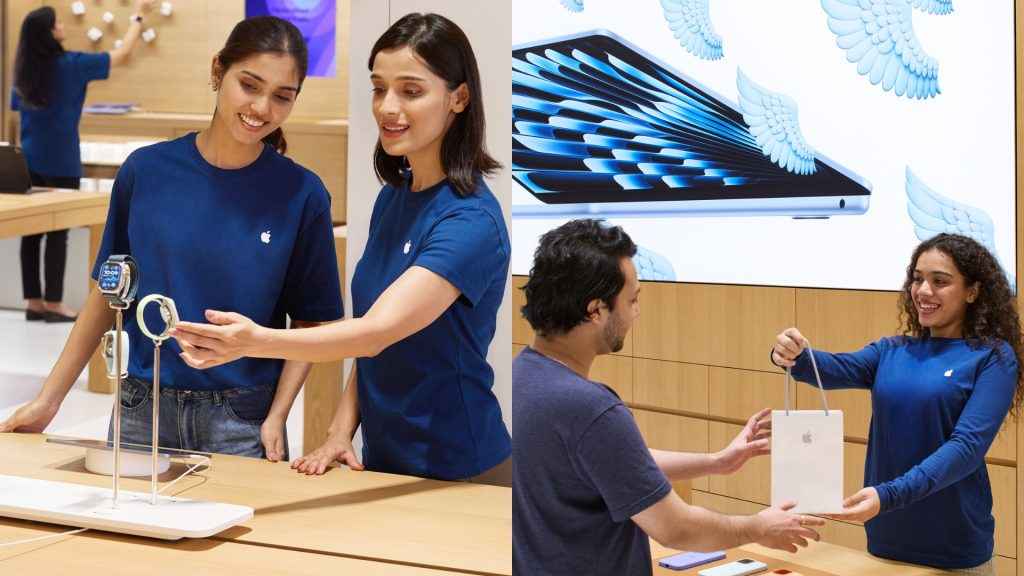
The formula is straightforward, and there’s a reason mall developers treat Apple like an anchor tenant. It doesn’t discount, it doesn’t hard sell, but it keeps the experience spotless and quietly pulls heavy footfall across the week. As Faisal Kawoosa, Chief Analyst & Founder of Techarc put it: “Once a customer enters into any Apple store, it’s very unlikely that the person will leave empty hands. Even if the person would not have made up the mind, the sheer magic of Apple stores definitely converts into sales.”
Expect the same in Hebbal and Koregaon Park. In Bengaluru, you’ve got a tech workforce with both the income and the appetite for high-ASP devices. In Pune, it’s a city thick with students, creators, and upwardly mobile professionals and is the perfect mix for iPhones bought on EMI and Macs bought as “investments.”
As IDC’s Associate Vice President Navkendar Singh points out, around seven out of ten iPhones in India now move through some kind of financing scheme: “Since India doesn’t have telco contracts or bundled monthly payments, we’re a largely prepaid market where affordability has remained an important point, and that has contributed heavily to Apple’s iPhone success in India.” Step inside an Apple Store and the financing options are made frictionless, which is why conversion rates spike. It isn’t a weakness. It’s product–market fit.
Singh adds that iPhone shipments were about 12.5 million in 2024 and could touch roughly 15 million this year, nudging Apple into top-five territory by unit shipments despite an average selling price nearly three times the market median. Brar also flagged how that premium tilt shows up in-store: “Data shows that the ASP for iPhones sold in Mumbai and Delhi trend approximately 8–12% higher than the national average. Customers are buying more Pro models over the non-Pro options, and for Pro users, higher storage options like 256GB or 512GB seem not like a luxury, but a necessity.”
It’s not just about volume. It’s about building a high-value ecosystem in the right postal codes, and Hebbal and Koregaon Park tick those boxes. Counterpoint’s Research Director for Devices and Ecosystems Tarun Pathak framed the geography bluntly: “If you look at the top five cities from where the premium smartphone sales comes from, in the order it is Mumbai, Delhi, Bangalore, Pune and Hyderabad, these five cities contribute close to like 21–22% of the premium smartphone sales and that’s exactly the cities where Apple has started to open.”
Apple now checks off four of those five with owned stores. Even if the four contribute well under one percent of national revenue directly, the indirect lift is the point. As Prabhu Ram, Head of Industry Intelligence Group at CMR, reminded me: “Our market insights highlight that Apple posted strong double-digit growth in India in Q2 2025, capturing a 7% market share, driven by robust demand for premium smartphones, and in the super-premium segment (above INR 50,000), Apple’s market share grew 54% year-on-year.”
The Cultural Landmark
If the Mumbai and Delhi stores taught us anything, it’s that Apple’s retail spaces quickly become more than places to shop. They double as civic rooms or what Brar calls “brand temples.” “For years, Apple’s brand in India was perceived through the lens of third-party resellers. While many are excellent, the experience could be inconsistent. The official stores are what I call ‘brand temples.’ They help in offering a controlled narrative around the brand and the products.”
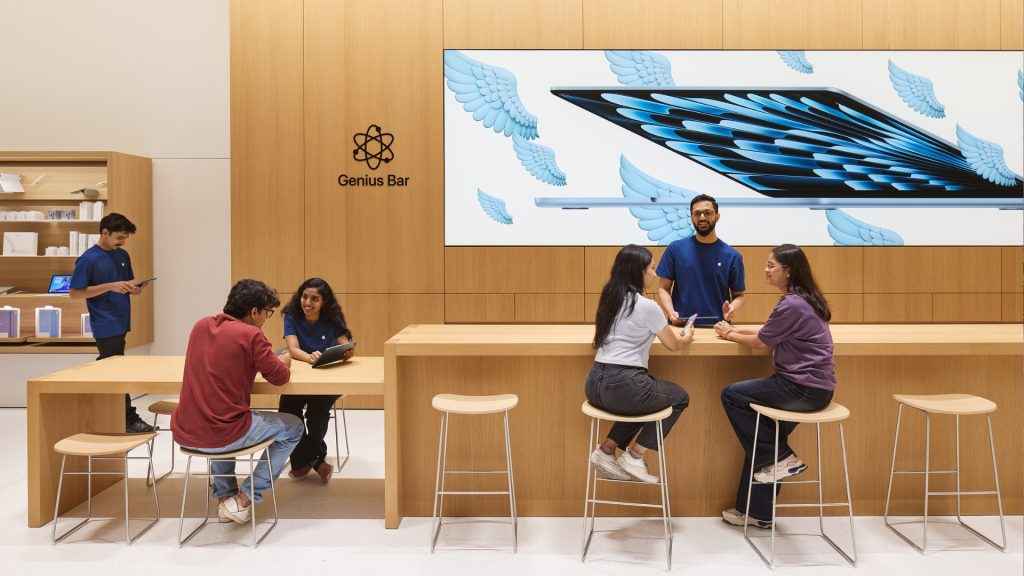
That controlled narrative shows up in how the spaces are designed. From the Today at Apple sessions such as photography workshops, music jams, iPad sketch lessons, to the Genius Bar, everything is choreographed for immersion. Kawoosa believes this is where Apple stands apart: “Apple is a brand which has pioneered the concept of experiential marketing and I feel today brands need to build experiential connect than any other connect. Emotional and logical connects are fine, but it’s experiential connect that results in very strong brand preferences which are hard to replace.”
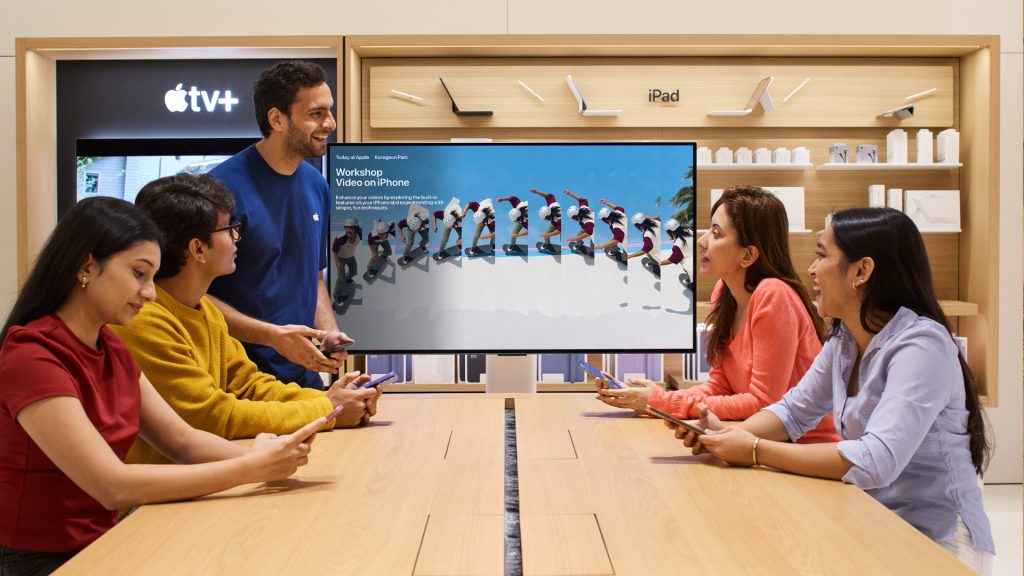
And it isn’t just the architecture, it’s the people inside it. “The highly trained and professionally mannered promoters at these stores never appear to be selling. They never push. They assist you when you want, educate you and clear your doubts to arrive at a buying decision,” Kawoosa said. That ethos is what makes the stores sticky, particularly for Gen Z, who, he noted, “shop gadgets and devices along with friends and sometimes parents, who still have a say in what they are buying in many cases.”
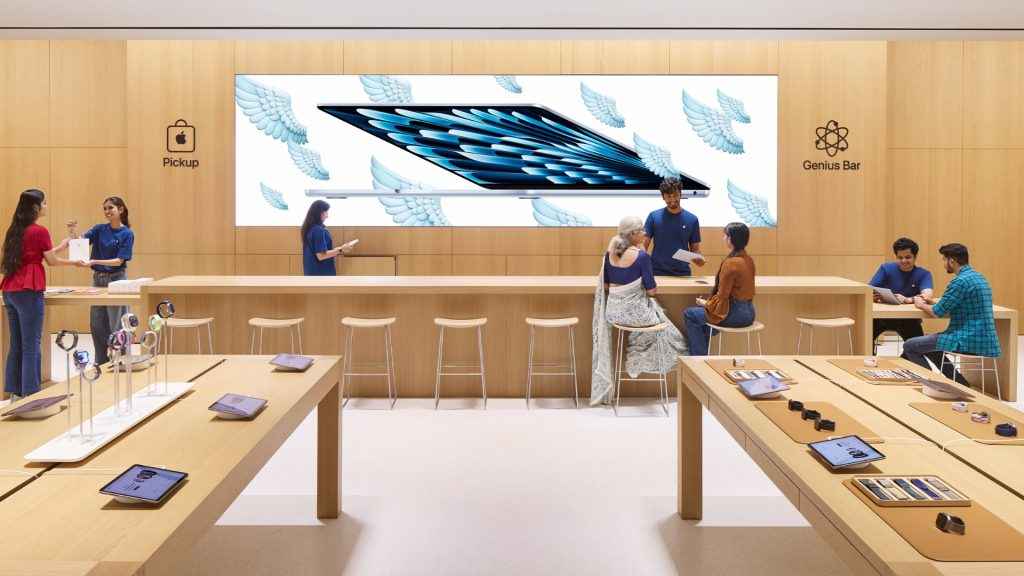
Prabhu Ram sees this as a cultural reset for how Indians buy premium tech: “In a market where touch-and-feel remains central to electronics purchases, physical stores are critical not just for loyal ecosystem customers but also for new consumers drawn to the brand’s enduring appeal.” This is already visible in Pune, where students are wandering in for workshops, and in Bengaluru, where startup founders see the store as a ready-made space for demos and community.
Singh also emphasised the landmark aspect: “These are experience zones with their very expert genius staff, and these are landmarks, right?” And landmarks have knock-on effects. Once Apple raises the bar, neighbouring retailers scramble to improve their own environments. Pathak told me this is part of the long game: “It’s not from the revenue perspective, it is more from the strategy and the momentum they have in India, it shows the confidence in the Indian market from Apple perspective because retail stores mean controlling the end-to-end experience.”
For Lakhyani, the cultural pull translates into aspiration: “These official stores create a greater sense of aspiration for Apple products. They successfully convert Android users into Apple customers by offering a compelling brand experience.”
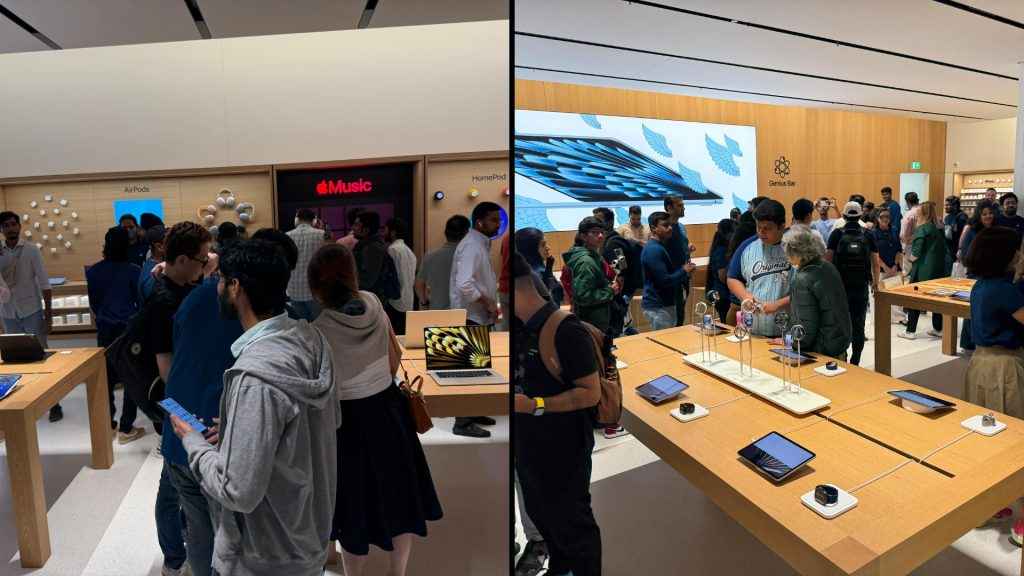
And for Brar, the store is the most powerful ecosystem showcase Apple has: “The iPhone is the gateway drug, but the store is where users get hooked on the entire ecosystem. A customer trying an iPhone is just a few feet away from an Apple Watch display… A MacBook is placed next to an iPad, showcasing Universal Control. These seamless integrations, when experienced live, are incredibly compelling and drive multi-device purchases.”
That’s the cultural blueprint: a space that acts as a classroom, community hub, and aspiration engine all at once. Mumbai and Delhi already showed us how quickly Apple Stores become landmarks. Now Hebbal and Koregaon Park are poised to become the same, not just selling devices, but reshaping how cities experience technology.
The Local Impact
The ripple goes deeper than shiny storefronts. Prabhu Ram is bullish on the decade-long arc: “The Apple online store has enabled the brand to tap into aspirational demand for its ecosystem products, not just in urban centers but across Aspirational India.” The physical stores, then, deepen that demand in premium hubs. They’re less about first-day sales and more about rewiring consumer behaviour city by city.
For Singh, the strategy is simple: expand the footprint, because offline matters. “These stores obviously become a center point of experiencing the product and the entire ecosystem,” he told me.
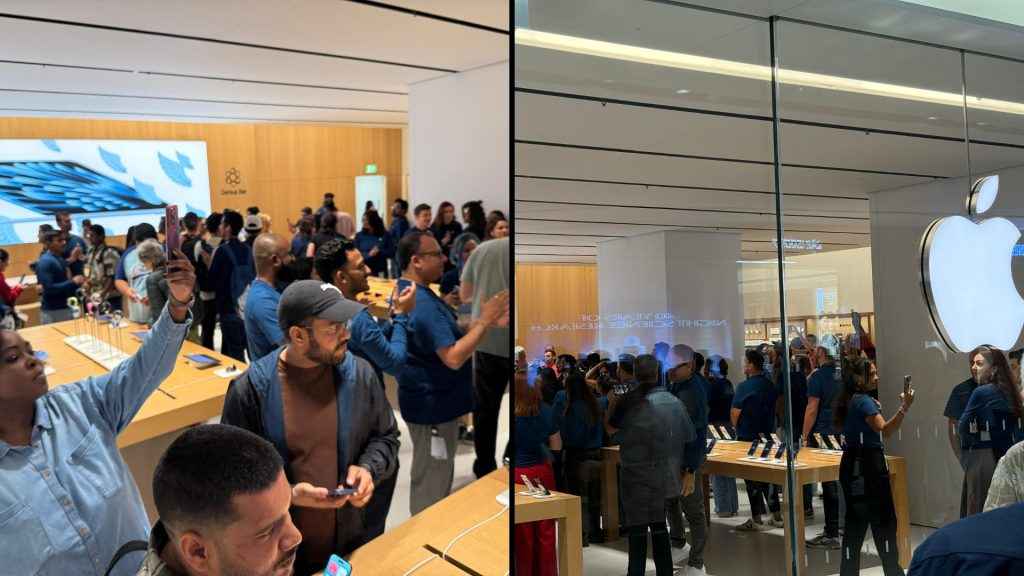
Bengaluru, analysts agree, may be the most important of them all. Brar said, “I expect the Bengaluru store to potentially outperform the Delhi store in terms of sales velocity and ASP from day one. This is India’s tech capital and has a massive concentration of high-income, tech-savvy professionals, early adopters, and the startup ecosystem. Footfall will be immense, and I project a very high conversion rate for Pro iPhones, MacBooks, and Apple Watch Ultra.” Pathak added: “Bangalore has been in terms of spending pattern one of the cities where people likely to spend more on these devices, so it’s a very crucial part of the entire Apple journey here in India.”
Pune, meanwhile, is a different kind of play. “Pune is a fascinating mix,” Brar said. “I project extremely high footfall, likely rivaling Mumbai initially, driven by the aspirational student demographic. The initial ASP might be slightly lower than in Bengaluru, with strong sales of base-model iPhones, iPads for education, and AirPods. However, Pune is a crucial long-term play. Apple is capturing its next generation of loyal customers here.” Pathak added: “Not necessarily iPhones, these consumers will be locked into that ecosystem from different perspectives like for example, watches or iPad or a Mac or AirPods, so a high chance is this user will see an extension of these categories.”
But Apple also faces local challenges. As Brar warned: “In Pune the main hurdle will be converting aspirational footfall into sales… managing the high volume of ‘window shoppers’ while effectively engaging with serious buyers.” And in Bengaluru, the issue isn’t demand but competition. “The Bengaluru consumer is arguably the most technologically sophisticated in India. They are discerning, well-researched, and heavily courted by every premium brand. Furthermore, Samsung has a very strong presence and its own flagship experience store (the Opera House). Apple will need to ensure its service and experience are flawless.”
Kawoosa believes the way Apple runs its stores gives it an edge in such markets: “These stores give a shape to Apple’s experience and a user can immerse into it… Apple also lets you do whatever you want to at their stores. You can experience any gadget around, which either helps in cross sales or the device gets added to the wish list of the consumer. Both ways, Apple wins you and sells you the entire ecosystem eventually.”
Retailers, too, see upside rather than threat. As Lakhyani put it: “Mainline retailers in these cities generally have no fear or sense of competition with large Apple stores. They view these stores as a means for Apple to build its brand image and showcase its entire ecosystem to consumers who are willing to pay full price or accept the standard offers available to everyone.” That dynamic was visible in Mumbai and Delhi, and Pune and Bengaluru are likely to follow.
And this isn’t just about retail, it ties directly into Apple’s manufacturing push. As Brar explained: “Apple’s massive ‘Make in India’ initiative helps with supply chain resilience and pricing stability, but producing goods locally is only half the battle. You need to create and sustain the demand and brand premium to sell those goods at Apple’s desired price point. This is where the offline stores come into play. They are the ultimate justification for the premium price, ensuring that an iPhone made in India is still perceived as a world-class luxury product.”
That’s the local impact: a flywheel that converts footfall into financing, windows into purchases, and curiosity into loyalty while locking in Apple’s long-term bet on India’s most important cities.
The Bigger Picture
Four stores don’t sound like much in a country this large, but Apple’s strategy isn’t about blanket coverage, it’s about symbolism. It’s about densifying influence in the handful of cities that shape India’s premium story. Mumbai and Delhi proved the concept. Pune and Bengaluru are the next chapters. What comes next, Hyderabad, Chennai, perhaps a second wave in Delhi or Mumbai, will tell us whether Apple can turn a blueprint into a nationwide playbook.


