
OpenAI’s Prism explained: Can you really vibe code science?
 Follow Us
OpenAI’s Prism applies vibe coding ideas to scientific research workflows
OpenAI Prism reimagines how scientists code, write, and research
Explaining OpenAI Prism and its attempt to vibe code science

For years, artificial intelligence has promised to accelerate scientific discovery. But most AI tools still sit awkwardly on the sidelines, helping with narrow tasks like summarising papers or generating snippets of code. With Prism, OpenAI is testing a more radical idea: what if research itself became conversational?
 Survey
Prism is built around the same philosophy that gave rise to “vibe coding”, a loose term used by developers to describe steering software creation through natural language prompts rather than rigid planning. Applied to science, the approach sounds almost heretical. Research is supposed to be methodical, structured, and precise. Prism asks whether parts of that process can instead feel fluid, exploratory, and guided by dialogue.
Also read: ChatGPT Prism: What is it, top features, how it works and step-by-step guide to use it
From rigid workflows to conversational research
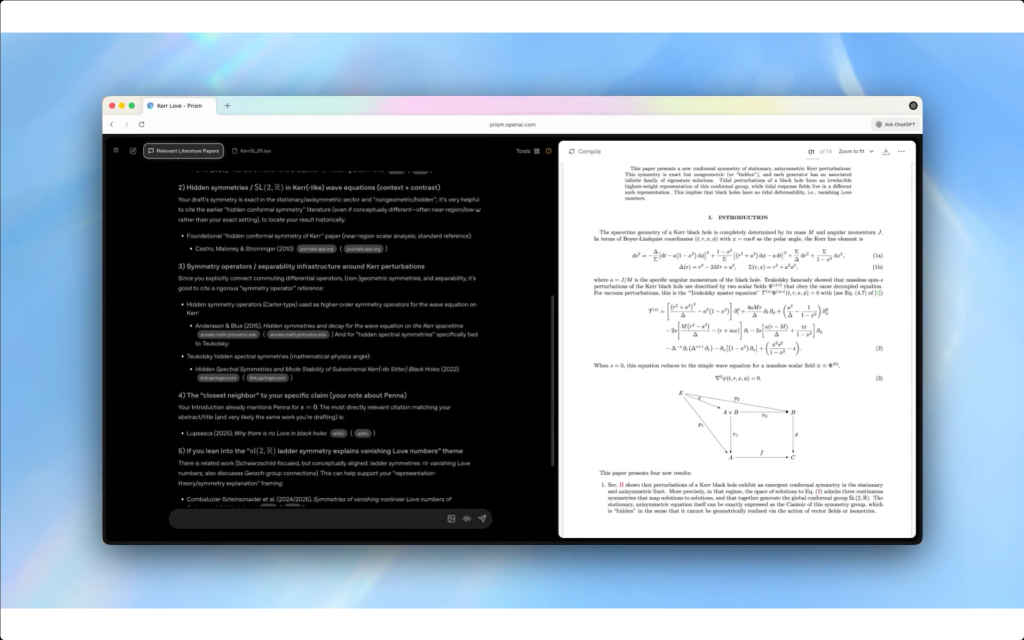
Modern scientific work is fragmented by design. A researcher might analyse data in one environment, write code in another, draft a paper in a separate editor, and manage references elsewhere. Prism attempts to collapse those layers into a single AI-first workspace.
Instead of switching tools, scientists can describe what they want to do. That might mean asking the system to clean a dataset, generate a plot, explain an unexpected result, or rewrite a dense paragraph for clarity. The AI becomes a collaborator embedded directly in the research flow rather than a detached assistant.
Also read: What is Clawdbot (now Moltbot): Viral AI agent’s features explained, how to use
This is where the idea of “vibe coding” enters. Rather than writing every line of logic upfront, researchers guide the system through intent. They iterate by conversation, adjusting direction based on outputs, much like a back-and-forth with a junior colleague. The goal is not to replace expertise but to reduce friction, especially in early-stage exploration when ideas are still forming.
Crucially, Prism is not positioned as an autonomous scientist. Human judgment remains central. The AI suggests, drafts, and reorganises, but it does not decide what is true. That distinction matters in fields where errors can ripple into real-world consequences.
Why OpenAI thinks this could change science
The deeper bet behind Prism is about productivity and accessibility. Writing papers, managing code, and documenting experiments consume a huge share of researchers’ time. By smoothing those tasks, OpenAI argues that scientists can spend more energy on thinking, designing experiments, and interpreting results.
There is also a cultural shift at play. Younger researchers already rely on chat-based tools to learn, prototype, and debug. Prism formalises that habit and pushes it into the core of scientific work. If successful, it could lower barriers for interdisciplinary research, where unfamiliar tools and formats often slow progress.
Scepticism is inevitable. Critics worry that conversational workflows may obscure assumptions, encourage overreliance on AI-generated text, or blur accountability in research outputs. Others point out that science thrives on rigor, not vibes.
OpenAI’s response is that Prism is a workspace, not an authority. It reflects the user’s intent and inputs, amplifying good practices or bad ones alike. Used carefully, it could accelerate discovery. Used carelessly, it could just as easily introduce noise.
Whether “vibe coding science” becomes a lasting model or a passing experiment remains to be seen. What Prism makes clear is that AI’s role in research is shifting. The question is no longer whether AI can help scientists, but how deeply it should be woven into the act of thinking itself.
Also read: Smartphones to electronics: Why India-EU FTA is great for Made in India tech


