
Microsoft on AI in Biology: Understanding the risks of zero-day threats
 Follow Us
Microsoft warns AI can bypass DNA screening, creating biosecurity zero-days
AI in biology exposes flaws in global defenses against biothreats
Zero-day vulnerabilities show urgent need for stronger AI biosecurity safeguards

When Microsoft’s chief scientific officer Eric Horvitz and his team describe a “zero-day” in biology, they are deliberately borrowing a term from cybersecurity. A zero-day vulnerability refers to an unknown flaw in software that hackers can exploit before anyone has time to patch it. But here, the flaw isn’t in computer code – it’s in the global biosecurity systems that are supposed to detect and prevent the misuse of synthetic DNA. And the exploit, as Microsoft researchers discovered, comes from AI.
 Survey
In a new study, Microsoft scientists revealed that artificial intelligence can help generate genetic sequences that evade current screening software. These systems, widely used by DNA synthesis companies and research labs, compare incoming orders against a database of known pathogens and toxins. The idea is simple: if someone tries to order a dangerous sequence – say, a segment of anthrax or a toxic protein – the system raises a red flag. But with the help of generative AI, the researchers showed that harmful designs could be rewritten in ways that still function biologically but no longer look suspicious to the software.
Also read: Perplexity’s Comet AI browser now free for all users, gets new Background Assistants feature
A first-of-its-kind breach
The finding is being described as the first real “zero-day” in biosecurity. Much like cybercriminals who use new malware to slip past firewalls, AI was able to paraphrase dangerous code in protein form, creating sequences that existing screening methods failed to recognize. According to the researchers, this breakthrough isn’t just theoretical: it demonstrates a fundamental weakness in how the world currently guards against biological misuse.
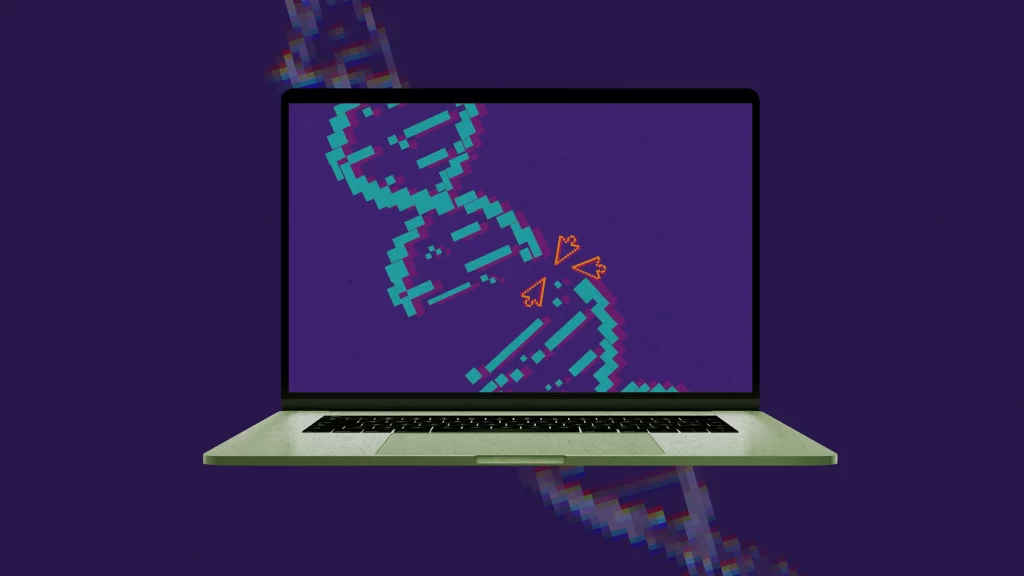
While the Microsoft team quickly developed patches and proposed improvements to strengthen defenses, the deeper message is clear. As AI models become more powerful and more accessible, defensive systems will have to keep evolving just as quickly. What was once an unlikely scenario, AI accelerating the design of harmful biological agents. is now a tangible risk.
Why this matters
For decades, biosecurity experts have relied on the assumption that creating bioweapons requires both advanced expertise and specialized equipment. The tacit knowledge needed to turn genetic code into a functional threat has acted as a natural barrier. But large AI models are starting to erode that barrier by guiding even non-specialists through steps that once demanded years of training.
Also read: Vibe working explained: Microsoft’s AI agent for Excel, Word, and PowerPoint
At the same time, DNA synthesis is becoming faster, cheaper, and more distributed globally. If AI can help generate malicious code that evades standard filters, the result could be a dangerous widening of access to biothreat capabilities. This is especially concerning given that existing international safeguards remain voluntary and unevenly enforced.
None of this means AI in biology is inherently bad. In fact, many of the same tools that can help design harmful sequences are revolutionizing drug discovery, protein engineering, and vaccine development. AI can speed up the search for cancer treatments, optimize enzymes for clean energy, and even predict the structure of proteins that were previously unsolvable puzzles.
But the dual-use nature of the technology, equally capable of breakthroughs and biothreats, makes it uniquely challenging to regulate. What Microsoft’s zero-day demonstration shows is that ignoring the problem is not an option. The tools are too powerful, and the stakes too high.
Building resilient defenses
Microsoft’s researchers have urged for a “defense-in-depth” strategy: not just relying on sequence matching, but combining multiple approaches such as functional prediction, structure analysis, and even AI red-teaming to identify hidden threats. They also argue for stronger international coordination, noting that pathogens do not respect borders and neither do AI models.
Governments and research institutions are beginning to take note. Discussions are underway on whether access to powerful biological design models should be gated, whether DNA synthesis should come with stricter oversight, and how to build rapid-response systems capable of spotting new threats.
A new frontier of security
Just as the internet forced the world to invent cybersecurity, the rise of AI-assisted biology is pushing us toward a new field: bio-AI security. The Microsoft team’s discovery may have closed one loophole, but it also underscored how many more may be waiting.
The challenge now is not simply to react to each new exploit, but to build systems resilient enough to anticipate them. That means recognizing AI as both a catalyst for progress and a potential amplifier of risk. And it means preparing for a world where the next “zero-day” may not be in a line of computer code, but in the blueprint of life itself.
Also read: Sora 2 vs Veo 3: How OpenAI and Google’s AI video tools compare


