
LinkedIn’s Hiring Assistant explained: Nithya Rajagopalan on AI, LiHA and ATS integration
 Follow Us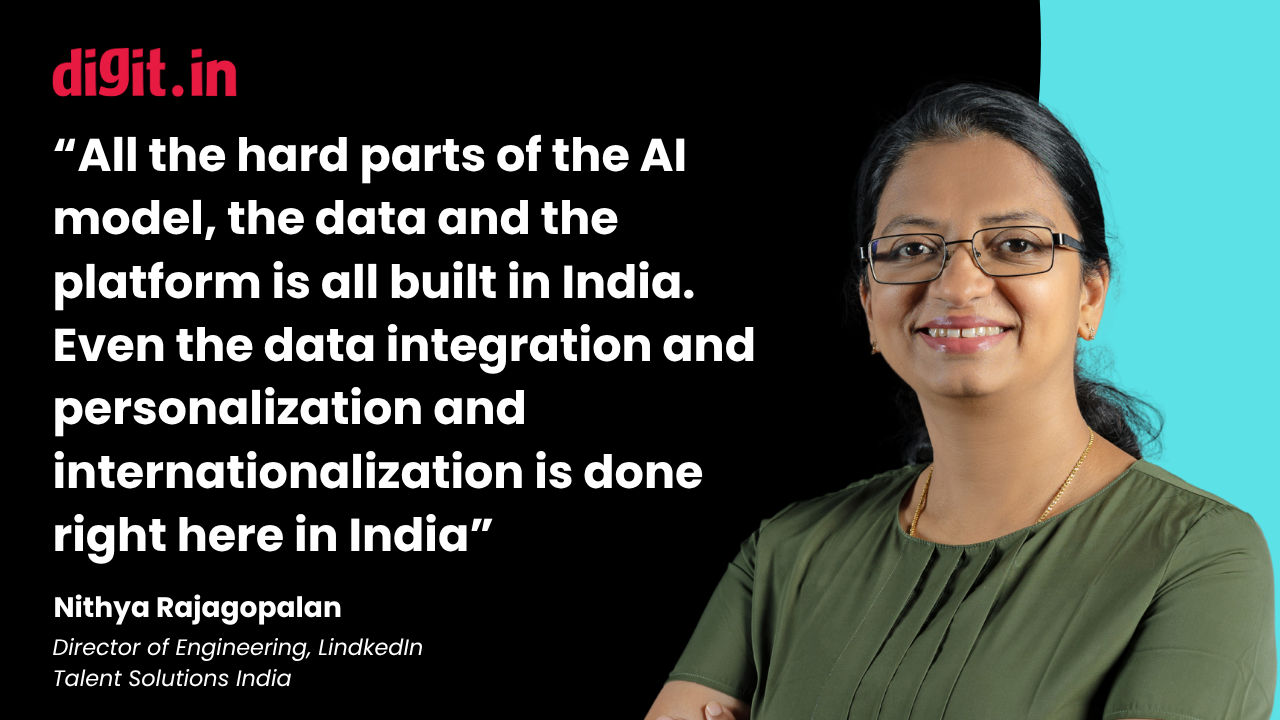

It has been six months since I last spoke with Nithya Rajagopalan, the Director of Engineering of LinkedIn Talent Solutions India, on the Hiring Assistant which people at LinkedIn seem to fondly refer to as Liha. The product was still in the experimental stage back then, full of promise but not completely trusted by recruiters who were still testing the limits of this promising new idea. This experimental phase is no longer there. Liha has moved past this stage and has become infrastructure for LinkedIn’s recruiters.
 Survey
I spoke with Rajagopalan after a roundtable in Bangalore and the first thing I wanted to ask her was: “What changed?” And one word kept repeating itself during the entire course of the conversation: seamlessness. “The recruiters can get the top candidates across systems now,” she says, pointing to the increasing network of integration into various applicant tracking systems. Job postings now move into the ATS system, candidates come out of the same, and recruiters do not have to babysit the process. A part of this plumbing work happens in India.
Also read: AI impact on Indian workplaces: Humans are getting more important
The hard parts are built here
When I pressed Rajagopalan on how much of Liha’s architecture, model training and product logic is actually made in India and how much comes from LinkedIn in the US, she couldn’t give me an exact number, but she didn’t try to sidestep the question, saying, “All the hard parts of the data integration platforms and personalization and internationalization is done in India.” She told me the language personalizations that enabled Liha to work in other languages besides English were also built in India.
The most challenging part to get right may well be ATS integration. Each enterprise hiring system – Workday, Greenhouse, SuccessFactors – has its own special way of doing data. Rajagopalan’s team built a layer to make Liha “agnostic of these changes.”
When two truths disagree
This is where it really gets interesting. Suppose there is some discrepancy between what the candidate’s ATS data shows and what the LinkedIn profile shows? Does the machine simply decide who wins the battle?
Also read: 5 AI agent security failures in 2026: From OpenAI’s hidden Wiki incident to Anthropic’s PyPI breach
Not exactly. This process is called a reconciliation by Rajagopalan, and thankfully, there’s no winner-takes-all here. The two data sets are simply combined to create what is termed an “enhanced profile” and enriched with verification data, so Liha is working on the fullest possible picture, not adjudicating some disagreement. “I wouldn’t say that this is a, this would win or that would win,” she says. Fair enough, although a little disappointing.
AI resumes are the new headache
AI is being deployed by candidates as well, and that’s causing a shift in how the problem is being tackled from the opposite direction. Resumes are becoming more AI-tweaked, some even AI-written, and that causes the input material Liha relies on to change all the time. “It’s a moving problem,” Rajagopalan said without any corporate doublespeak.
The solution implemented by LinkedIn is not about more clever parsing. It’s about getting more evidence. The platform went from verifying your place of employment to actually validating your ten most important skills and finding evidence for their validity through confirmation of their actual use and certification of them. This may not be glamorous work, but it may very well be the only solution to an AI arms race.
Engineers, rebuilt
For Rajagopalan, this translates into the same candor when it comes to what this means for her teams. The foundations don’t change, she maintains, but the idea that engineers only write code is long dead. “It’s never like that anymore,” she stated, adding that we now have engineers who know how to think of products, work with AI tools, and have responsible AI capabilities.
India’s importance in all this will remain significant for a long time. She cited fast hiring features such as notice period and salary predictions as India-first initiatives coming out of LinkedIn’s fastest-growing market in talent solutions. There are more to follow, apparently.
Also read: 5 Best AI tools for turning photos into comics


