
Interview with Nithya Rajagopalan on how LinkedIn’s humanising AI recruitment
 Follow Us
LinkedIn AI uses systems thinking to keep humans in control
Engineering responsible AI at LinkedIn ensures recruitment logic is transparent
LinkedIn Hiring Assistant provides proof points for every candidate recommendation

For anyone currently navigating the job market, the application process can feel like shouting into a digital void. There is a growing fear that your resume, the document you’ve meticulously polished to represent your life’s work, isn’t even being seen by a human being. Instead, many candidates worry they are being ghosted by a cold, unfeeling “black box” algorithm that lacks basic human logic and discards talent based on a missing keyword.
 Survey
However, according to Nithya Rajagopalan, Director of Engineering at LinkedIn Talent Solutions India, the reality of the engineering behind these tools is far more collaborative than most people think. During a recent interview with Digit, Rajagopalan explained that the goal isn’t to automate humans out of the loop, but to architect a bridge of trust between machine efficiency and human intuition. As the technical lead for LinkedIn’s Hiring Assistant, she is steering a shift toward “systems thinking” where AI acts as a partner rather than an autonomous gatekeeper.
Also read: India becoming world’s most important AI developer hub, says GitHub
Dismantling recruiter myths
The biggest hurdle for AI in recruitment isn’t just the code; it’s the trust gap. Rajagopalan is quick to point out that the industry needs to move past the idea that AI is a lone decision-maker. “It’s something that people say, AI will make a decision and then we just have to go along with it,” she notes. “That’s not true”. In LinkedIn’s architecture, “AI is helping you to come up with a list and then the final decision is taken by the end recruiter”.
Another major misconception is that these advanced tools are reserved solely for tech giants. Rajagopalan explains that LinkedIn has engineered products like Hiring Pro that work for smaller businesses as well, “where they can use AI for online applications”. For those worried about a process where they have no idea why the AI made a certain choice, she is blunt: “That’s not the case. You can bring in explainability. You can bring in responsible AI. It’s all about the investments on the AI engineering side”.
The architecture of “High potential” signals
Also read: 40000 GPUs not enough for India’s AI ambitions, says IndiaAI chief
So, how does the system actually figure out who is a “high-potential” candidate in a market as massive and noisy as India? It comes down to the volume and speed of feedback. Rajagopalan explains that “if there are like too many signals, which are very similar, immediately the AI can pick up and say, okay, among all of these signals that we are getting, this is a higher potential”.
The system is designed to be incredibly responsive. “Sometimes the reasoning can be within an hour, sometimes the learning can be within an hour, sometimes a day,” she says. But it’s not just about speed; it’s about accuracy. If only one recruiter is providing a signal, the AI doesn’t just jump to conclusions because “it is not a very high signal for the AI to learn from”. The goal is to ensure the system learns from a “mass of feedback” rather than over-optimizing for a single person’s bias.
Engineering explainability into the workflow
The most critical part of the Hiring Assistant is that it is designed to show its work to the human user. “When it suggests a candidate,” Rajagopalan said, “it doesn’t just say, here are my 20 candidates. It shows why it is recommending those 20 candidates. It identifies exactly which qualifications match the job and even tells where it got that information”.
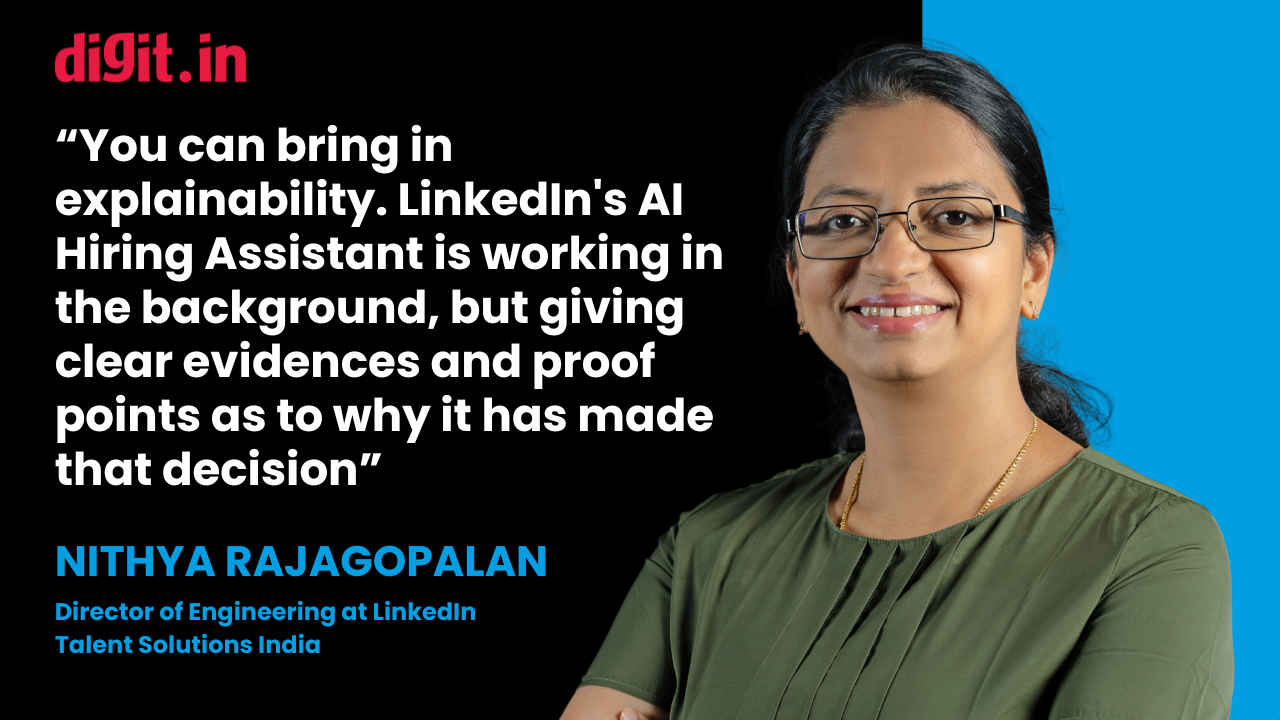
This means a recruiter sees a “checkmark or a cross on what it is mapping or not mapping” for a specific role. The system will explicitly tell the recruiter if it “read that from LinkedIn’s profile” or “from the resume”. This gives the human recruiter “clear evidences and proof points as to why it has made that decision,” allowing them to validate the logic rather than following it blindly.
This transparency also helps solve for semantic adjacency – the idea that a candidate might have the right skills even if they didn’t use the exact keywords a recruiter typed in. “By giving recruiters a user interface where they can actually go and modify, you can review, you can edit, you can delete,” the AI learns from those human adjustments to refine the role requirements.
Guardrails and privacy
Despite all this learning, LinkedIn keeps the data on a short leash. Rajagopalan is firm on the fact that these learnings don’t leak across the entire platform. “It is not across, definitely not across multiple organisations, it doesn’t cross customer boundaries,” she says.
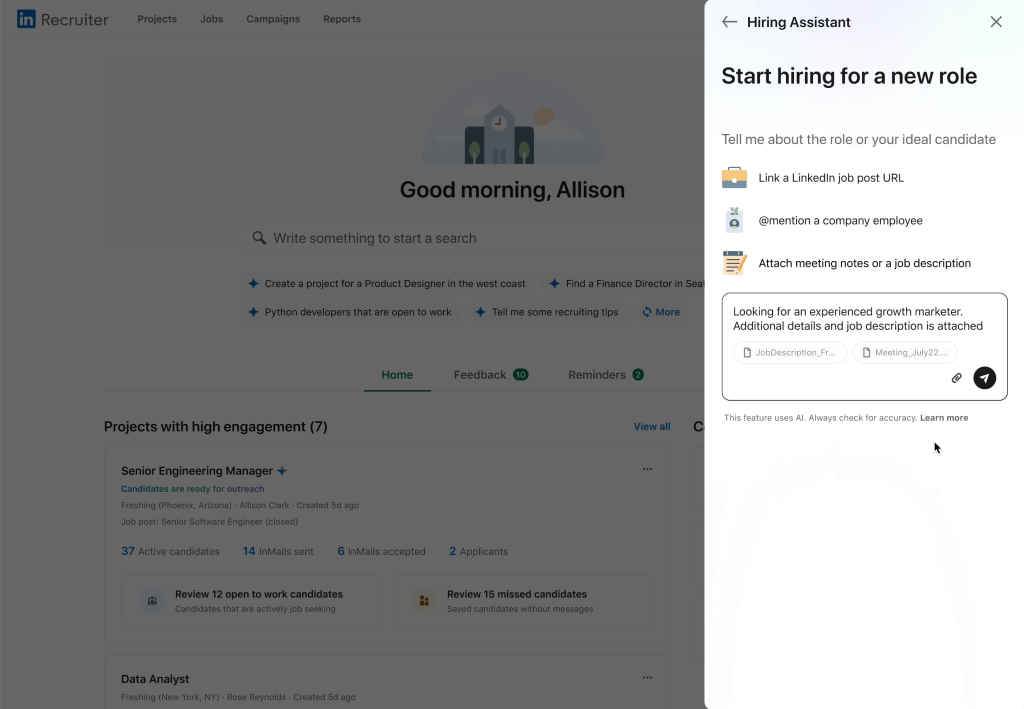
The Hiring Assistant isn’t starting from scratch, either. It sits on top of the existing LinkedIn Recruiter product and picks up on “the past projects of that particular recruiter and hiring preferences”. By keeping very strict guardrails within each customer’s data, the team ensures the AI stays helpful for the recruiter without compromising the privacy of the broader professional network.
Also read: Inside LinkedIn India’s AI engineering the future of hiring and jobs


