OpenAI shipped two models in the same week. That alone tells you something about where the company’s head is at right now. Less than two weeks after GPT-5.4 landed, which itself was released two days after GPT-5.3, OpenAI added GPT-5.4 Mini and GPT-5.4 Nano to the lineup. Neither is meant to replace the flagship. Both are meant to make it more useful. The question is which one is right for what you’re trying to do.
 Survey
Also read: OpenAI launches GPT 5.4 mini and nano, its most capable small AI models yet: How to use them


What’s the difference
Mini is the more capable of the two. It runs more than 2x faster than GPT-5.4 and closes an impressive amount of ground on the flagship – scoring 54.38% on SWE-Bench Pro, only three points behind the full model, and 72.13% on OSWorld-Verified, which tests computer-use ability, against GPT-5.4’s 75.03%. For a “smaller” model, those are numbers worth paying attention to.
Nano is something else. It’s not trying to punch above its weight, it’s designed for tasks where speed and cost are the only things that matter. Classification, data extraction, ranking, simple coding subtasks. It’s the smallest, cheapest model OpenAI has ever shipped, and it’s API-only for now.
Also read: Space-1 Vera Rubin: NVIDIA’s space chip for 25x AI performance
On pricing, the gap is meaningful. Mini costs $0.75 per million input tokens and $4.50 per million output tokens, with a 400,000-token context window. Nano comes in at $0.20 per million input tokens and $1.25 per million output tokens, OpenAI’s lowest price point to date.
What makes these models interesting isn’t just the specs, it’s where they fit in OpenAI’s broader architecture thinking. In Codex, OpenAI’s coding agent, the design is explicit as GPT-5.4 handles planning and final judgment while Mini subagents work in parallel on narrower tasks like searching a codebase, processing a document, reviewing a large file. Mini uses only 30% of GPT-5.4’s Codex quota, which makes it the practical default for routine coding work. Nano slots below that, handling the most mechanical subtasks where you need throughput and nothing else. So think of it less as a standalone assistant and more as infrastructure.
Which model is the best one for you?
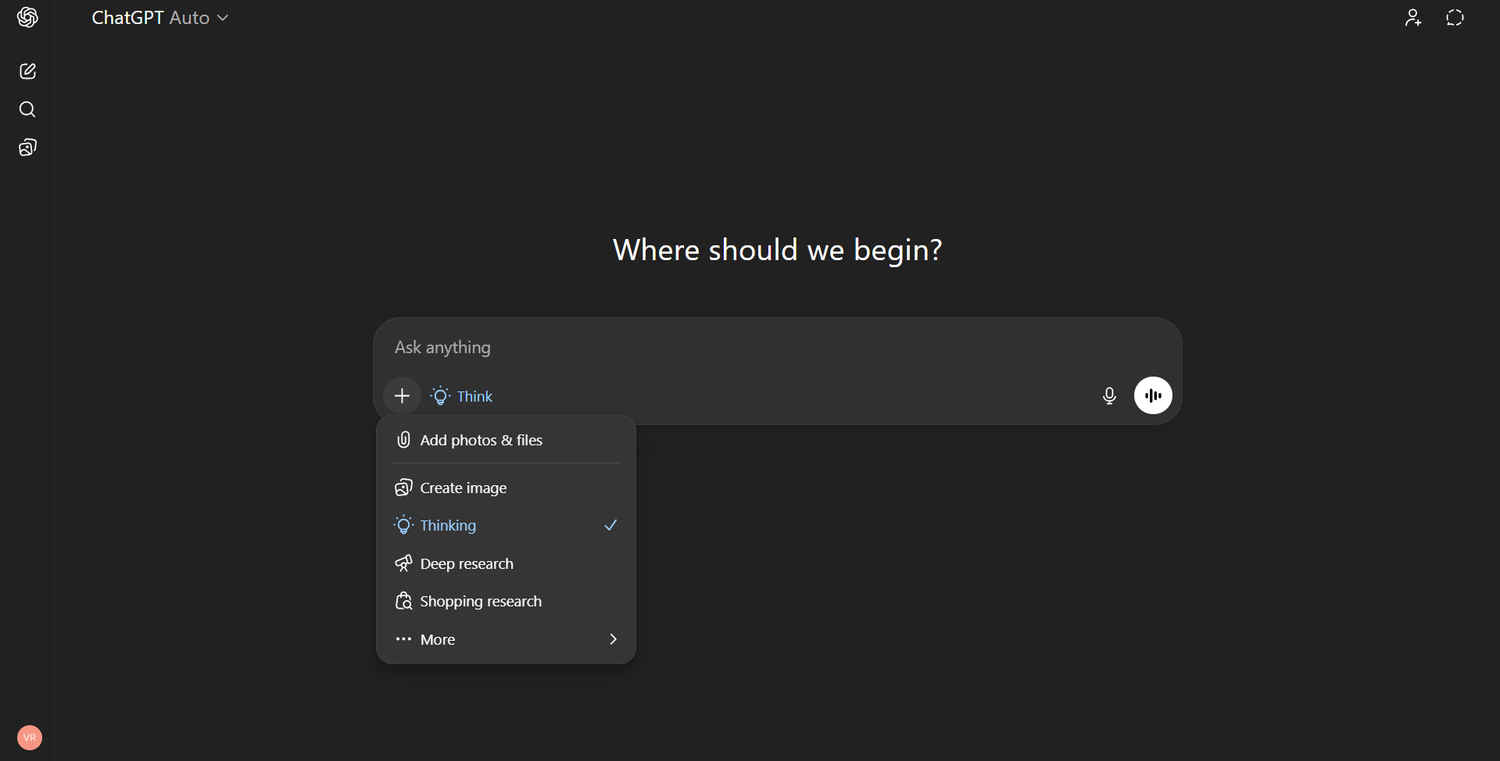
If you’re a developer building agents or pipelines where cost and speed are constraints, Nano is built for you as long as your tasks are well-defined and don’t require nuanced reasoning. If you want something that behaves close to the flagship without paying flagship prices or waiting on it, Mini is the better choice. It’s available across the API, Codex, and ChatGPT, and for free and Go users it surfaces through the “Thinking” feature in the “+” menu.
Mini is a capable model at a lower cost. Nano is a fast, cheap tool for simple jobs at scale. OpenAI isn’t asking you to choose one over the other, it’s asking you to use both, in the right order.
Also read: NVIDIA NemoClaw explained: The new open-source AI agent platform
 Follow Us
Vyom Ramani
A journalist with a soft spot for tech, games, and things that go beep. While waiting for a delayed metro or rebooting his brain, you’ll find him solving Rubik’s Cubes, bingeing F1, or hunting for the next great snack. View Full Profile


