
Best AI audio and music making tools
 Follow Us
AI tools like AIVA, Soundraw, and Magenta Studio help creators produce custom tracks in minutes without musical expertise.
The AI in music market is set to surge from USD 3.9B in 2023 to USD 38.7B by 2033, growing at 25.8% annually.
These tools empower creators as musical co-pilots—handling technical tasks while humans refine the artistic vision.
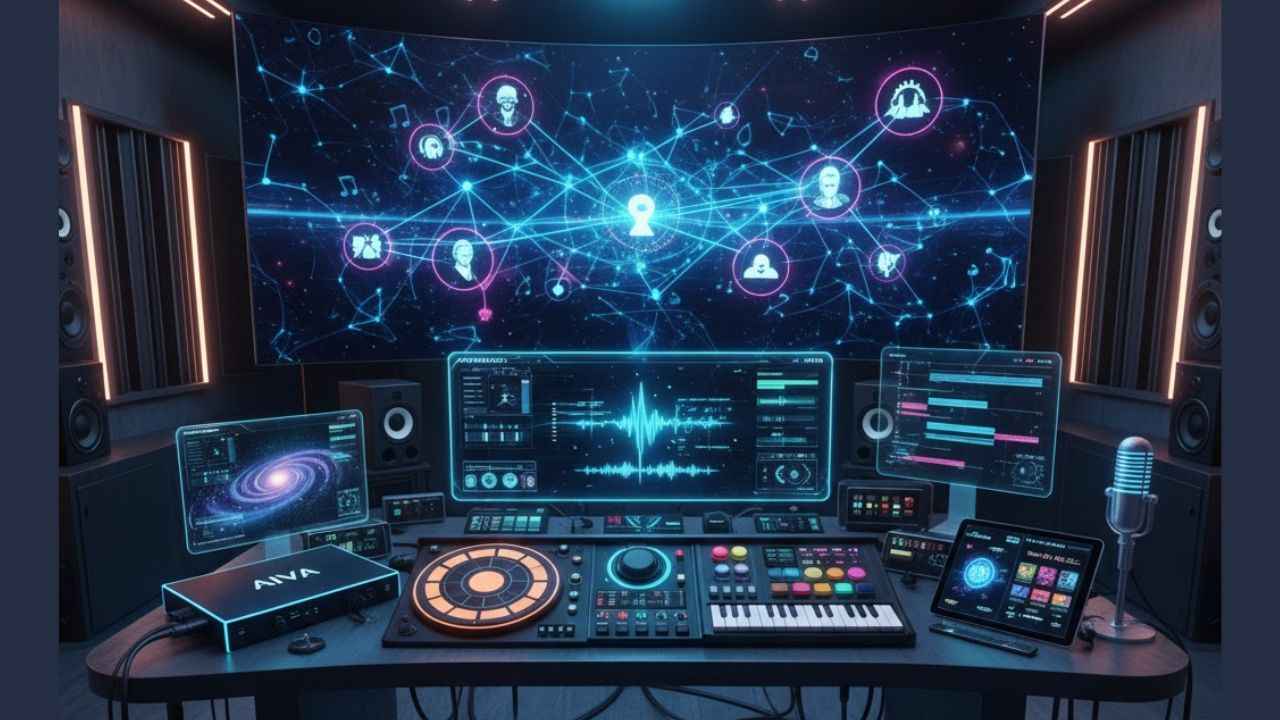

Whether it’s an engaging jingle for a product launch, a podcast intro, or background music for TikTok and Instagram Reels, audio plays a massive role in digital storytelling. Traditionally, producing quality soundtracks required access to expensive studios, skilled engineers, and complex licensing. But now, AI is making music production faster, cheaper, and more accessible than ever before.
 Survey
AI music generators can now compose original scores, background loops, and even emotionally tuned soundtracks within minutes. According to recent projections, the global AI-in-music market is expected to grow from USD 3.9 billion in 2023 to USD 38.7 billion by 2033, with an annual growth rate of nearly 26%. These tools are turning anyone with a creative idea into a music producer.
AI music tools work as creative co-pilots, handling the technical heavy lifting while users focus on vision and direction.
These platforms use deep learning to analyse thousands of existing songs, extracting musical patterns to generate melodies, harmonies, and entire compositions, studio-grade soundtracks with minimal manual input.
By adjusting parameters like genre, mood, tempo, and instrumentation, creators can produce unique tracks for films, games, or social media without needing formal training. The latest generation of tools in 2025 makes music creation not only faster but also highly customisable, offering high-quality audio ready for publishing or further editing.
AIVA
Leading the list is AIVA, an AI-powered composer that blends technical sophistication with creative flexibility. Built on diverse “generation profiles” datasets of curated musical samples, AIVA can compose new pieces inspired by everything from lo-fi beats to Afro house or cinematic soundscapes.
Users can choose key signatures, tempo, and duration before AIVA generates tracks within a minute. The output is surprisingly polished, often sounding like professionally mixed music. You can fine-tune compositions by adjusting melody, chords, basslines, and percussion.
AIVA’s free tier supports three-minute tracks (non-monetizable), while the €15/month Standard Plan extends output to five minutes with limited monetisation rights. For creators seeking quick, high-quality AI compositions, AIVA is one of the most capable tools available today.
Soundraw
If variety and creative control are your top priorities, Soundraw delivers. This intuitive AI generator lets users define everything from tempo and mood to genre, theme, and instruments. Unlike many tools, Soundraw allows up to five-minute tracks even on its free tier.
Once your track is generated, you can dive into its granular editing options. Soundraw enables section-based energy adjustments, letting you amplify or tone down intensity in specific parts of a song. In Pro mode, users can fine-tune instrumentation, transitions, and layering for a more dynamic composition.
For commercial use, Soundraw offers a Personal Plan at $16.99/month, granting full monetisation rights across digital platforms, social media, TV, and radio ads. It’s a must-try for marketers and creators needing tailor-made background scores.
Melobytes
Melobytes is one of the fastest AI music generators around. Despite its minimal design, it churns out complete tracks in seconds. Melobytes offers an impressive range of musical styles from electronic and jazz to classical compositions inspired by Bach, Beethoven, Vivaldi, and Chopin. Users can tweak tempo, bars, and even specific instrument notes or effects before generating a track.
The output is delivered as a MIDI file, ready for use in digital audio workstations (DAWs). In testing, Melobytes generated a five-minute song in just 10 seconds. While the sound quality may not match paid services like AIVA or Soundraw, it’s ideal for sampling, experimentation, and inspiration. Best of all, Melobytes is free and doesn’t require registration.
Magenta Studio
Before Bard and Gemini, Google was already exploring AI creativity through Magenta Studio, a suite of open-source music tools built on machine learning. Designed for both standalone use and integration with Ableton Live, Magenta Studio includes a range of creative plugins like Interpolate, Drumify, Continue, and Groove.
Its core module, Generate, produces short musical phrases using a Variational Autoencoder (VAE) trained on millions of melodies and rhythms. Users can create four-bar drum or melody patterns by setting just a few parameters like file location, number of variations, and “temperature” (which controls randomness).
While the compositions are brief, they’re excellent for sparking new ideas or overcoming creative blocks. Completely free and open-source, Magenta Studio is perfect for experimental musicians and producers looking for AI-assisted inspiration.
Also read: AI chips: How Google, Amazon, Microsoft, Meta and OpenAI are challenging NVIDIA
Voicemod text to song converter
For users who want instant results with minimal input, Voicemod’s Text to Song Converter is one of the easiest AI music tools to try. Accessible via web browser, it transforms written lyrics into complete songs—complete with vocals and background music.
Voicemod offers 16+ song styles, including pop, EDM, hip-hop, and even festive Christmas themes. You can choose from seven different AI singers, each with a unique vocal tone, from classical soprano to contemporary pop.
Simply input your lyrics, pick a style and voice, and let the AI compose. Within a minute or two, Voicemod produces a track ready to share. While the vocal tone occasionally mismatches the lyrics’ mood, the results are often surprisingly good.
The platform is free to use, requiring only a quick sign-up, making it a fun and accessible option for beginners or meme creators who want to experiment with AI-generated vocals.


