

Apple is two years late to AI and still shipping a beta: Here’s why that matters
 Follow Us

Apple has almost always been comfortable being second. Historically, it was not the first company to make a smartphone, a smartwatch or truly wireless earbuds. In each of those categories, it arrived after others had already mapped the territory, studied where they went wrong and built something that ultimately redefined the market. In the same vein, we could argue that for Apple, timing has never been the point as much as the products have been.
 Survey
When WWDC 2026 wrapped with Siri AI as its headliner, a rebuilt assistant that is smarter, more conversational and more capable than anything Apple has shipped before, Apple fanboys had every reason to apply the same logic. It was late, it is always late, but Apple wins anyway. Except this time, the situation is more complicated than that because while it took two years for Apple to fully realise its AI potential, is it really what we need anymore? The answer to that is perhaps in today’s announcements themselves.
The beta problem
Siri AI, the revamped assistant is not launching as a finished product. Apple is shipping it in September as a beta, with a possible waitlist for certain features, in English only, not available in the EU on iPhone or iPad and not available in China at all. The original Siri carried the same beta label for two years after its 2011 launch. In all likelihood, we are now potentially looking at the same pattern repeating.
And this is not a minor caveat; it is the single most significant thing Apple said about Siri AI at WWDC 2026. The company spent two years promising features that were announced at WWDC 2024, delayed them repeatedly and is now delivering them as unfinished software. The personal context awareness, the onscreen understanding, the cross-app task execution that Craig Federighi and Co. stood on stage and demonstrated in 2024, all of it was supposed to be in your hands long before now. It was not; it still isn’t.
The Gemini irony
Then there is the question of how Siri AI actually works. Apple’s new assistant is powered, in significant part, by Google’s Gemini models and the processing happens partly on Google’s servers.
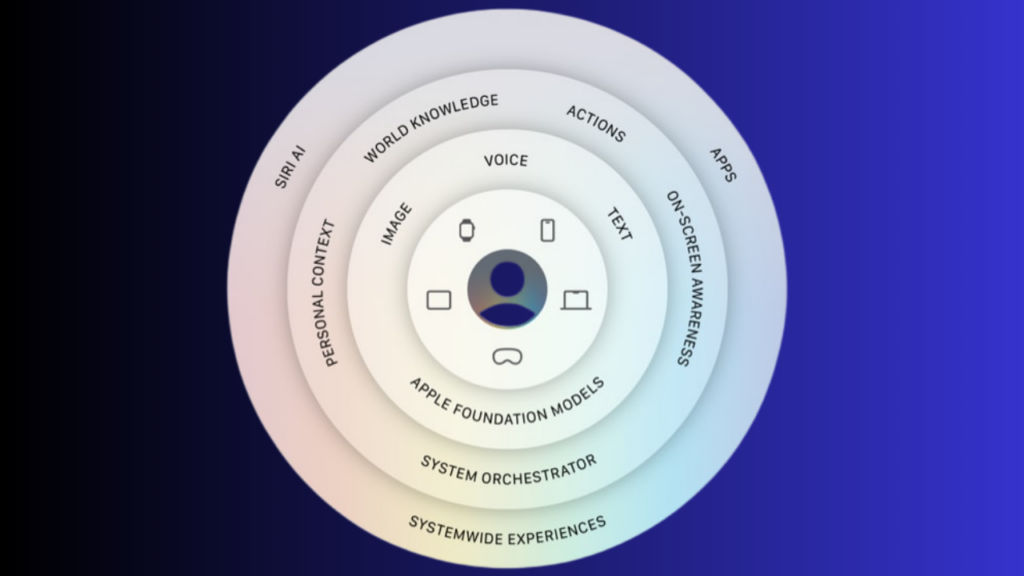
To understand why this matters, you need to appreciate how much of Apple’s identity is built around doing things in-house and doing them privately. The company spent years developing its own chips, its own operating systems, its own silicon-level privacy architecture, precisely so it would not have to rely on anyone else. It has repeatedly used privacy and control as competitive differentiators against Google specifically.
And yet here we are. The most privacy-sensitive feature Apple has ever built, an assistant that reads your emails, messages, photos and files, is co-powered by a model built by its oldest rival and partially processed on that rival’s infrastructure. Apple has privacy frameworks around this, a thing called Private Cloud Compute which is a real architecture with privacy protections but the arrangement still invites a question the company has not fully answered: if you could not build this without Google’s help, what does that say about where you actually stood in the AI race?
What the competition has been doing
Google’s Gemini has been deeply integrated into Pixel phones for well over a year. Samsung’s Galaxy AI features, many of which overlap significantly with what Apple announced at WWDC, shipped with the Galaxy S24 series in early 2024. Microsoft has been aggressively pushing Copilot into Windows and its productivity suite since 2023. OpenAI’s ChatGPT and Anthropic’s Claude have had the conversational, document-aware, image-understanding capabilities that Apple demonstrated on Monday for longer than most people can remember.
The features Apple showed at WWDC 2026- intelligent tab organisation in Safari, natural language calendar creation, smart message suggestions, AI photo editing, and real-world object recognition via the camera are not new ideas. They are Apple’s implementations of ideas that the rest of the industry has been shipping and iterating on for two years.
Two specific examples from the keynote make this harder to dismiss. Apple said that Messages in iOS 27 will now surface contextual suggestions based on what you are discussing, like finding relevant photos or creating reminders, based on conversation context. This is strikingly similar to Google’s Magic Cue, which has been doing exactly this on Android for some time. The Visual Intelligence onscreen selection feature, where you highlight something on your display and ask Siri about it, maps almost directly onto Circle to Search, the Google feature that lets Android and Chrome users select anything on screen for an instant AI-powered lookup. Apple’s implementations may be more deeply integrated and more privacy-preserving, but the ideas themselves did not originate in Cupertino.
Apple’s counterargument
Now, none of this is unfair as a criticism, but it is also not the complete picture. Apple’s counterargument, which it has made explicitly and which history partially supports, is that being first is not the same as being best. The first smartphones were clunky. The first smartwatches were confused about what they were for. The first truly wireless earbuds from most brands were unreliable. Apple arrived later in each case and built the product that the market actually settled on.
There is also a genuine privacy consideration in the AI space that Apple is right to take seriously. Many of the AI features that competitors have shipped collect and process user data in ways that Apple’s architecture seemingly does not. If Siri AI works as described, with on-device processing for sensitive data and verifiable Private Cloud Compute for the rest, that in itself becomes a meaningful differentiator as to why you should care about Apple’s AI moves.
And it is worth noting that the features themselves, when demonstrated at WWDC, looked solid enough.
Also Read: Here are the biggest Apple Intelligence features unveiled at WWDC 2026
So does it matter?
My honest answer is: probably yes, but less than it should. You see, the smartphone market is different from the AI assistant market in one crucial respect. When Apple arrived late with the iPhone, the category was nascent and the competition was weak. The AI assistant space in 2026 is not nascent. It is crowded, fast-moving and dominated by well-resourced competitors who have been building and improving these products for years. The gap Apple needs to close is larger and the targets are moving at the speed of light.
The beta label is a real problem because Apple has now used the word to describe its AI ambitions three times in three years. At some point, “we are working on it” becomes its own brand of credibility damage. Apple’s users are patient, but patience is not infinite and Android manufacturers are not standing still while Apple finds its footing.
The Gemini dependency is an acknowledgement that Apple needed outside help to get here and that the company’s vaunted vertical integration had its limits when the technology in question moved faster than any single organisation could build from scratch.
What Apple has going for it is what it has always had: a billion-plus active devices, a loyal user base, a retail network and a track record of turning late entries into the new standard. Whether that is enough in AI, where the compounding advantage of data and usage is more significant than in hardware, is the question the next two years will answer.
Read More: WWDC 2026: What new tools Apple is giving parents to manage kids’ screen time


