

5 things Sundar Pichai said at India AI Impact Summit keynote
 Follow Us

Speaking at the AI Impact Summit 2026 in New Delhi, Google CEO Sundar Pichai delivered a keynote that framed artificial intelligence as the most transformative technology of our era. Addressing world leaders and industry pioneers, Pichai combined personal nostalgia with a bold roadmap for the future, emphasizing that the current “platform shift” offers a unique opportunity for nations like India to leapfrog traditional development gaps. His remarks centered on the dual necessity of pursuing AI with ambitious curiosity while maintaining a rigorous commitment to responsibility and global inclusion.
 Survey
The transformation of Vizag into a global AI hub
Sundar Pichai opened his remarks by reflecting on his personal history, recalling his days as a student traveling through Visakhapatnam on the Coromandel Express. He contrasted those memories of a quiet coastal city with Google’s current commitment to establish a full-stack AI hub there as part of a massive fifteen billion dollar infrastructure investment in India. This project is designed to house gigawatt-scale compute and a new international subsea cable gateway, signaling a shift where regional Indian cities become the backbone of global technological advancement and job creation.
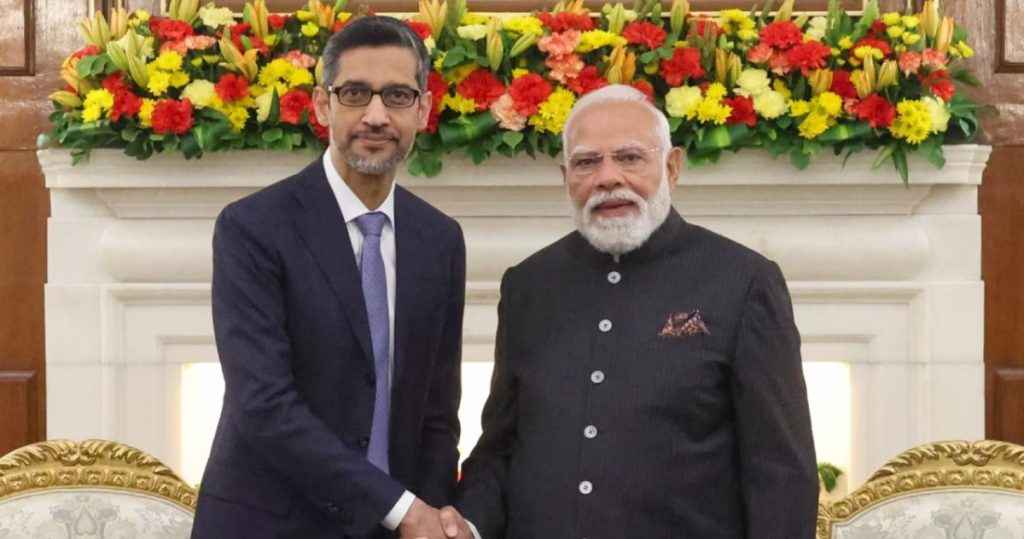
“I remember Vizag being a quiet and modest coastal city brimming with potential. Now in that same city, Google is establishing a full-stack AI hub… Sitting on the train, I never imagined Vizag becoming a global AI hub.”
AI as the most significant platform shift of our lifetimes
Pichai characterized the current era of artificial intelligence not just as an incremental improvement in software, but as a fundamental “platform shift” that surpasses previous technological milestones. He expressed a vision of “hyperprogress” where AI serves as a tool to help emerging economies leapfrog legacy gaps that have historically slowed development. By comparing the potential of AI to the evolution of autonomous vehicles and space-bound data centers, he emphasized that this technology allows humanity to dream on a scale that was previously unimaginable.
“No technology has me dreaming bigger than AI. It is the biggest platform shift of our lifetimes. We are on the cusp of hyperprogress and new discoveries that can help emerging economies leapfrog legacy gaps.”
The Nobel Prize-winning impact of AlphaFold on global health
Also read: Sam Altman at India AI Impact Summit 2026: 5 key highlights
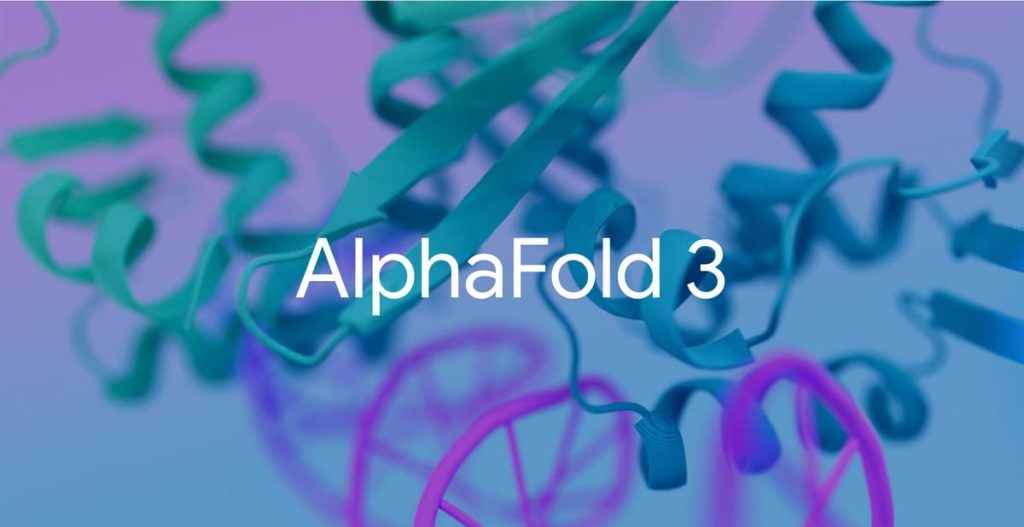
A major portion of the keynote focused on the “bold” application of AI in the scientific community, specifically highlighting the success of Google DeepMind’s AlphaFold. Pichai explained how this technology solved a fifty-year-old challenge in predicting protein structures, effectively compressing decades of traditional research into a searchable database. He noted that this breakthrough is now a cornerstone for three million researchers globally who are using it to develop malaria vaccines and combat antibiotic resistance, proving that AI’s greatest value lies in solving the “hardest problems in science.”
“This breakthrough didn’t just win global recognition [a Nobel Prize], it compressed decades of research into a database that is now open to the world… researchers in more than 190 countries are using it to develop malaria vaccines, fight antibiotic resistance, and much more.”
Preventing the digital divide from becoming an AI divide
The CEO addressed the socio-economic risks of the AI era, stating that the benefits of the technology must be accessible to everyone rather than being concentrated in a few regions. To support this, he detailed Google’s America-India Connect Initiative, which includes building four new subsea fiber optic cables to strengthen the digital bridge between the two nations. Pichai argued that responsibility in the AI age requires a dual focus on physical infrastructure and human capital, ensuring that the global south is not left behind as the technology evolves.
“We can’t allow the digital divide to become an AI divide. That means investing in computing infrastructure and connectivity… trust is the bedrock of adoption.”
The evolution of the workforce through new career paths
In discussing the future of labor, Pichai acknowledged that AI will undeniably automate some roles, but he remained optimistic about its ability to create entirely new industries. He drew a parallel to the rise of YouTube creators – a career that did not exist twenty years ago but now supports millions of people – to illustrate how AI will evolve the professional landscape. To prepare for this shift, he highlighted Google’s commitment to large-scale training initiatives, including a new AI Professional Certificate designed to help workers globally master these tools within their current and future jobs.
“AI will undeniably reshape the workforce, automating some roles, evolving others and creating entirely new careers. Twenty years ago, the concept of a professional ‘YouTube Creator’ didn’t exist; today, there are upwards of 60 million around the world.”


