
Sam Altman at India AI Impact Summit 2026: 5 key highlights
 Follow Us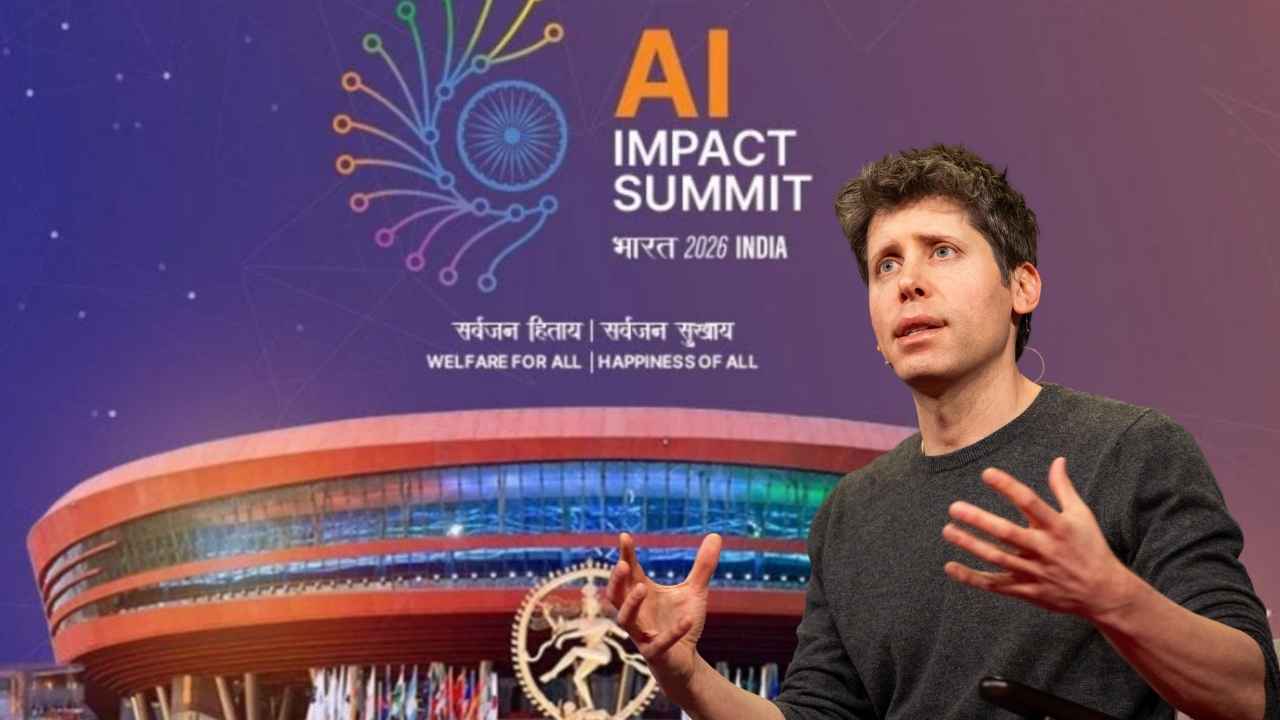

The energy in New Delhi feels different this week. The India AI Impact Summit 2026 has officially begun, and the city has turned into the centre of the global AI conversation. Leaders from across the world have flown in, including policymakers, researchers and some of the most powerful names in technology. OpenAI CEO Sam Altman also attended the event, not just as a guest but as a speaker. In his keynote he made some bold predictions about superintelligence, job disruption and the future of governance. Here are five major highlights from his keynote.
 Survey
Also read: SKOAR! College Cup – Delhi Edition finale begins today: What to expect
1. India is uniquely positioned to shape AI’s future
Altman began by praising India’s progress in AI adoption and infrastructure. “It’s really a treat to be here in India. And it’s incredible to see the country’s leadership in advanced AI,” he said. He also noted how much had changed in just over a year, pointing out that AI systems have moved from struggling with high school level maths to handling research level mathematics and even producing novel results in theoretical physics.
He described India as “the world’s largest democracy” and said it is well positioned not just to build AI systems but to shape how they are governed. According to him, leadership in sovereign AI infrastructure and small language models shows that India is serious about owning its technological future.
2. Superintelligence may arrive sooner than we think
One of the boldest moments in the keynote came when Altman spoke about superintelligence, something he has been talking about for years. He warned that early versions of “true superintelligence” could emerge within the next few years. “If we are right, by the end of 2028, more of the world’s intellectual capacity could reside inside of data centres than outside of them,” he said.
He admitted that this is an extraordinary claim and that OpenAI could be wrong. But he stressed that the possibility deserves serious attention. According to Altman, if AI systems continue to improve at the current pace, they could outperform humans not just in repetitive tasks but in advanced roles as well. He even suggested that a sufficiently advanced AI system could be capable of being the CEO of a major company or conducting better research than top scientists.
3. Job disruption is inevitable, but so is reinvention
Altman did not avoid the hard topic of employment. “It will be very hard to outwork a GPU in many ways,” he said, explaining that AI will reshape roles driven by cognitive repetition, data processing and even parts of software development. He acknowledged that many current jobs will be disrupted as AI systems grow more capable.
However, he framed this as part of a larger historical pattern. “Technology always disrupts jobs. We always find new and better things to do,” he said. Drawing comparisons with earlier industrial revolutions, he suggested that future generations may look at today’s jobs as stepping stones toward greater capabilities.
At the same time, he pointed out the positive side of productivity gains. AI driven automation of supply chains and robotics could make physical goods cheaper. AI tutors and healthcare systems could expand access to essential services. Faster economic growth, he implied, may soften the blow of job losses.
Still, he made it clear that societies cannot stay passive. New forms of governance, policy innovation and social contracts will be required. The real challenge is whether countries can redesign skilling and education fast enough so that AI augments human ambition rather than replaces it.
4. On democratisation of AI
Altman strongly argued that the future of AI must not be concentrated in one company or one country. “We believe that democratisation of AI is the only fair and safe path forward,” he said. According to him, centralising such powerful technology could lead to dangerous outcomes.
He outlined three core beliefs. First, democratization ensures that humanity flourishes. Second, AI resilience is a core safety strategy. And third, the future of AI will not unfold exactly as anyone predicts, which means many stakeholders must have a say in shaping it.
He acknowledged that AI will influence geopolitics, warfare, governance models and social contracts. Because of this, he suggested that the world may eventually require an institution similar to the International Atomic Energy Agency to oversee advanced AI systems and enable rapid global response mechanisms.
Altman also talked about the importance of humility. With technology this powerful, he said, it is important to admit what we do not know. Many of the most important discoveries, he noted, happen when technology and society meet, sometimes clash and then evolve together. In his view, open debate and international coordination will be critical.
5. OpenAI doubles down on India
Beyond philosophy and predictions, Altman also made concrete announcements. OpenAI confirmed plans to open two new offices later this year in Bengaluru and Mumbai, adding to its existing presence in New Delhi. The expansion is part of what he described as building AI “with India, for India, and in India.”
He also announced a collaboration with Tata companies and introduced the first cohort of higher education institutions under a new academic initiative. The institutions include Indian Institute of Technology Delhi, Indian Institute of Management Ahmedabad, Manipal Academy of Higher Education and All India Institute of Medical Sciences among others.
According to OpenAI, the initiative is expected to support more than one lakh students, faculty members and staff over the next year. The aim is to integrate AI tools into research, education and institutional operations.
By the end of his keynote, one thing was clear. Disruption is coming fast. But if India moves quickly, invests wisely and keeps AI open and democratic, it could help decide what the next chapter of human progress looks like.


