
The video game industry is letting its own history die
 Follow Us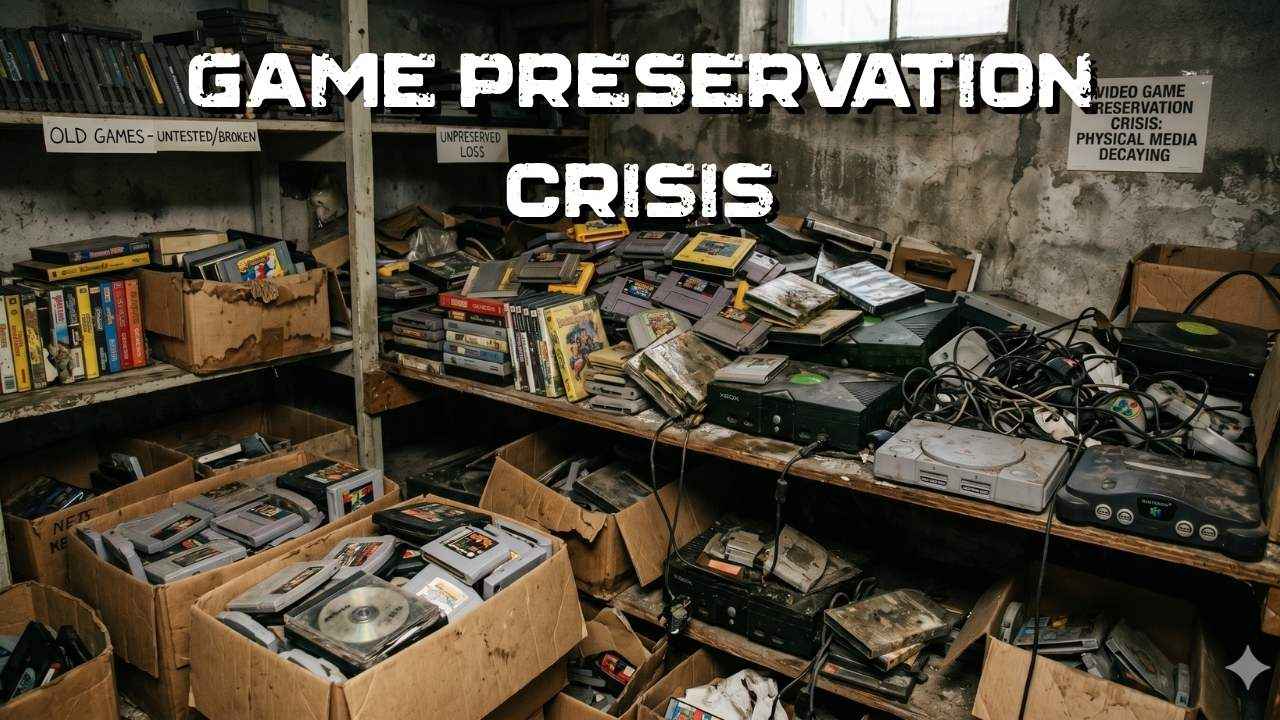

There are a lot of games that you can’t play anymore. Its not because they were bad or no one wanted to play them but because a server somewhere got switched off, a digital storefront quietly shut down, and the company that made it decided that the licensing math did not work out. They are gone. Legally, completely, possibly permanently gone. And the industry that made it has collectively shrugged and moved on to the next release. This is not a new problem. It is just a problem nobody with actual power seems interested in solving.
 Survey
Also read: Chinese AI video generation has overtaken the US: Here’s why ByteDance and Kuaishou are winning
The examples are all around if you know where to look. One of the most infuriating instances in recent memory is Ubisoft’s The Crew, which simply stopped working when Ubisoft turned off the servers in 2024. Not delisted. Not discontinued. Bricked. Games purchased by people and stored in their libraries became unusable because the game needed an active internet connection, and Ubisoft decided flipping that switch was a business decision rather than a betrayal for everyone who bought it. PT, the playable demo from the now-canceled game Silent Hills, was removed from the PlayStation Network in 2015, following the Kojima debacle, and it has yet to return. People were forced to retain their PlayStation 4 console purely for the sake of keeping their installation. Marvel vs. Capcom 2, one of the best fighting games ever made, went missing from digital stores for several years due to licensing issues. Alan Wake was also subject to the same treatment. Scott Pilgrim vs. The World: The Game disappeared for six years. Most games do not get the surprise re-release Scott Pilgrim eventually did. They just stay gone
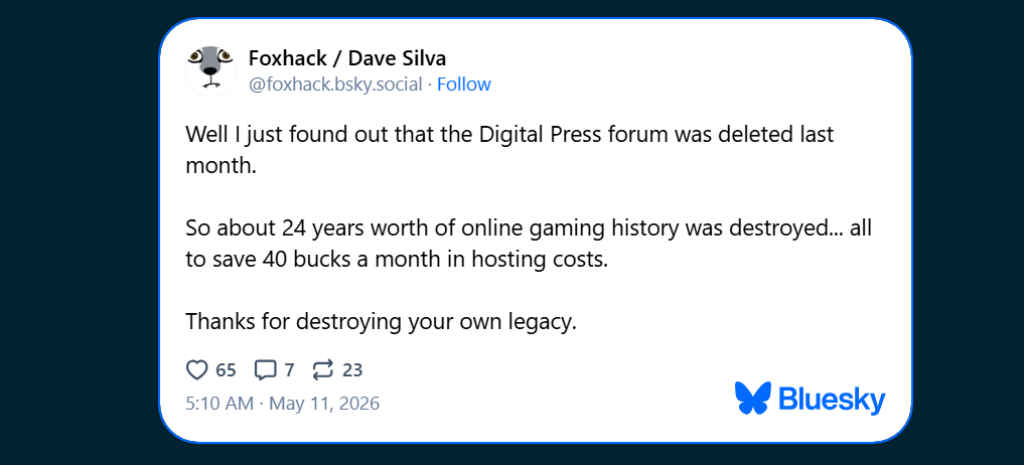
It’s not just the games. It’s the whole ecology surrounding them. Time Extension reported this month that the Digital Press website – which, established in 1991, was one of the first websites dedicated to chronicling and commemorating gaming history – disappearing into the ether overnight. Twenty-five years of online gaming history disappeared due to the hosting fee of $42 per month becoming too much of a financial burden. Twenty-five years of conversations, preservation advice, community wisdom, esoteric gaming information all gone. The number that continues to repeat itself in my head is forty-two dollars. That was the price of twenty-five years of gaming history to the person who had control of it.
I’ve been dwelling on this more than I probably should be. Video games represent the defining media experience of my generation. The music, the films, the novels, gaming stands alongside all of this and even above them for some people, representing the means by which my generation learned storytelling, competition, creativity, and community. And here we are allowing our history to decay before our eyes as the industry pats itself on the back for breaking record sales figures.
Also read: Best Chromebooks in India for work, school and everyday use: Top picks for 2026
It turns out. Film had that figured out. Music had that figured out. There are libraries. There are archives. Restoration efforts exist, because someone realized that the works created by a culture were worth saving. The Video Game History Foundation had been keeping track of just how much had been lost, and the statistics they cite are staggering – the overwhelming majority of games from earlier generations are out of print and unavailable for purchase legally. Not obscure games. Important, lauded, culturally significant games that shaped the medium.
The publishers have always known. The discussion of preservation has been going on for decades now at every major industry event. Panels are organized, intelligent remarks are made, and then nothing happens, because the status quo being unchanged is more profitable than change itself. Maintaining a back catalogue takes effort, licensing rights cost money, making that available takes money. Letting it all go is free. The math is grimly simple.
The fact that makes this situation even more frustrating is the simplicity of the solution itself. Emulation scenes, which the industry has been trying to suppress via litigation for years now, have done more good for game preservation than most publishers did on their own. The people preserving gaming history are doing so for free, on their own time, despite active opposition from the very companies they are helping preserve their history. This is the reality of the situation.
I grew up playing many games from gaming history through emulation, not because I wanted to steal any of those games, but simply because there was no other way to play them at all. This is embarrassing for an industry worth hundreds of billions of dollars. Instead, it is just the norm.
Games are not products with expiry dates. They are cultural artifacts. An industry which created something incredible over the span of fifty years is witnessing its parts vanish without even so much as a proper obituary. The Crew gets bricked. PT stays buried. The Digital Press forum gets wiped to save forty-two dollars a month. At some point, letting your own history die stops being a business decision and starts being a statement about what you think your medium is worth. Apparently, not much.
Also read: Tata-ASML deal: Why it matters for India’s semiconductor ambitions


