Sergey Brin admits Google underinvested in LLMs despite inventing Transformer
Google missed early AI lead, Brin says caution slowed chatbot rollout
Brin returns from retirement as Google pivots fully to Gemini AI
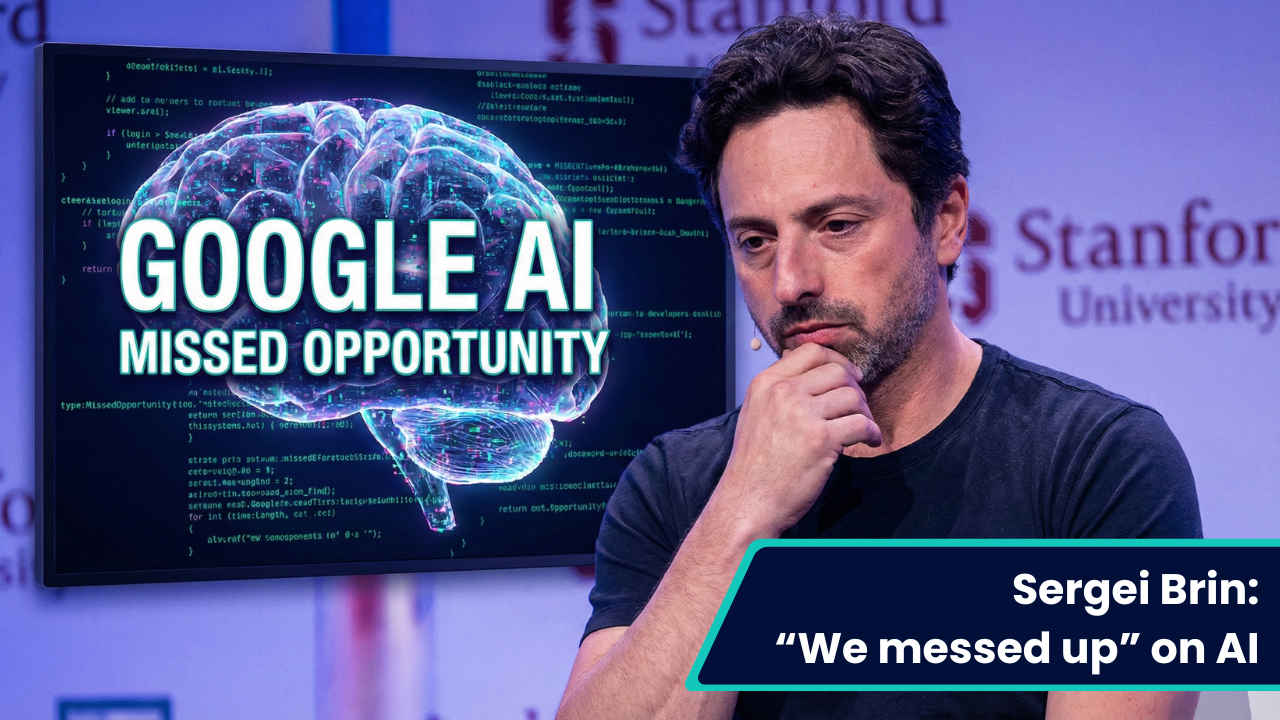
It is rare for a tech founder to admit a strategic blunder in public. It is even rarer for one to admit that their company missed a technological wave that they themselves set in motion. Yet that is exactly what Google co-founder Sergey Brin did during a recent appearance at Stanford University. Speaking candidly at the centennial celebration of the Stanford School of Engineering, Brin acknowledged that Google failed to capitalize on its early lead in artificial intelligence.
 Survey
Also read: AI-controlled robot shoots human after prompt manipulation, raising serious safety risks


A rare admission of failure
Brin told the audience that the company “for sure messed up” by underinvesting in large language models. He specifically pointed to the Transformer paper as a missed opportunity. This groundbreaking piece of research was published by Google researchers eight years ago and introduced the architecture that eventually became the “T” in ChatGPT. Despite owning the foundational research that paved the way for the current generative AI boom, Brin admitted that Google “didn’t take it as seriously as we should have” at the time.
Paralyzed by reputation
The hesitation stemmed from a mix of corporate caution and a lack of foresight regarding how quickly the technology would scale. Brin noted that the company was “too scared” to release chatbots to the public because early models had a tendency to say “dumb things.” As a result, Google kept its AI research largely confined to the lab while startups like OpenAI moved aggressively to productize the technology. Brin suggested that the company rested on its laurels and failed to anticipate that the “Deep Tech” of AI would become the primary battlefield for the industry so quickly.
Also read: Samsung SATA SSD production halt explained: Why storage prices are rising
Retirement interrupted
The wake-up call was significant enough to pull Brin out of retirement. He revealed that he had officially retired just before the COVID-19 pandemic to study physics and spend time with his family. However, the surge in AI development drew him back to the Googleplex. He described his return as a necessity because he missed the technical challenges and the fast-paced environment. Brin is now deeply involved in the development of Gemini and even mentioned that he talks to the AI during his commute to brainstorm ideas. He emphasized that the company has now fully pivoted to prioritize AI to catch up to the market it inadvertently helped create.
Also read: Rapido CTO on AI, open source, drones and future of Indian mobility
 Follow Us
Vyom Ramani
A journalist with a soft spot for tech, games, and things that go beep. While waiting for a delayed metro or rebooting his brain, you’ll find him solving Rubik’s Cubes, bingeing F1, or hunting for the next great snack. View Full Profile


