
Rapido CTO on AI, open source, drones and future of Indian mobility
 Follow Us
Rapido’s AI adds voice orders, improving captain safety
Platform-first, open-source stack is scaling Rapido across India’s cities
AI supports pricing, routing, onboarding, but humans decide safety
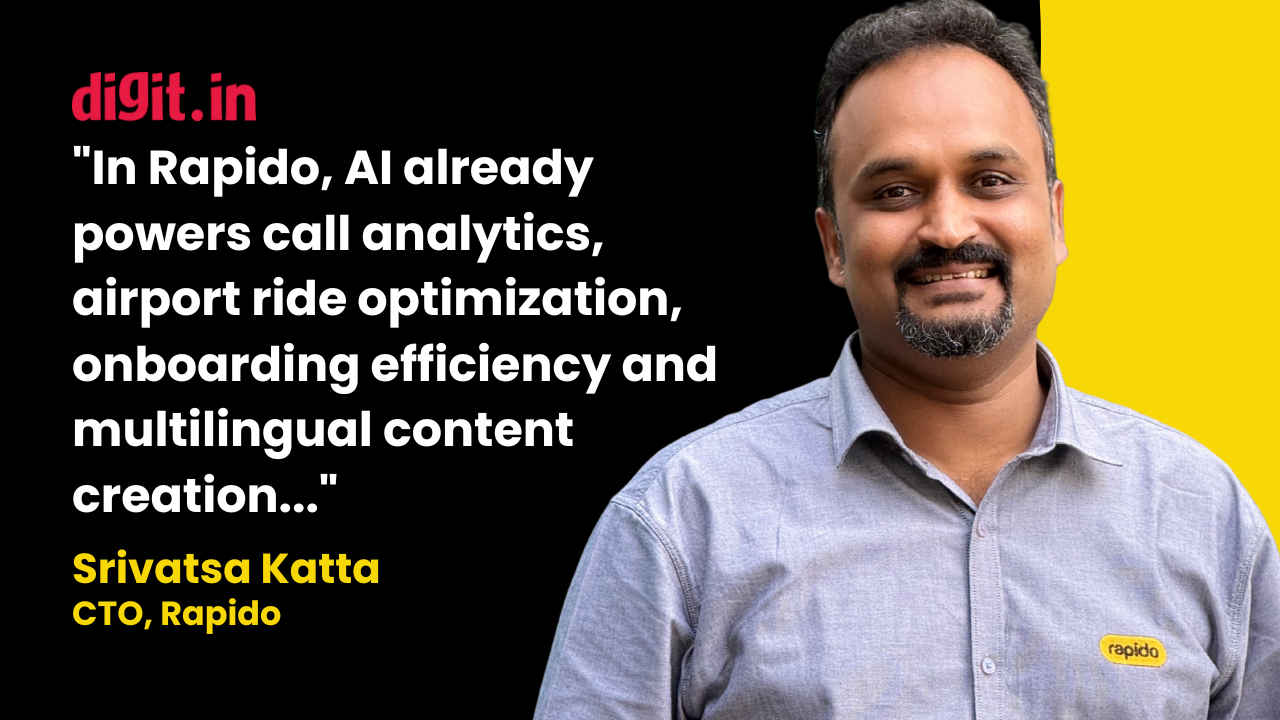

“Rapido’s tech DNA is built on an open-source, platform-first architecture, run by very lean but highly skilled teams shaped by the cost-disciplined world of bike taxis,” Srivatsa Katta, CTO at Rapido, tells me.
 Survey
In my interview spanning across several questions and responses, that sentence carries a certain Indian-startup swagger, and it’s a useful lens to understand Rapido’s quietly expanding ambition in India’s urban mobility maze, where the real-world constraints have a habit of humiliating even the most beautifully architected software.
Competing with Ola and Uber, Rapido began life in the most Indian of mobility categories: bike taxis. Not the shiny, VC-slide version of mobility, but still the most practical kind. The category that forces Rapido’s product team to reckon with potholes and wrong turns. It’s also the kind of business that teaches you, very quickly, that you can’t brute-force scale with headcount and hope, according to Srivatsa, but you scale with systems.
“Our technology vision is to be a full-spectrum mobility platform that can serve every type of urban journey on a single backbone,” says Srivatsa Katta.
“Starting from bike taxis, we built modular, reusable platforms & systems that now power multiple categories and will extend into OTA and multimodal travel,” he says. “This open-source foundation and platform thinking allows us to move fast, stay cost-efficient and respond quickly to new mobility needs as the landscape becomes more competitive.”
Also read: ARAS with AI for two-wheelers: How Luna Systems aims to save lives on Indian roads
It’s a very CTO way of saying that we don’t want to rebuild the engine every time we add a new vehicle type. And in India’s mobility market, where you’re constantly compared to Ola and Uber and increasingly to new entrants who show up with flashy UI and aggressive incentives, the bottomline is that the winners are the ones who can keep the machine reliable while expanding categories, cities, and edge cases.
Which is where AI – used pragmatically – starts to matter.
Operational AI everywhere, even in voice
In 2025, every company claims AI. Rapido’s framing is less “AI as magic” and more as necessary plumbing lines – a multiplier for operational efficiency, decision support, and user experience, without pretending to replace any of the necessary human parts, according to Srivatsa.

“Our focus is on strengthening our platform architecture and scaling our end-to-end mobility vision through expansion into more tier 3 and tier 4 cities alongside urban mobility,” says Katta. “AI will continue to support efficiency in areas like customer support, captain care, airport ride optimization, onboarding automation and multilingual content creation. The broader bet remains open source-heavy, modular platforms that can expand across categories and cities.”
It’s a revealing response which tells us how AI is being deployed inside Rapido where it can shave friction – especially in a country where friction is never just digital. It’s linguistic. It’s infrastructural. It’s behavioural.
Katta is also clear about what AI is not supposed to do: be the final authority in sensitive decisions. “In safety, AI plays a supporting role without making final decisions,” he says. “In sensitive areas like safety and fraud, AI only assists, and human teams make final decisions.” It’s an admission from the Rapido CTO that, yes, you can automate a lot but you shouldn’t automate accountability.
So it’s no surprise that the most tangible example of Rapido’s AI work plays out in voice-based order notifications for captains.
“Riders are on the road when they get orders, and the usual experience has always been to show them the incoming orders and expect them to accept or reject the orders, basis pickup / drop locations and the order amount,” says Katta.
Also read: From Amazon to Restaurants: 5 ways robots are delivering the future
If you’ve ever watched a two-wheeler rider navigate Indian traffic while a phone screen lights up with decisions, you already know where this is going.
“We recently introduced voice-based order notifications, which will read out the incoming order details so that the captain doesn’t have to take their eyes off the road,” he says. “Used AI to create natural multilingual voices so that they can relate to it easily and make a decision.”
It’s the kind of feature that sounds obvious only after someone ships it. It’s also a reminder that UX design in India isn’t always about nicer animations. Sometimes it’s about keeping someone’s eyes on the road.
And the phrase “natural multilingual voices” is doing a lot of work here. India isn’t a monolingual market with one default accent. If Rapido gets that voice right, it’s not just a feature. It’s a new interface layer – one that points toward Katta’s bigger claim about where mobility UX is headed.
“With AI, we are hopeful that the experiences on the app would have a dramatic shift in the next few years, transforming visual experiences to multi-sensory experiences like voice, gestures making it more intuitive and user-friendly,” he says.
The map is not the territory, especially in India
Mobility companies love maps, because it makes the world more computable. India enjoys reminding you that it is not.
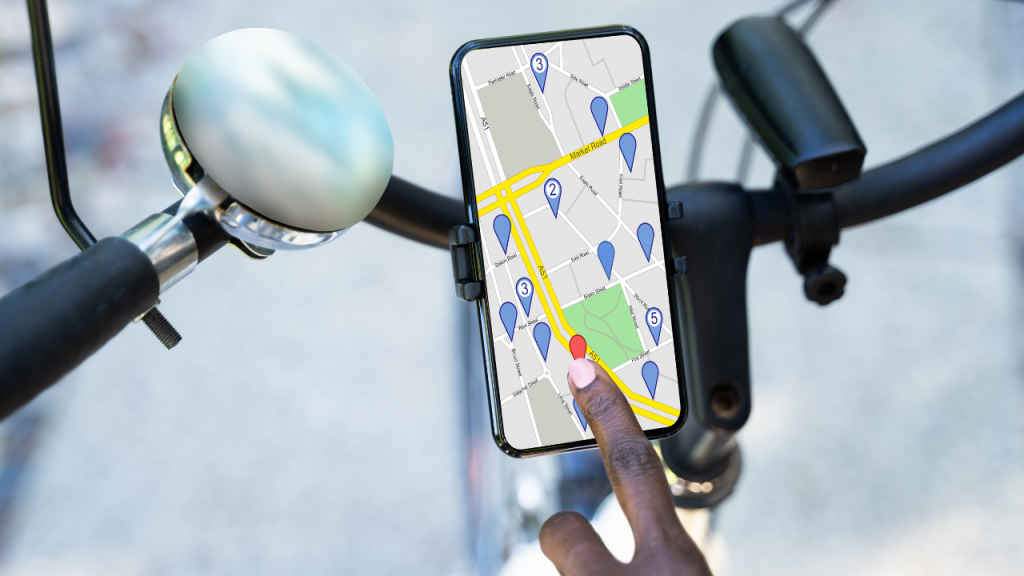
“Maps and routing have been one of the biggest technological challenges in Indian cities,” says Katta. “Roads get blocked for various reasons, and the digital maps are not up to date.”
And then comes the line that every India mobility operator learns, eventually, through pain: “Riders have their own understanding of navigating the city which may or may not align with the optimal routes projected by mapping systems,” admits Srivatsa Katta.
This is where the Western mobility playbook quietly breaks. In India, mapping reality is a moving target. A road is open until it isn’t. A turn exists until someone decides it shouldn’t. “This needs constant evolution based on historical data and many other public sources of routing information,” Katta adds.
If Rapido can harness data – and eventually AI – to reconcile what the map thinks with what humans know, that’s not just better, more accurate ETA, but a serious differentiator over time.
“Our transparent pricing engine uses city, category and historical data to ensure fairness and adhere to the local government guidelines, while policies like the Minimum Support Price secure captain earnings,” says Katta. This means data drives decisions, but guardrails define the game.
And that’s a recurring theme in his responses, use AI and automation to scale, but don’t let them become unaccountable rulers.
“Automation already handles routine decisions in allocation, pricing and internal workflows,” he says. “But in sensitive areas like safety and fraud, AI only assists, and human teams make final decisions. Our approach is to use automation to scale efficiency, not remove human judgement.” That last line deserves to be printed on a wall in more than a few AI centres of excellence.
What’s next for Rapido and India?
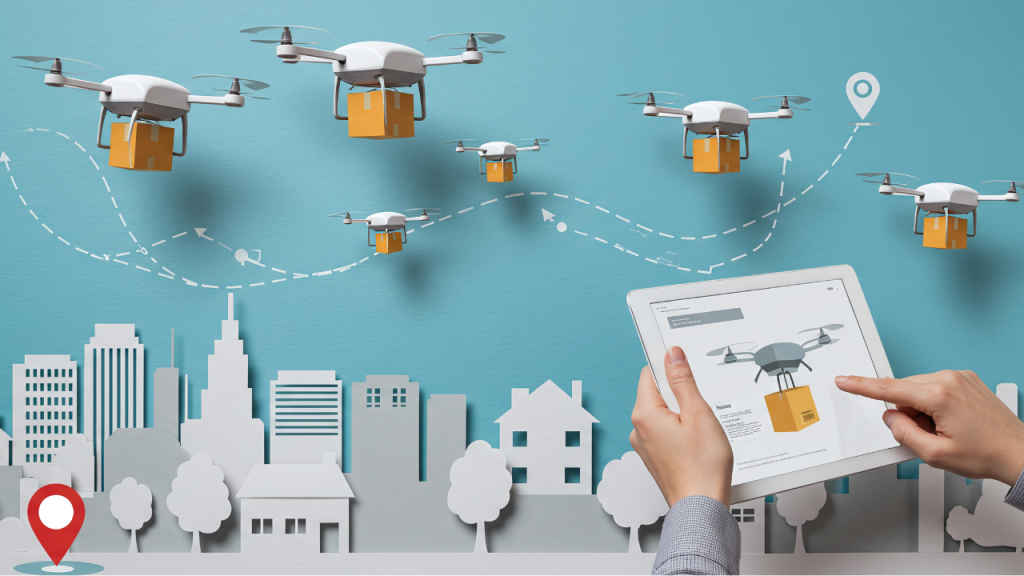
Katta does offer a classic moonshot, with a grin you can almost hear in the phrasing. “Maybe drone deliveries, which is really a moonshot idea,” he says. But then he pivots to something that feels more profound – and more difficult.
“To be really grounded, we believe there is a huge potential to bridge all kinds of mobility needs and simplify the experiences so that people do not have to worry about travel anymore,” he says. “A simple one-click multimodal experience and the AI systems powering the preferred route, mode and time would be a game-changing experience,” believes Rapido’s Srivatsa Katta.
That’s not just a product idea, but a promise to tame India’s daily travel anxiety – the constant mental math of time, cost, comfort, and uncertainty.
When I ask him what global trend Indian mobility startups might be underestimating, Katta doesn’t pick something fashionable like spatial computing or crypto or whatever the internet is yelling about this week. He goes straight for the big one. “Autonomous vehicles and their ability to disrupt the taxi business on Indian roads and infrastructure are a big unknown for Indian mobility startups,” he says.
If autonomy shows up in India in a meaningful way, it won’t arrive as a copy-paste import from California. It’ll be forced to evolve – like everything else here – into something uniquely adapted to Indian conditions.
In the meantime, Rapido is playing a more immediate game: building an open-source-heavy, modular, platform-first mobility backbone that can stretch from metros to tier 4 towns, from screens to voices, from “accept/reject” taps to “multi-sensory experiences like voice, gestures.” Or, as Katta put it right at the start, with the kind of clarity you only get when your product has to survive reality.
Also read: Bharat Taxi launched in Delhi to rival Ola and Uber: Benefits, features and more


