
Pixel 10 Pro Fold Review: Google’s Foldable Finally Grows Up
 Follow Us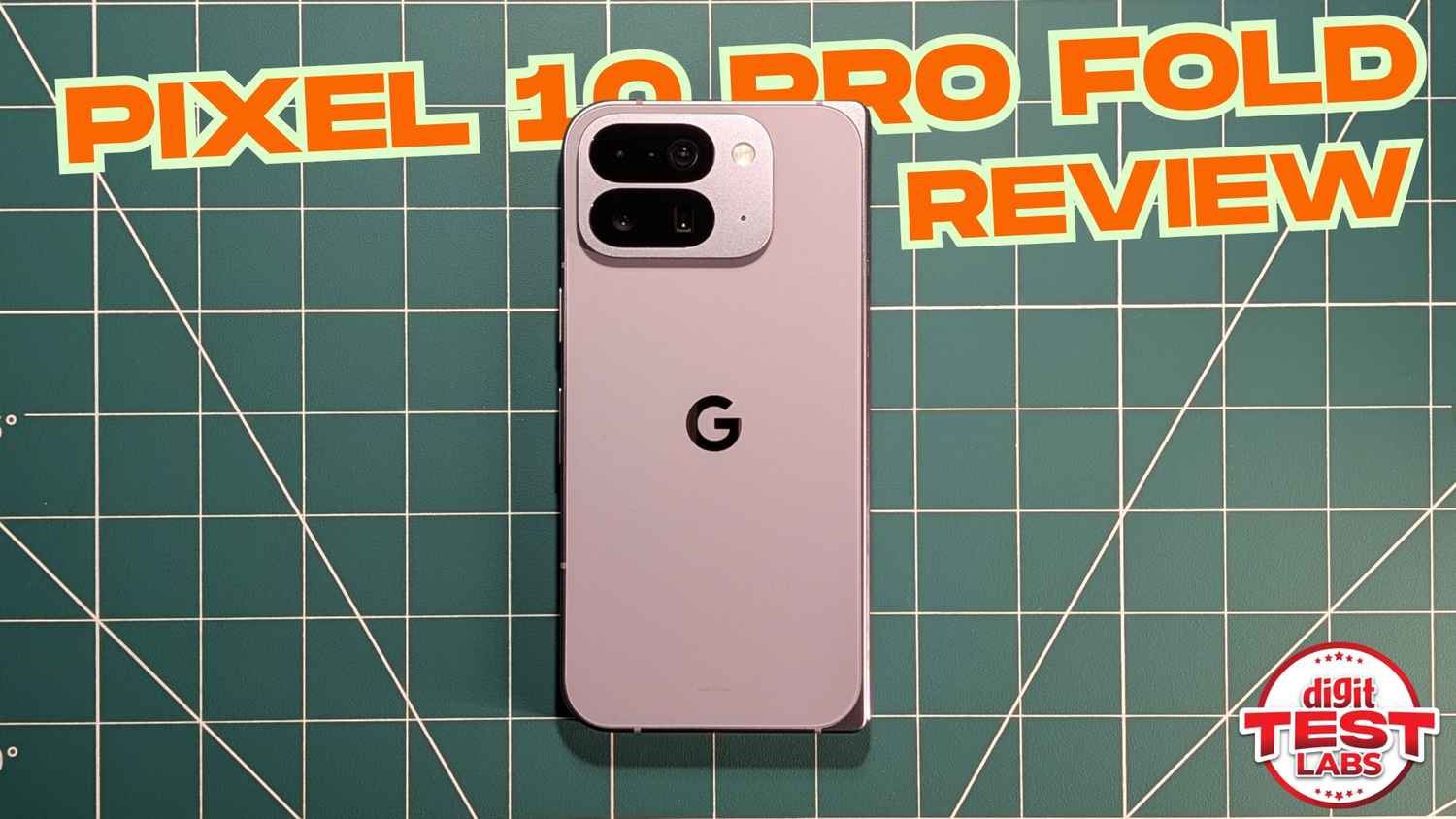

For the past two years, Google’s foldable story has felt like an experiment in progress. It’s fascinating, ambitious, but never fully realised. The first Fold was met with mixed reviews for its narrow cover display and awkward ergonomics. The Pixel 9 Pro Fold from last year was a refinement but still didn’t feel entirely cohesive. This year, the Pixel 10 Pro Fold doesn’t feel like a reinvention but rather a realignment of Google’s foldable strategy.
The Pixel 10 Pro Fold looks very familiar to the 9 Pro Fold, but it’s finally complete. It’s thinner, more durable, with a gearless hinge and backed by a vastly more capable Tensor G5 chip that brings meaningful gains across performance, battery, and intelligence.
But do these upgrades translate into the broader Pixel identity and make this AI-driven foldable with its understated elegance a great choice, or is Google doing patchwork? That’s what we’re here to find out.
Design

The Pixel 10 Pro Fold’s design language doesn’t chase futuristic flamboyance. Instead, it’s quietly exquisite, whether it’s the satin-like texture of the glass back or the polish of its metal hinge. The new gearless hinge feels re-engineered. It’s fluid without the creak, yet firm, and there’s a reassuring tactility to it, as if the mechanism has finally matured past the prototype stage.
What really stands out, though, is the IP68 rating, the first for any Pixel Fold and still rare across the category. Foldables have always been delicate devices, both in perception and reality. This one, with its multi-alloy steel frame and aerospace-grade aluminium cover, feels really robust. It’s still not a phone you’d want to drop, but for once, it feels like a phone you could.

Folded, it’s manageable; unfolded, it’s expansive. The outer display is now 6.4 inches, subtly wider, addressing one of the biggest usability complaints from earlier models. The bezels are thinner, giving it a more contemporary presence without breaking Pixel’s design continuity.

There’s a certain maturity here; it’s not flashy, not trying too hard, just Google doing what it does best.
Display

The inner display has always been the heart of any foldable, and Google’s new Super Actua Flex Display makes a strong case for being among the best. The outer 6.4-inch Actua panel reaches an impressive 2090 nits in manual mode and peaks at 2900 nits under auto brightness, while the inner 8-inch Super Actua Flex display manages 2050 nits manually and up to 2700 nits automatically.

In practical terms, this means you can read, edit, or scroll even under direct sunlight, a scenario where last year’s Fold struggled visibly. The screen has excellent HDR headroom and punchy visual impact without over-saturation.
The 1–120Hz adaptive refresh keeps everything feeling smooth, but it’s the colour calibration that stands out. In Calman testing, the Natural colour profile covered 99.2% of the sRGB gamut with an average DeltaE of just 1.2 and a maximum DeltaE of 3.3 that place it squarely in professional-grade territory. The RGB balance chart revealed near-perfect tracking across luminance levels, and the panel maintained consistent white balance without drifting toward blue or green even at higher brightness levels.
The inner screen also benefits from a noticeable reduction in reflectivity, and while the crease remains visible, it’s less intrusive. Taken together, this is a foldable display setup that finally feels uncompromised: bright, colour-accurate, and comfortable to use in both orientations. Google has effectively closed the gap between its foldable and its Pro flagship panels, giving the Pixel 10 Pro Fold one of the most refined visual experiences you can get on a foldable device today.
Cameras

Google’s camera legacy has always hinged on computational mastery rather than raw sensor advantage, and the Pixel 10 Pro Fold continues that tradition, but with more discipline. The triple-camera setup combines a 48MP wide, 10.5MP ultrawide with macro focus and a 10.8MP telephoto with 5x optical zoom (and 20x Super Res).







Daylight shots are textbook Pixel, rich yet restrained colours, heaps of detail, and that slightly moody dynamic range Google loves. Low-light performance continues to be excellent, with HDR+ processing, and Night Sight is still the best in the business. I shot under neon lights, and it produced natural skin tones instead of radioactive red faces, thanks to Real Tone doing its thing.
The ultrawide is wide enough to make architecture and landscapes dramatic. It doubles up as a macro which allows you to move in close and the phone switched the lenses automatically. Shots like the pollen grains on a hibiscus flower and cheese strands on pasta look crisp and clear.
The 5x telephoto lens is crisp, sharp, and thanks to AI-driven Pro Res Zoom, even 10x shots are shockingly usable. Beyond zooming, it’s also a great portrait tool for compressing backgrounds beautifully and producing DSLR-like bokeh. Portrait mode itself has become surgical, cutting hair and glasses with precision.


What’s remarkable is how much of the Pixel 10 Pro XL’s imaging DNA translates seamlessly into the Fold. There’s a new AI-powered trick up its sleeve: Low Light Boost for Instagram, which automatically enhances story videos shot in dim environments and could be genuinely useful for creators. The new Camera Coach guides your framing without being patronising. Add Me remains one of those small but genuinely useful tools that make sense only on a foldable, now aided by Dual Screen Preview so everyone in the frame can see themselves while you compose.
Google’s C2PA Content Credentials integration adds a quiet but important layer of authenticity, allowing verifiable metadata for photos.
The overall imaging package doesn’t feel radically new, but it feels deeply refined. No matter which lens you choose, you can point, shoot, and trust the result.
Performance & Software

Tensor chips have always been a double-edged sword, brilliant at AI, inconsistent at efficiency. The Tensor G5 changes that narrative. Built on a new architecture with a better thermal envelope, it delivers performance that’s finally competitive but still trails behind the raw performance metrics of the Qualcomm’s or Mediatek’s flagships.
Compared to last year’s Pixel 9 Pro Fold, the gains are significant:
- AnTuTu: 1,329,051 vs 1,089,915
- Geekbench Single / Multi: 2252 / 6068 vs 1782 / 3793
- 3DMark Wildlife Extreme: 3182 vs 2559
- PCMark: 15,779 vs 13,275
The CPU throttling test shows sustained 91% performance which is a huge leap over the previous generation. Apps launch faster, multitasking feels immediate, and sustained workloads like photo editing or using dual-screen productivity apps no longer cause thermal discomfort. Even under 3DMark’s stress runs, surface temperatures stay manageable with cooling improvements and refined SoC design.
But the real leap lies in the experience. Magic Cue is an anticipatory assistant, surfacing relevant info during calls or chats without being intrusive. And Gemini let’s you point the camera at an object, ask it a question or share your screen for context-based help. Combined with Pixel Journal, Pixel Studio (now powered by Imagen 4), and Smart Edit in Gboard, the Fold becomes a personal workspace that feels integrated rather than feature-bloated.
Seven years of OS and security updates further anchor it in longevity, something no other foldable promises today.
Battery Life
The Pixel 10 Pro Fold packs a 5015mAh battery, modest on paper, yet effective in practice. Thanks to Tensor G5’s improved efficiency and better display power management, the phone clocked 15 hours and 49 minutes in PCMark’s Battery Life test, which is a huge generational leap over the Pixel 9 Pro Fold.
Real-world endurance easily stretches beyond a full day of mixed use, even with the inner display in regular rotation. Foldables traditionally suffer from split-use inefficiency, but this one feels more consistent, less of that sudden drop-off when switching from outer to inner screens.
Charging remains moderate rather than groundbreaking: 0–100% in 1 hour 30 minutes, with 70% achieved in 46 minutes. The addition of 15W Qi2 Pixelsnap wireless charging, though, makes everyday top-ups feel more fluid, especially with the new magnetic stand.
Verdict

The Pixel 10 Pro Fold isn’t revolutionary, but it takes the scattered ambition of Google’s earlier foldables and focuses it into a cohesive, confident device that finally feels premium in execution, not just intent.
It’s a foldable that no longer needs to justify its existence. It just works beautifully. The displays are brighter, the hinge sturdier, the cameras more mature, and the Tensor G5 finally lives up to its name with efficiency gains and improved endurance.
Sure, it’s still expensive, and its crease hasn’t vanished. The design remains more understated than flashy, and Google’s approach to charging still lags behind the fastest in the business. But those aren’t dealbreakers, they’re trade-offs made in the pursuit of balance.
At its core, the Pixel 10 Pro Fold is about refinement over reinvention. It’s Google’s foldable vision, finally polished, a great phone that just happens to fold.
Google Pixel 10 Pro Fold Key Specs, Price and Launch Date
| Release Date: | 21 Aug, 2025 |
| Market Status: | Launched |


