
Japanese Robotics Developers Showcase Innovations Amidst Chinese Competition
 Follow Us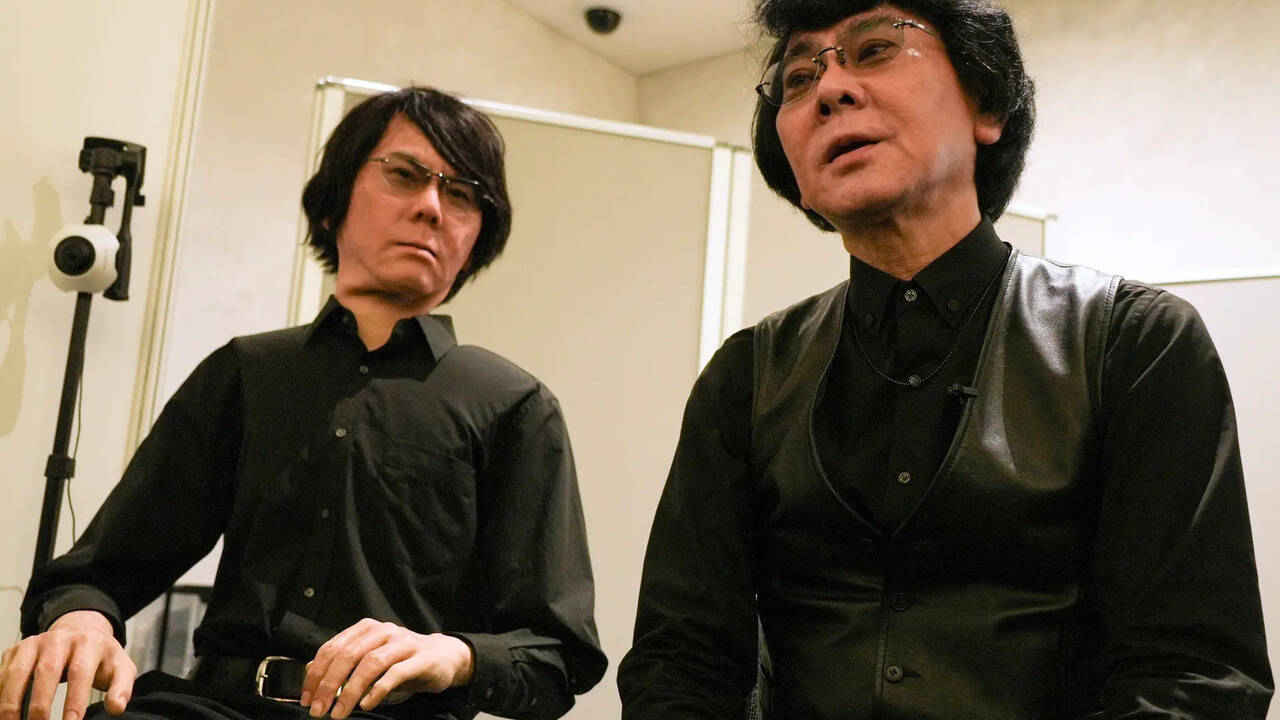

TOKYO (AP) — The Humanoids Summit Tokyo opened Thursday, featuring advanced robotic technologies including mechanical hands capable of threading needles, childlike dancing robots, and adult-sized delivery robots.
 Survey
Among the numerous participating companies, such as Boston Dynamics and Toyota Motor Corp., Chinese firms emerged as prominent competitors, highlighting a shift in the robotics landscape.
Chinese Innovations Challenge Japanese Robotics
Chinese companies like Booster Robotics and LimX Dynamics have refined technologies initially developed in Japan and the U.S., focusing on affordable mass production. This trend mirrors previous shifts in Japanese industries such as consumer electronics and automotive manufacturing, where Japan once led but failed to deliver significant commercial humanoid solutions.
Tim Hornyak, author of “Loving the Machine: The Art and Science of Japanese Robots,” described this phenomenon as the “Galapagos syndrome,” which refers to how innovative Japanese products evolve in isolation and struggle to gain traction in the global market.
Hornyak expressed concern, stating, “I really hope that Japan can come up with a Ford Model T-version of humanoid robots. But I think China has already stolen their lunch. It’s a bit too little too late.”
For instance, the Mini Pi Plus robot from High Torque in China, while entertaining, lacks practical applications in industrial settings, yet it is priced competitively starting at $5,500.
Japanese Robotics Address Labor Shortages
GMO, a Tokyo-based AI and robotics firm, showcased a humanoid equipped with camera eyes designed to assist with cargo handling at Japan Airlines. The goal is to create robots that can perform tasks interchangeably with human workers, addressing Japan’s growing labor shortage.
Unitree, a Chinese company, provides the underlying robotics technology, including a four-legged dog-like robot intended for exploration.
Experts highlight Japan’s strong manufacturing capabilities and a public that is receptive to robotics as key advantages in developing these technologies. A recent Pew survey indicated that only 28% of Japanese respondents expressed anxiety about AI, compared to 50% in the U.S.
Japanese Robotics Maintain Quality Standards
Honda Motor Co., known for its pioneering humanoid robot Asimo, demonstrated a motorized robotic hand capable of threading needles and manipulating small bolts. Keisuke Tsuta, assistant chief engineer at Honda, noted that the durability and power of their technology set it apart from competitors.
Despite the competitive landscape, Professor Hiroshi Ishiguro from Osaka University, a veteran in humanoid robotics, remains optimistic about Japan’s potential. He stated, “What’s significant is that Japan has a culture that’s receptive to robotics. If we’re going to really start using robots in society, Japan is the ideal place.”
His robotic counterpart echoed his sentiment, remarking, “I think robots will coexist with people. Robots are the mirror of human beings.”
In a more humorous vein, Ishiguro remarked, “No one is interested in me. All everyone cares about is my robot,” emphasizing the public’s fascination with robotic advancements.


