
Vivo V80 vs OnePlus 15R vs Motorola Signature: From price to specs everything compared
 Follow Us
Vivo V80, OnePlus 15R and Motorola Signature offer premium features.
OnePlus 15R and Motorola Signature lead in performance.
Vivo V80 packs a large battery and versatile cameras.
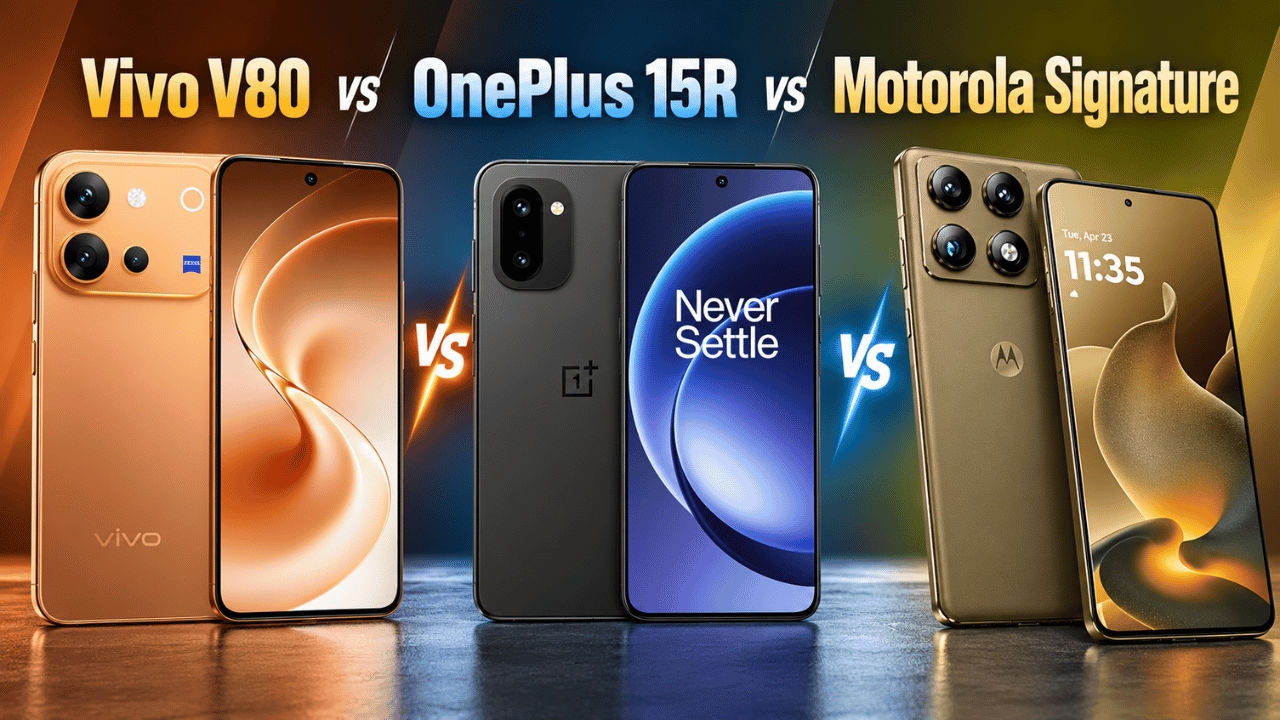

Vivo has recently expanded its V series in the Indian market with the launch of the Vivo V80. With its debut, the device has set up an interesting fight in the premium phone segment as it becomes a direct competitor to the OnePlus 15R and Motorola Signature. While Vivo V80, OnePlus 15R and Motorola Signature offer good cameras, flagship-level performance and decent battery life, choosing the one could still depend on your use case and the overall specs of the device. Here is a spec-based comparison of the Vivo V80, OnePlus 15R and Motorola Signature to help you choose better.
 Survey
Vivo V80 vs OnePlus 15R vs Motorola Signature: Display
The Vivo V80 comes with a 6.59-inch AMOLED display that supports a refresh rate of up to 144Hz. The company also claims that the device can reach a local peak brightness of 5,000 nits, ensuring that the content on the device is visible outdoors.
The OnePlus 15R, on the other hand, comes with a 6.83-inch screen with a 165Hz adaptive refresh rate. The makers have also installed Corning Gorilla Glass 7i to keep the screen protected against scratches.
Motorola Signature features a 6.8-inch LTPO AMOLED panel and is paired with up to 165Hz. The display also supports Dolby Vision, HDR10+ and up to 6,200 nits of peak brightness. Moreover, the screen is also protected with Gorilla Glass Victus 2.
Also read: Oppo Find X10 Pro Max India launch soon: Expected price, specifications and what we know so far
Vivo V80 vs OnePlus 15R vs Motorola Signature: Performance
The Vivo V80 draws its power from Qualcomm’s Snapdragon 7 Gen 4 processor. Buyers can also choose from 8GB of LPDDR4X RAM and up to 512GB of UFS 3.1 internal storage options. Out of the box, the device runs on OriginOS 7, a skin based on Android 17.
However, the OnePlus 15R comes with Qualcomm’s Snapdragon 8 Gen 5 processor paired with 12GB LPDDR5X Ultra RAM and up to 512GB UFS 4.1 storage options. The handset is shipped with Android 16-based OxygenOS 16.
Motorola has equipped the Signature model with a Snapdragon 8 Gen 5 processor. It also comes with up to 16GB of LPDDR5X RAM and up to 1TB of internal storage options. The smartphone runs Android 16 with Hello UI.
Vivo V80 vs OnePlus 15R vs Motorola Signature: Battery
Talking about battery, the Vivo V80 packs a 7,200mAh battery and supports 90W charging. The OnePlus 15R goes a step further with a 7,400mAh battery. However, the device comes with a slightly lower charging speed at 80W, and the Motorola Signature uses a smaller 5,200mAh silicon-carbon battery, which is supported by 90W wired charging and 50W wireless charging. Not only that, it also supports reverse wireless and wired charging.
Vivo V80 vs OnePlus 15R vs Motorola Signature: Camera
The Vivo V80 comes equipped with a 50MP main camera with OIS, a 50MP telephoto camera and an 8MP ultra-wide camera. For selfies and video calls, it sports a 50MP front camera.
In comparison, OnePlus 15R sports a 50MP Sony IMX906 main camera with OIS, which is supported by an 8MP ultrawide sensor. At the front, the device also comes with a 32MP sensor that can help in video calls and selfies.
Motorola Signature offers three 50MP rear cameras, including a main sensor with OIS, a 122-degree ultra-wide camera and a 3x optical zoom periscope telephoto camera. It also has a 50MP front camera and supports 8K video recording.
Vivo V80 vs OnePlus 15R vs Motorola Signature: Price
Vivo V80 costs Rs 62,999 in the Indian market, while the OnePlus 15R currently sells for Rs 59,999 after multiple price hikes on its launch price, and Motorola Signature landed in the Indian market for Rs 59,999.


