
Google Pixel 11 Review: The flagship that bets on feeling useful
 Follow Us

Google Pixel phones have always stood apart from the usual flagship race. Instead of chasing the fastest chip or the biggest camera sensor, Google built the Pixel around computational photography, clean Android, and AI-powered features like Night Sight and Magic Eraser. Over the years, each generation has refined that formula rather than reinventing it. The Pixel 11 continues that approach, but this time Gemini takes centre stage, becoming a much deeper part of the everyday experience. The big question is whether those smarter AI features are enough to justify the Rs 89,999 price tag. After using it for nearly three weeks, here’s what I found.
Google Pixel 11 Design
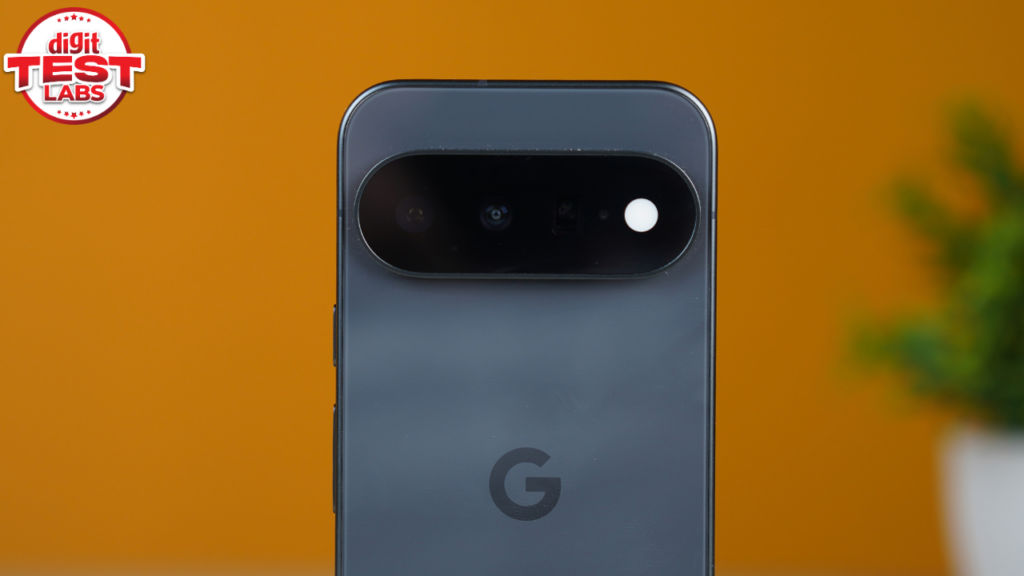
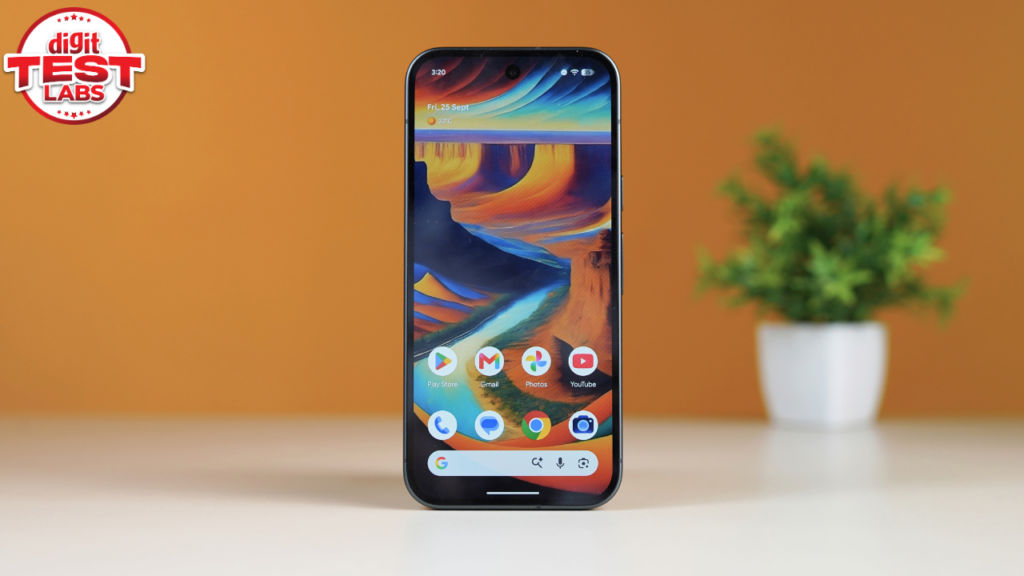
Google has not exactly reinvented the Pixel 11’s design, and that’s probably the point. If you’re coming from a Pixel 10, you will have to look twice to spot what’s changed. The formula remains largely the same: glass on the front and back, a flat aluminium frame and that familiar pill-shaped camera bar that has now become a Pixel signature.
There are a few subtle changes: the Pixel 11’s camera bar is 40 pct thinner this time around, and Google has ditched the metallic camera frame for an all-glass finish over the camera lenses. It makes the module look a little cleaner. From a distance, it still very much looks like a Pixel.
At 197 grams, the Pixel 11 is lighter than its predecessor, and that difference is noticeable when you use it for hours at a stretch. The compact form factor also makes it comfortable to hold. Personally, this is the kind of size I prefer, and the Pixel 11 gets the ergonomics right.
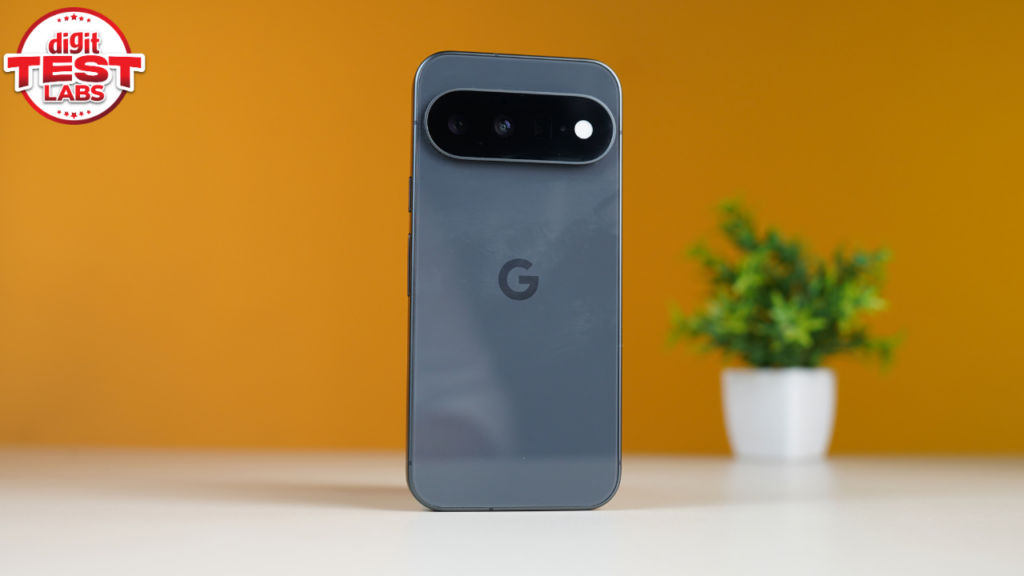
Durability also looks solid. Google has used Gorilla Glass Victus 2 on both the front and rear, while the phone carries an IP68 rating for protection against dust and water. So, at least on paper, the Pixel 11 should have no trouble dealing with the usual knocks and accidental splashes that come with everyday use.
The glossy rear panel, however, is a different story. It looks sleek when it’s clean, but it quickly turns into a fingerprint magnet. It can also get quite slippery without a case, so I’d recommend using one unless you’re particularly confident about your grip. The camera module has another minor annoyance: dust tends to collect around it, and getting into those little gaps for cleaning is not always as easy as it should be.
Google Pixel 11 Display
The Pixel 11 comes with a 6.3-inch OLED display, what Google calls its Actua display. It’s an FHD+ resolution panel with an adaptive refresh rate at 120Hz. Google claims a peak brightness of up to 3,000 nits, and our own lux meter at Digit Test Labs measured higher, 3220 nits of peak brightness. Outdoor visibility is excellent. I never found myself squinting my eyes to read the screen in direct sunlight during testing.
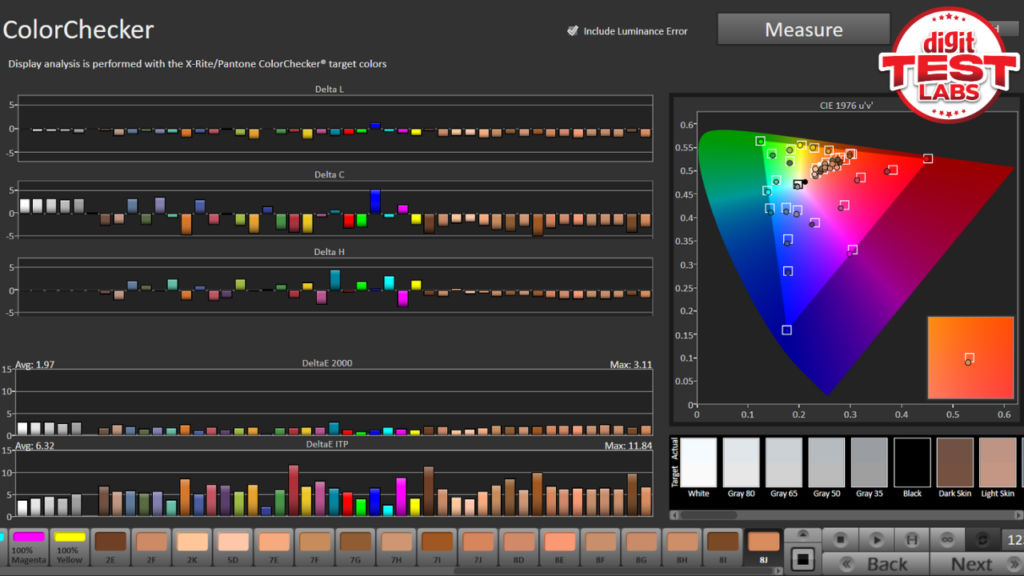
We ran the display tests through Calman and Colour Gamut at our Digit Test Labs. In the Calman test, the panel returned an average Delta E of 1.97, which basically means the colours look almost exactly as they should. In fact, anything below 2 is so accurate that most people won’t notice any difference from real-life colours. In simple terms, the Pixel 11 focuses on showing natural and true-to-life colours instead of making everything look overly bright or saturated.
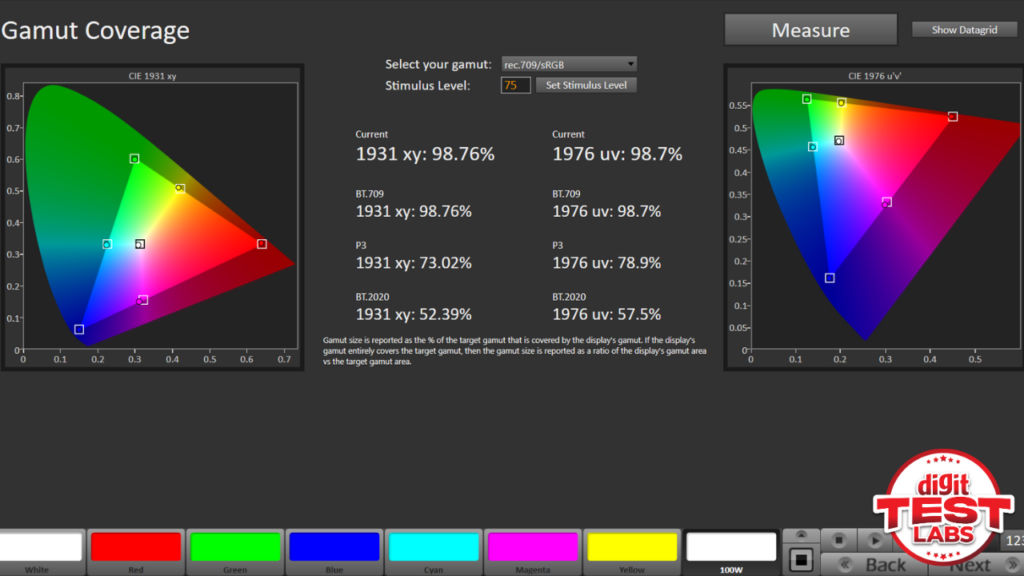
In the Colour Gamut test, the panel measured 98.7%, which is also great. In simple terms, the screen can show almost all the colours used in everyday content like photos, social media, YouTube videos, and most streaming apps. And the good part? The Pixel 11 supports HDR playback and comes with Widevine L1 certification, so you can stream Netflix and other supported apps in Full HD with HDR.
In daily use, I mostly watched content on Netflix and YouTube. I watched a couple of podcasts and live streams of gaming events on YouTube while going back from the office, and that’s where I really appreciated the Pixel 11’s compact size. If you would ask me, the colours are vibrant and details are crisp.
However, the bezels are there and will bother you in almost everything you do on your phone. Anyway, stereo speakers are good, haptics are cool and the overall experience is premium.
Google Pixel 11 Performance
Under the hood, the Google Pixel 11 comes with Google’s new Tensor G6, built on a 3nm process. Interestingly, it comes with an unusual seven cores compared to the eight core architecture of the Tensor G5 chipset. However, each core is claimed to run at a higher clock speed, up to 4.11Ghz. It looks like Google is leaning towards more AI-specific gains rather than raw performance.
In day-to-day use, this phone glides through everything. Apps open quickly, animations stay smooth, and switching between multiple apps never feels jittery. Camera processing is also faster, especially when capturing multiple shots in a row.
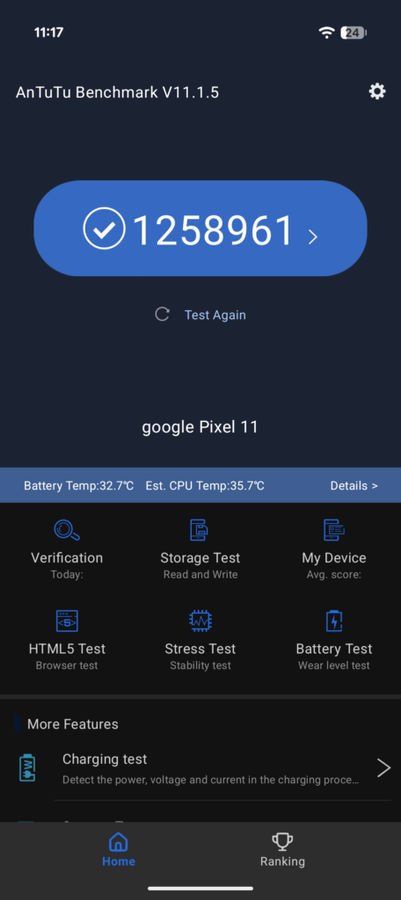
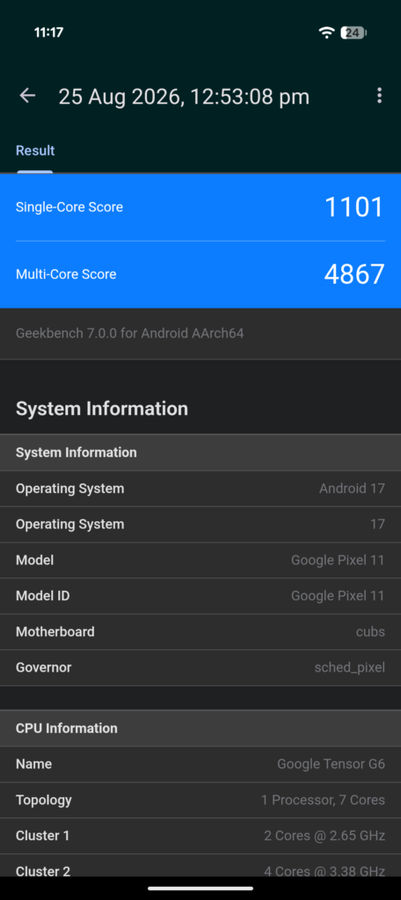
The benchmark results gave us a pretty clear picture of the Pixel 11’s performance. It scored 12,58,961 on Antutu, while Geekbench returned 1,101 in single-core and 4867 in multi-core. These are decent numbers, but they’re still behind flagship chips like the latest Snapdragon 8 series and Dimensity 9500 series processors.
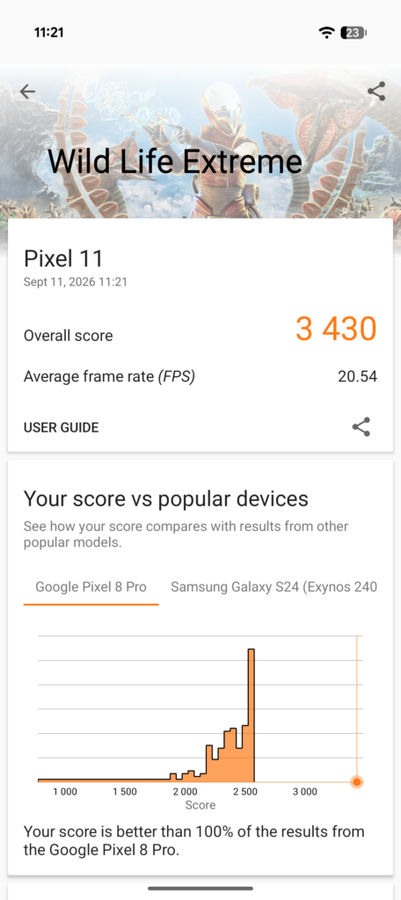
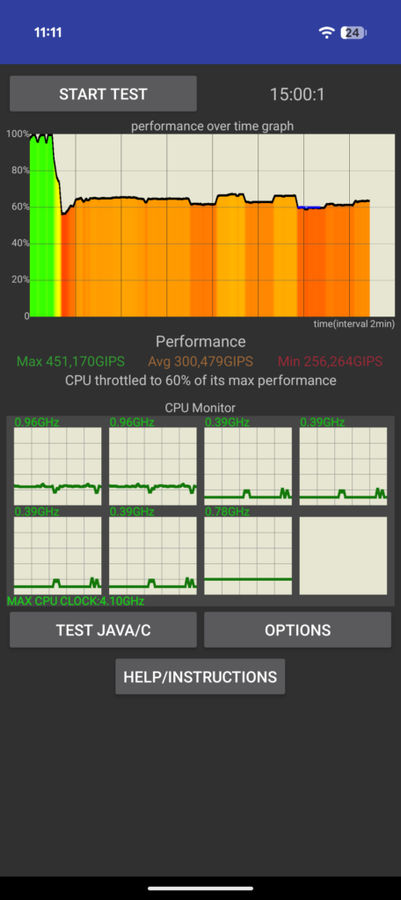
In the 3DMark Wild Life Extreme test, the Pixel 11 scored 3,430, which shows it has enough graphics power for everyday gaming and heavy tasks. Our CPU throttling test showed the chip dropped right after the test started, the graph stayed mostly orange, and the CPU throttled to 60 percent of its peak.
Gaming-wise, it’s good enough for casual players. BGMI and Call of Duty: Mobile run comfortably at 90 FPS. However, if you play for a long time, you’ll start seeing frame drops up to 10-12 FPS and stutters, and the phone also gets noticeably warm during extended gaming sessions.
Google Pixel 11 Cameras
The Pixel 11 has a triple camera setup with a 48MP main camera at f/1.7 with OIS, a 13MP ultrawide sensor at f/2.2, and a 10.8MP telephoto lens with 5x optical zoom, with Google’s Super Zoom pushing that up to 30x digitally for photos. On the front, there’s a 10.5MP selfie camera with autofocus.
My colleague took this device on his trip to Kerala, where he took a bunch of camera samples. Looking at them, I can say that the main camera is easily the highlight here. In daylight, photos come out with great contrast, balanced exposure and impressive dynamic range, so bright skies and darker areas are both captured well. Colours look vibrant without feeling overly edited, and there’s plenty of detail in the shadows.





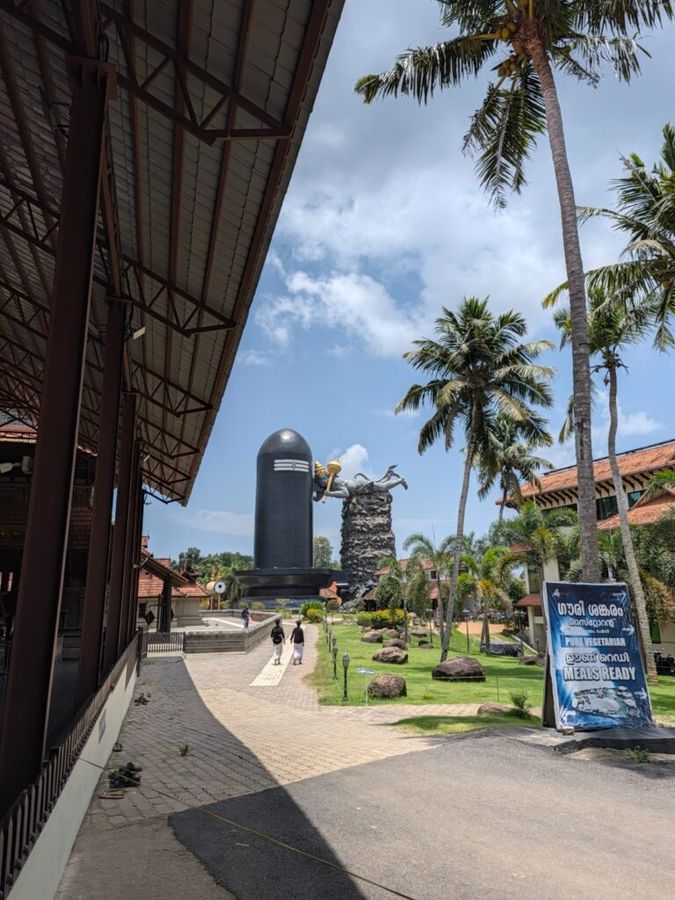






In this sunset picture, you can see how well it handled the sun and the exposure. The bigger main sensor also makes a difference at night. In low light, photos come cleaner, brighter and more detailed, even in situations where many other phones in this price range start showing noise or losing detail.



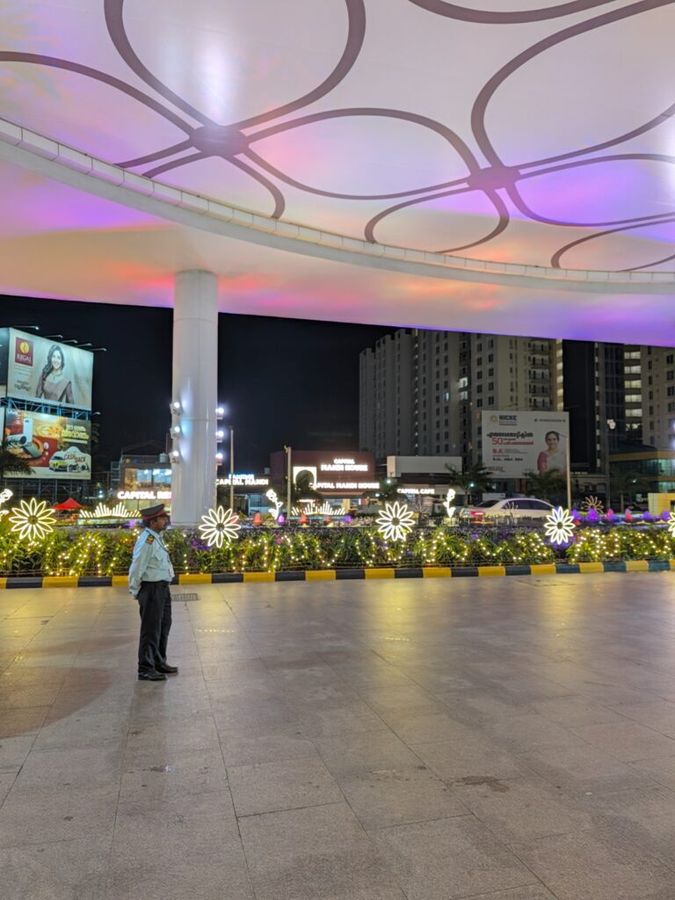


The ultrawide camera is another strong point, however, it is the same as last year. It’s one of the better ultrawide cameras you’ll find at this price, and colour consistency stays with the main camera. So if you switch between the two lenses while shooting, you will not notice much of a difference.

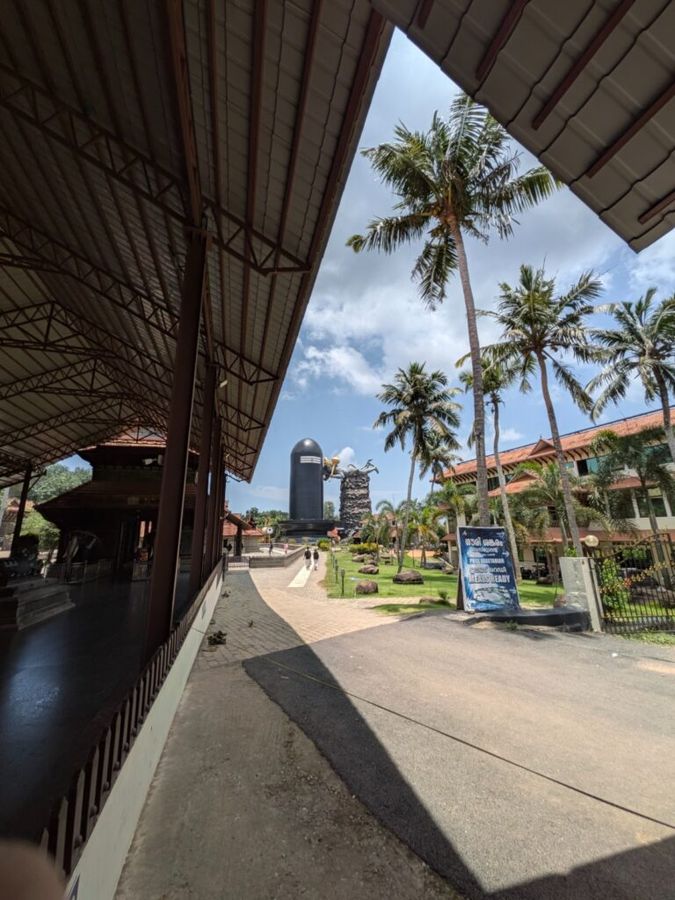


The telephoto camera is the same as last year, a 10.8MP sensor with 5x dedicated zoom. This 5x optical zoom gives the Pixel 11 a real advantage over phones like the iPhone 17, which doesn’t have any telephoto lens.
Images from the telephoto lens come out sharp and good-looking, with a natural-looking bokeh effect. Most images come out social-media-ready. The edge detection is also great, skin tones lean towards a softer look and it adds a very slight reddish tint to the face.










Video recording goes up to 4K at 60fps on both the main and selfie cameras. The output from both the lenses is great, and videos come out stabilised. While recording, you can zoom up to 20x, unlike 30x while taking stills.
Camera Looks is the new feature they added this year. You get three default looks: Natural, Vanilla and Shadows, along with six more creative styles, including Digi, Black Tie, Minimal, Editorial, Classic, and Velvet. Each Camera Look is fully customisable.







The feature I kept using the most was Magic Capture. Instead of forcing you to choose between taking a photo or recording a video, you can simply hold the shutter button and the phone does both. It records the video while automatically pulling out the best still frames.
Creator Suite is also one of the useful features for those who make content regularly. It automatically organises your clips into a dedicated folder. It also includes a built-in teleprompter for talking to the camera, and it even has speech enhancement to reduce background noise in your recordings.
Google Pixel 11 Software and AI
The Google Pixel 11 comes with Android 17 out of the box, and Google is promising updates all the way till August 2033, i.e., 7 years of Android updates and 7 years of Security patches.
Another thing that is worth talking about is Gemini Integration. Instead of feeling like a separate app, it’s built right into the phone. It can do things like show you flight details when you need them, suggest a restaurant from Google Maps, or remind you about something from a recent message.
Rambler, Google’s upgraded voice typing tool built into the keyboard. You can speak normally, with pauses and ‘uh, ah’, and it’ll clean everything up into a proper sentence. The only catch is that you won’t see the words appear while you’re talking. The full text only shows up once you stop speaking.
Google Pixel 11 Battery
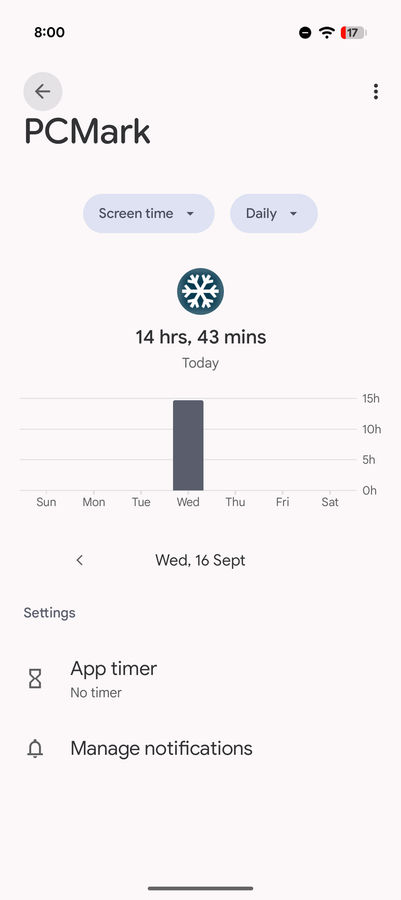
Google packs a 4,985mAh battery into the Pixel 11, almost similar to what you get with the Pixel 10. In our PCMark Work 3.1 Battery Test at Digit Test Labs, the Pixel 11 returned 14 hours and 43 minutes of screen-on time. That’s a solid result for a battery this size. It is comfortably enough for a full day of moderate to heavy use, including streaming, messaging, social media, calls, and casual gaming. That said, it doesn’t match the level of rival phones with bigger batteries that can stretch into a second day without any hiccups.
In terms of charging, the Pixel 11 supports 30W wired charging, and it takes around 83 minutes to charge from 0 to 100%. Wireless charging got a bigger upgrade this year. The phone now supports 25W Qi2 wireless charging, along with Google’s new PixelSnap magnetic system.
Verdict
The Pixel 11 is less about a dramatic hardware upgrade and more about refining Google’s idea of what a modern smartphone should be. The familiar design, compact 197-gram body and excellent 6.3-inch display make it comfortable to use, while the main camera remains the phone’s biggest strength. Images have plenty of detail, strong dynamic range and natural-looking colours, and the 5x telephoto adds useful versatility.
The bigger change is happening in software. Gemini is deeply integrated into the Pixel 11, with features such as proactive suggestions, Magic Capture, Creator Suite and Rambler showing where Google sees the future of smartphones. Some of these tools can genuinely save time, but their usefulness depends heavily on how often you actually use AI features.

But, there are compromises. The Tensor G6 delivers smooth everyday performance, but benchmark results and throttling show that it isn’t competing with the fastest flagship processors. Gaming is decent for shorter sessions but becomes less consistent during prolonged workloads. Charging is another weak spot, with 30W wired charging taking more than 80 minutes for a full charge.
At Rs 89,999, the Pixel 11 isn’t trying to win the specification race. It offers a strong camera system, excellent display, compact design, long-term software support and an increasingly AI-focused experience. Whether that combination justifies the price ultimately depends on what your requirements are and if you prefer Google’s software and AI features over raw performance and faster charging.
Google Pixel 11 Key Specs, Price and Launch Date
| Release Date: | 12 Aug, 2026 |
| Market Status: | Launched |


