
Type toddler-like gibberish on Blinkit and get chocolates? Viral post sparks concerns over algorithm
 Follow Us
A viral post claimed Blinkit showed chocolates after a random search, sparking online discussion.
Many users believe the results were caused by Blinkit's search system, not because it detected a child using the phone.
Social media users had mixed reactions, with some finding it strange and others calling it a simple search feature.
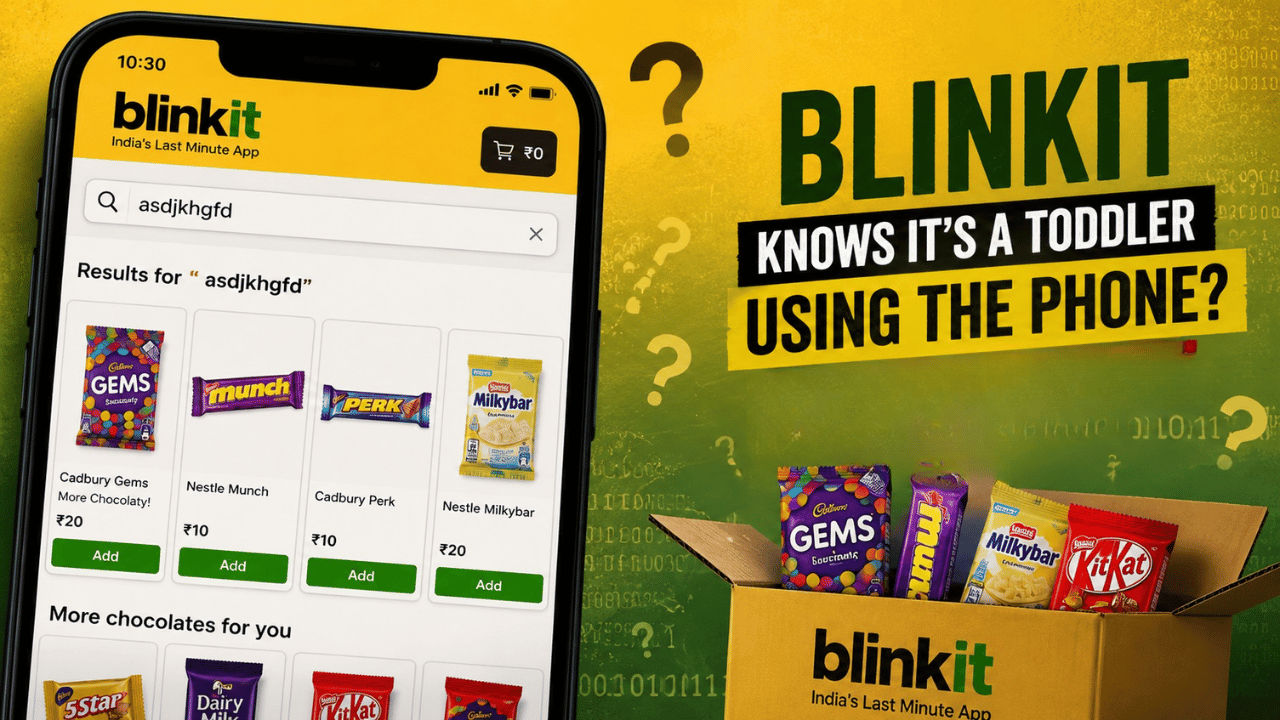

Blinkit is under the spotlight after users noticed something unusual in its search function. What began as a parent’s attempt to keep chocolates away from a toddler quickly turned into an online debate about algorithms, user behaviour, and app design. The post suggested that Blinkit somehow knew a child was using the phone after a random string of letters returned a page full of chocolates and candies. The claim caught the attention of thousands of users, many of whom rushed to test the feature themselves. While some found the results unsettling, others believe the explanation may be far less dramatic than it first appeared. Here’s everything that happened:
 Survey
Blinkit controversy
The discussion started when X user Prem Soni shared a screenshot of Blinkit’s search page. According to Soni, he was trying to convince his toddler that chocolates were unavailable on the platform. To do that, he entered random gibberish into the search bar, expecting no results.
Blinkit knows when your toddler has your phone, and it’s lowkey terrifying.
— Prem Soni (@ValueWithPrem) June 10, 2026
I was trying to trick my toddler that chocolates were out of stock, so I typed gibberish (the way a toddler would) into the search.
Look at the exact products the app served up as a fallback. pic.twitter.com/MubKhaxkNm
Instead, the app displayed popular chocolate products, including Gems, Perk, Munch, Milkybar and other sweets. Sharing the screenshot, Soni wrote that Blinkit appeared to know when a toddler had access to a phone, calling the experience ‘low-key terrifying’.
Also read: Hackers say they breached Oracle PeopleSoft systems used by more than 100 firms
What could be the possible reason
As more users tested the search feature, an alternative explanation began to emerge. Several people noticed that the results seemed linked to the first letter entered rather than any attempt to identify a child user.
One user pointed out that chocolates often appeared when the gibberish started with the letter ‘c’. Similarly, searches beginning with ‘g’ frequently returned Gems. This suggests Blinkit’s search system may be relying on letter-based matching, autocomplete suggestions, or popular product recommendations when it cannot find an exact match.
If the theory is to be trusted, then the behaviour could simply be a search fallback mechanism rather than Blinkit knowing that a toddler was using the smartphone.
Also read: Former xAI engineer says he was fired after warning about Grok risks, files lawsuit
Social media response
As the post went viral, many people went to the comments section to share their opinions. One user tried the same trend on other quick-commerce apps, including Zepto, and joked, ‘Zepto thinks I’m a grandma.’ Others experimented with different inputs, such as actual product names typed like a toddler would write them or random words split into gibberish.
The reactions about the feature were mixed, as some found it creepy and wondered if it was a tactic to influence people to buy more products. While others felt the results were being misunderstood, saying the app was simply showing products based on matching parts of the search terms.


