
OpenAI starts testing ads in ChatGPT, says AI responses won’t be affected
 Follow Us
OpenAI has started testing advertisements in ChatGPT in the US.
The test applies only to logged-in adult users on the Free and Go plans.
According to OpenAI, ads won't change or influence ChatGPT’s answers in any way.
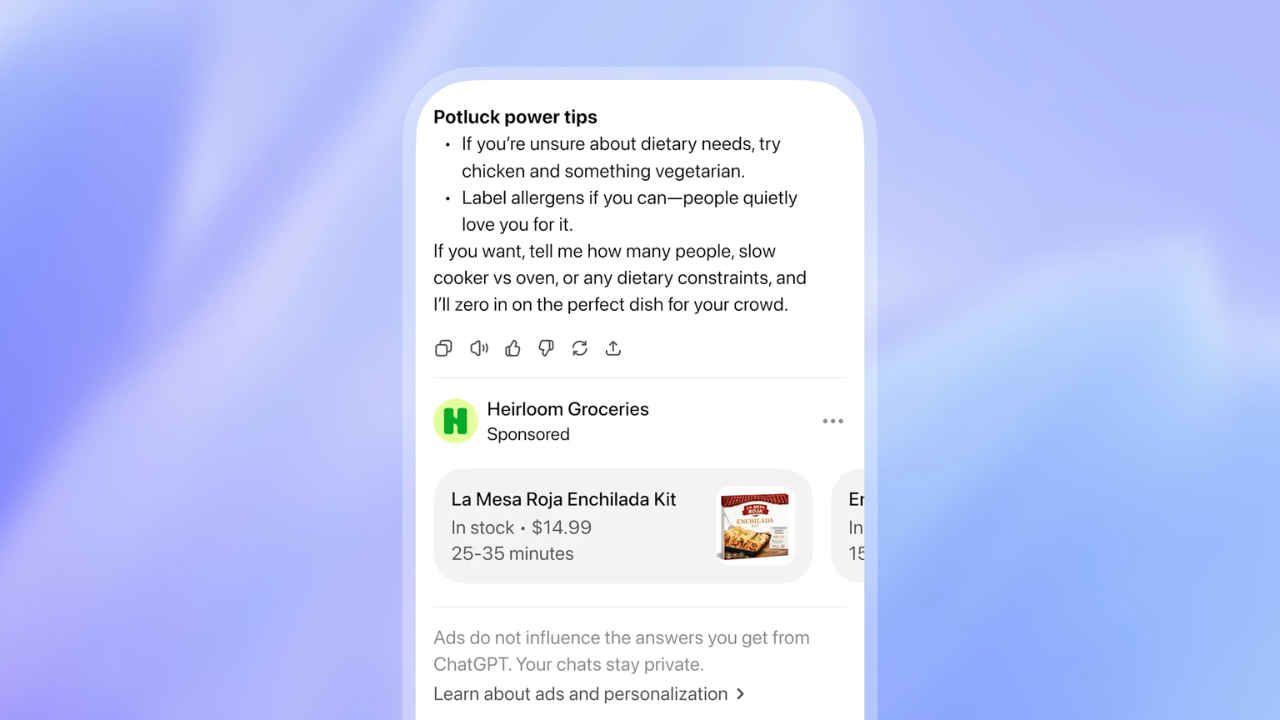

OpenAI has started testing advertisements in ChatGPT in the US. The test applies only to logged-in adult users on the Free and Go plans. Users on Plus, Pro, Business, Enterprise, and Education plans will not see ads. According to OpenAI, ads won’t change or influence ChatGPT’s answers in any way. The responses will continue to be based only on what is most helpful for the user. Also, ads will always be clearly labelled as sponsored and shown separately from normal answers.
 Survey
The main reason for introducing ads is to support the cost of running and improving ChatGPT. OpenAI says keeping the free and low-cost versions fast and reliable requires major investment. Advertising helps fund this work and allows more people to access powerful AI tools at little or no cost.
Also read: OpenAI co-founder says agentic engineering is the next big thing in AI coding
‘If you prefer not to see ads, you can upgrade to our Plus or Pro plans, or opt out of ads in the Free tier in exchange for fewer daily free messages,’ OpenAI said.
During this test, ads are selected based on how relevant they are to a conversation. This may include the topic being discussed, past chats, and how users interacted with ads before. For example, someone asking about cooking might see an ad for meal kits or grocery delivery. If several ads fit, the most relevant one is shown first.
OpenAI stressed that user privacy is protected. Advertisers do not have access to conversations, chat history, memories, or personal details. They only receive basic summary data, such as how many people viewed or clicked an ad.
Also read: Tim Cook discusses AI, succession and Apple’s 50th anniversary at meeting: Here’s what he said
Ads will not appear for users under 18, and they will not be shown near sensitive topics like health, mental health, or politics.
Users also have control over their ad experience. They can dismiss ads, give feedback, see why a specific ad was shown, delete ad-related data, and manage ad personalisation settings at any time.
OpenAI says this is only a learning phase. The company is closely watching user feedback to make sure ads feel helpful and do not interrupt the experience.


