
Meta, Mark Zuckerberg sued for allegedly using pirated books to train AI
 Follow Us
Publishers including Elsevier and Hachette accuse Meta of using pirated books and research material.
Mark Zuckerberg is alleged to have approved and encouraged the use of copyrighted works.
The case adds to ongoing legal battles involving AI firms like Anthropic and OpenAI over fair use and copyright.


Meta and its CEO Mark Zuckerberg are now under fire again after publishers filed a fresh legal challenge in the US. As per the reports, major publishers and an author have filed a class-action lawsuit claiming copyright violations tied to the company’s AI efforts. The lawsuit claims that Meta used copyrighted books and academic content without permission to train its Llama large language models.
 Survey
The plaintiffs include prominent publishing houses such as Hachette, Macmillan, McGraw Hill, Elsevier and Cengage along with author Scott Turow. The complaint stated that Meta copied and distributed millions of copyrighted works without authorisation or compensation with claims that Zuckerberg was directly involved in approving such practices.
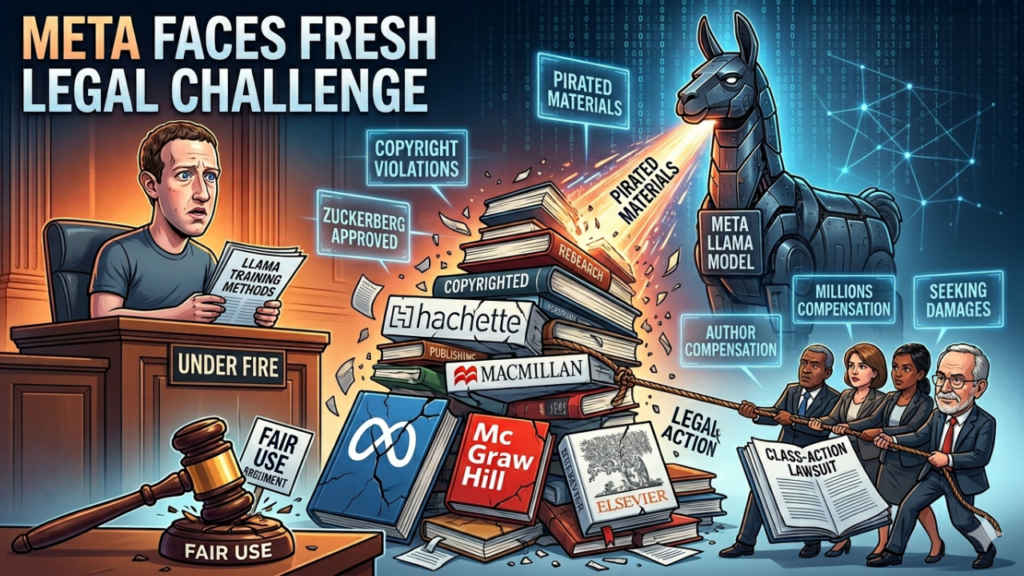
The lawsuit, reportedly filed in Manhattan federal court alleges that Meta relied on pirated materials ranging from textbooks and research papers to novels to train its AI systems. The plaintiffs are seeking damages and are also pushing for the case to be expanded to represent a broader group of copyright holders.
Well, this is not the first time Meta’s AI training methods have come under scrutiny. The company has faced many lawsuits with similar allegations, although earlier attempts by authors to prove copyright infringement have not always succeeded. In parallel cases involving other AI firms like Anthropic, courts have shown mixed responses, with some suggesting that while copyright claims may be complex, piracy-related arguments could hold more weight.
Also read: OpenAI AI smartphone may launch sooner than expected, mass production tipped for 2027
On the other hand, Meta has maintained that its AI practices come under the legal boundaries and argued that training models on copyrighted material can qualify as fair use. The company has also indicated it will contest the claims.
In the meantime, OpenAI and Elon Musk are fighting one of the biggest lawsuits. This came after Musk filed a lawsuit against OpenAI and Sam Altman claiming that the company purposely shifted to a for profit structure to make money, shifting from its helping humanity goal. Musk demanded damages and removal of Altman and Greg Brockman.


