
India mulling AI law to tackle deepfakes, cyber attacks and accountability gaps
 Follow Us
Government plans new AI laws to tackle deepfakes, scams, privacy, and online risks.
New rules may decide who is responsible when AI systems make mistakes.
AI copyright issues, data use, and algorithm bias are also being reviewed.
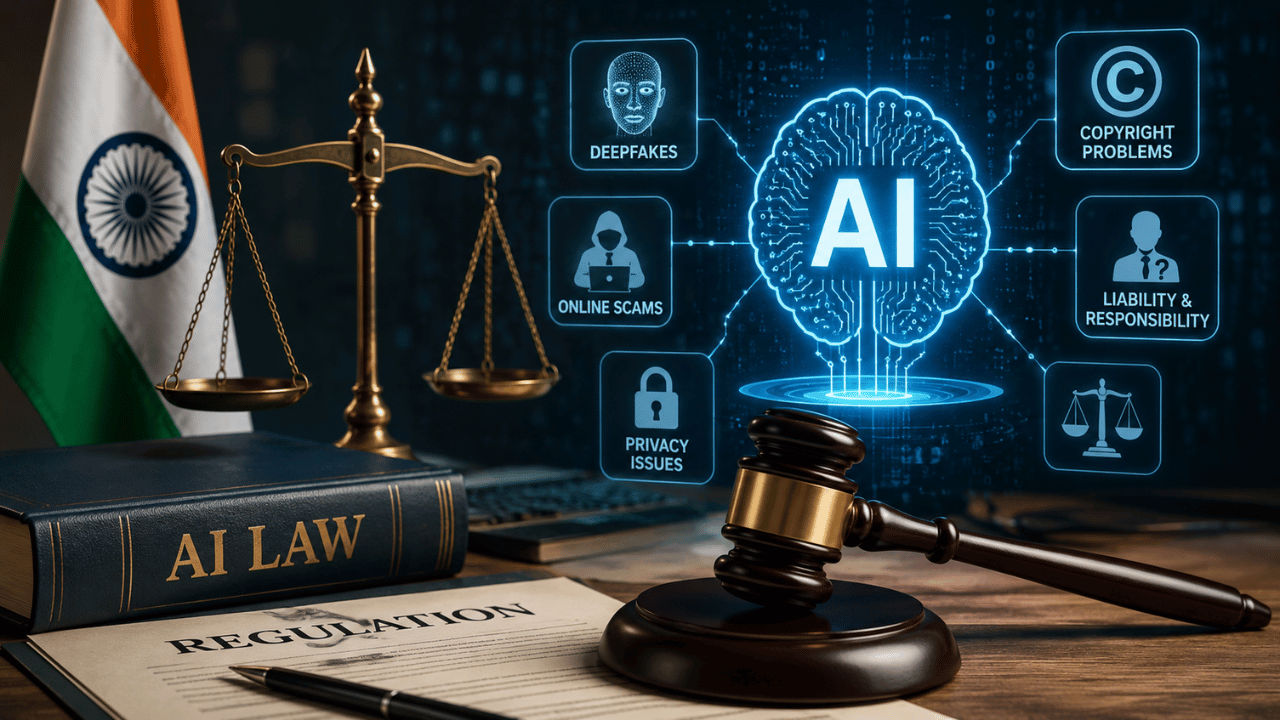

AI is growing at a rapid pace, and with that, it’s also changing how people use technology. While there are certain benefits to that, it also has created new risks that current laws cannot fully address. Keeping these challenges in mind, the central government is planning to introduce new laws to prevent the misuse of AI on social media and in cyberspace. The Ministry of Electronics and Information Technology said existing rules cover some AI-related problems, but new issues continue to appear. The proposed law is meant to deal with problems caused by AI, such as deepfakes, online scams, privacy issues, copyright problems, and deciding who is responsible if an AI system causes harm.
 Survey
Why the government wants a separate AI law
The Indian government feels that the existing laws were drafted to govern human behaviour and not how the AI will work. While these laws are capable of handling some problems arising from AI, they were never designed for it.
Explaining this, S. Krishnan, Secretary at the Ministry of Electronics and Information Technology, said that current legal provisions can address issues such as deepfakes and content labelling to some extent, but they are not enough to deal with the growing range of AI-related risks. He also confirmed that the government is already consulting experts to develop a dedicated legal framework for AI.
Also read: WhatsApp may soon make it easier to see who is online on iPhone
Who is responsible for AI mistakes?
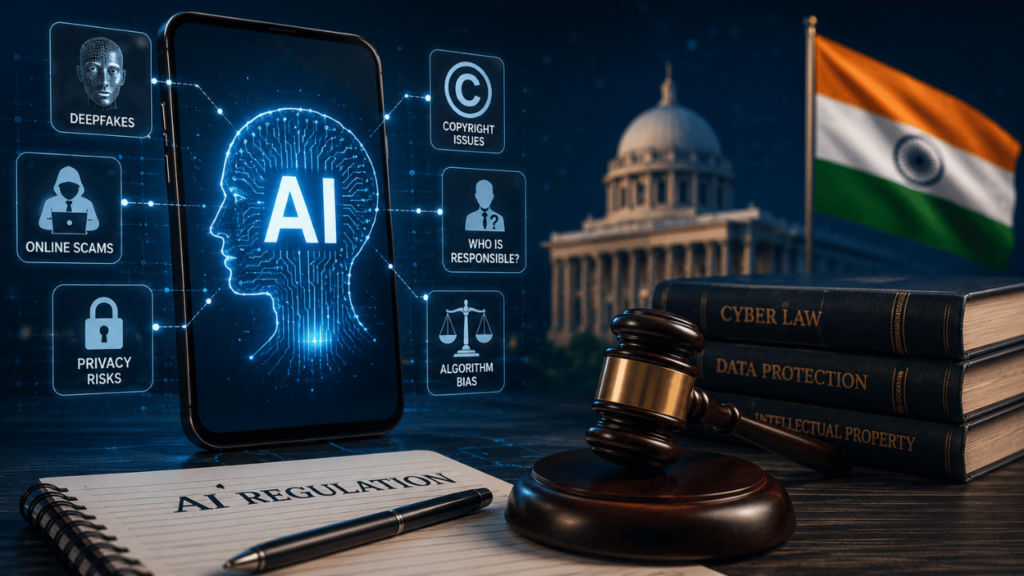
One of the major issues regarding AI is who should be liable in the case of an error made by the AI technology, as there are many AI technologies that operate as ‘black boxes’. It’s a situation when even their manufacturers cannot determine how they make a certain decision.
For example, if an AI-enabled medical robot conducts a surgery with an error or a self-driving car results in an accident, then no existing law in India specifies whether the manufacturer, the user, the company, or some other party should be held responsible for the damage caused.
Copyright and data need clear rules
The AI tools are no longer text-generating machines, as they can now generate images, songs, and novels and can even code complex programs. However, there are no legal regulations concerning the owners of such products because copyrights are only acknowledged by people.
Another problem is that there is massive use of copyrighted material available on the Internet for training AI systems without getting any permission. It is necessary to have legal provisions about what constitutes fair use and infringement of copyrights.
Also read: Xiaomi 18 Pro Max camera and battery details tipped: Will it launch in India?
Other challenges
Along with the above-mentioned challenges, the government is also studying the impact of AI on the creation of deepfake videos and cloned voices, posing a danger of fraud and identity theft. While there are ways to resolve such cases through laws, the spread of harmful content occurs much faster compared to legal actions that can be taken against the issue.
Algorithmic bias is also recognised as an issue by the experts. Under this situation, AI systems can treat some people unfairly. For example, they may discriminate while selecting people for jobs or approving loans.


