
CBSE to implement on-screen marking for Class 12 board exams: Here’s how the new system will work
 Follow Us
CBSE will start checking Class 12 answer sheets on screen instead of using pen and paper. Class 10 papers will still be checked the old way for now.
The new system is expected to make checking faster, reduce mistakes in marks and make the whole process more simple and clear.
Schools will need basic computer and internet setup, and CBSE will provide training and guidance to help teachers use the new system easily.
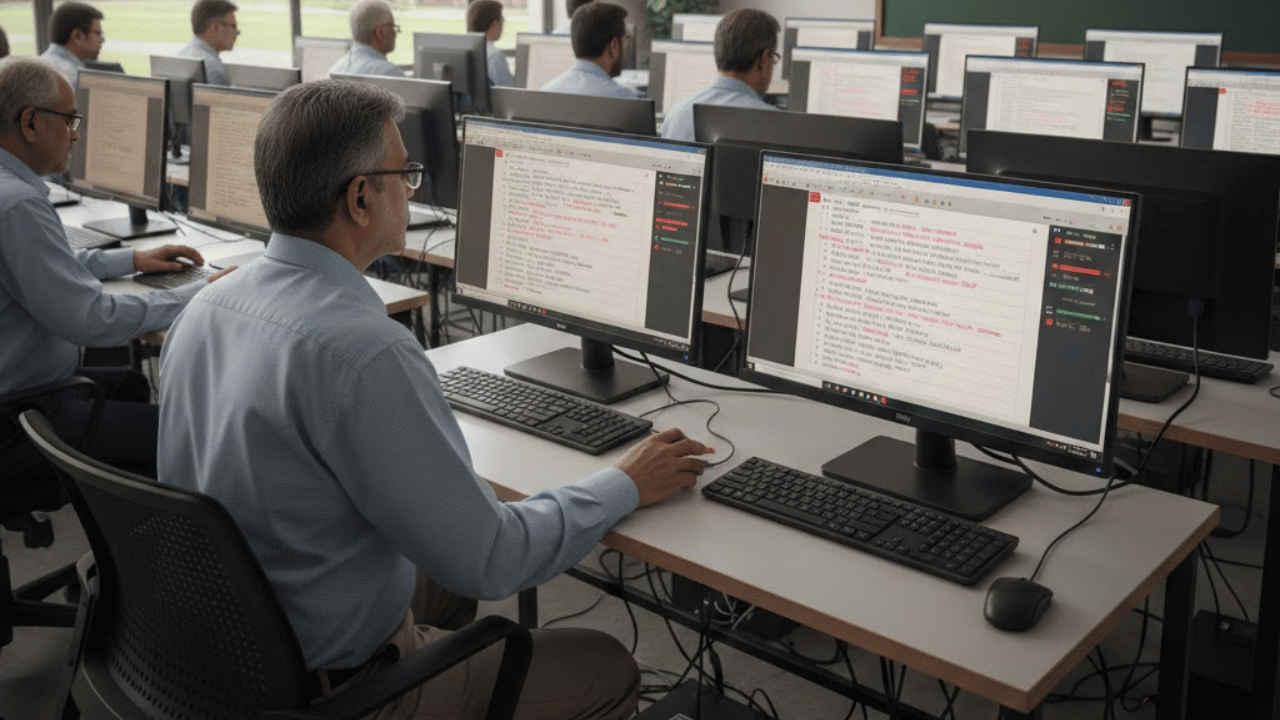

The Central Board of Secondary Education (CBSE) has announced a major change in the way Class 12 answer sheets will be checked from 2026. The board will introduce on-screen marking for the evaluation of Class 12 board examination papers. This step is aimed at making the checking process faster, more transparent and more efficient. However, the evaluation of Class 10 answer books will continue in the physical mode for now. The decision is part of CBSE’s larger effort to bring more digital processes into its examination system across India and abroad.
 Survey
Dr Sanyam Bhardwaj, the Controller of Examinations at CBSE, shared this decision in an official notice on February 9, 2026. The board said the new system will make checking answer sheets faster and reduce the need for manual checking. While Class 12 evaluation will shift to on-screen marking in 2026, Class 10 answer sheets will continue to be checked in physical mode.
Also read: Apple to open sixth India store in Borivali on February 26: Here’s what to expect
CBSE conducts Class 10 and Class 12 board exams in India and in 26 other countries. About 46 lakh students take these exams every year, so checking all the papers takes a lot of time and effort. This year, CBSE board examinations for Classes 10 and 12 will begin on February 17 and conclude on April 10. The board has also decided to conduct the Class 10 examination twice a year. The second exam will be held from May 15 to June 1. However, appearing in the first examination, starting February 17, will remain mandatory.
What is on-screen marking, and how does it work?
On-Screen Marking (OSM) is a digital way of checking exam papers. It replaces the old method of marking with pen and paper.
In this process the answer sheets are collected and scanned into clear digital copies (like PDF files) once the exam is finished. Once done, these digital copies are uploaded to a secure central server.
Following that, the examiners can log in to their secured account and check the papers online, either from home or from special marking centres, using special software.
Also read: Samsung Galaxy Z Fold 8 and Z Flip 8 leaks: Price in India, launch timeline, battery and more
Why CBSE is shifting to on-screen marking
CBSE has explained several reasons behind the move to digital evaluation for Class 12 answer books:
- Faster checking, as more teachers will be able to participate from their own schools.
- Automatic calculation of marks will reduce the totalling mistakes, ensuring the students get what they deserve.
- Less manual work and better coordination amongst teams.
- There is no need for post-result verification of marks, and it will save time, money and stress for students.
- Reduced manpower for verification-related tasks.
- No transportation of physical answer books, saving time and cost.
- Teachers can continue school duties while evaluating, ensuring that the studies are not impacted.
- Participation can be done from affiliated schools across India and abroad; hence, the manpower will be increased.
- Environmentally friendly process with less paper movement.
Also read: OpenAI removes GPT-4o and GPT-4.1 models from ChatGPT starting today: Here’s why
Technical requirements for schools
To prepare for on-screen marking, CBSE has asked schools to ensure proper technical arrangements. Schools must have:
- A computer lab with a public static IP as per affiliation bylaws.
- PCs or laptops with Windows 8 or above, a minimum of 4 GB RAM and 1 GB free space.
- Updated browsers such as Chrome, Edge, Firefox or Internet Explorer.
- Adobe Reader should be installed on the computer.
- The minimum internet speed should be at least 2 Mbps.
- An uninterrupted power supply (UPS) should be installed to avoid unexpected shutdowns due to power cuts.
How CBSE will help teachers and schools
CBSE has also announced support measures to help teachers adjust to the new system:
- Teachers with OASIS IDs can log in and explore the platform.
- Multiple practice sessions will be conducted within the platform.
- Training programmes will also be organised within the platform and schools.
- A dedicated call centre will handle issues faced by the teachers while checking the copies online.
- Instructional videos will be released for guidance so that the teachers can be ready beforehand.
- Detailed instructions for each step will be shared separately to ensure smooth preparation.


