
How to spot fake news on social media
 Follow Us
Fake news spreads quickly on social media and can create confusion.
Always check news using trusted sources before believing it.
Look for basic signs like missing sources, strange writing, or urgent sharing requests.

Social media has become an essential part of daily life. It’s no longer just a way to connect with our loved ones, as it has evolved into a major platform for consuming a wide range of content, including entertainment, emotional stories, and news. Although social media keeps us informed, it has recently witnessed a surge in the spread of fake news on these platforms. Fake news is spreading like a virus and is reaching thousands of people before the truth catches up. Furthermore, this trend has contributed to growing public fear and confusion. So, to put a stop to that, in this guide I’ll tell you simple and practical steps to identify and avoid fake news on social media.
 Survey
1. Use Google Fact Check Tool to verify fake news
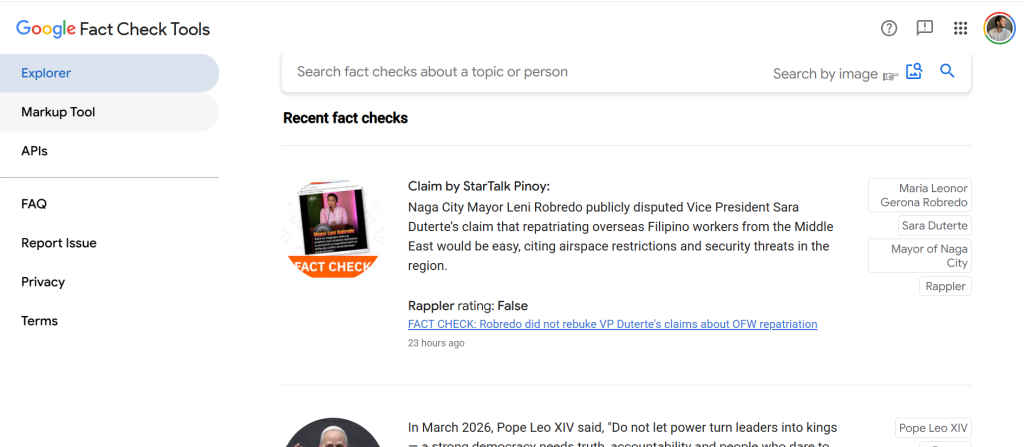
One of the easiest ways of verifying the facts is using the Google Fact Check Tools. It enables the user to verify whether the facts have already been verified or not. Here’s how you can use the Google Fact Check tool to verify social media news:
1. Visit the Google Fact Check Tools website.
2. Enter the keywords or the claim you want to verify.
3. Explore the facts from verified sources.
4. Read the explanation and the verdict.
Compare the facts with the viral post before believing or sharing the content.
Also read: Navratri 2026: Top 5 Google Gemini prompts to create puja photos
2. Verify news with Press Information Bureau (PIB)
The Press Information Bureau is the official source for information from the government of India. They provide regular clarifications on fake news concerning government policies, schemes, and other announcements.
To check the authenticity of news, you can visit the official website of the Press Information Bureau. Alternatively, you could also check out the official PIB Fact Check X handle of this government body, as they also check out the authenticity of news on this platform. This way, you would also be updated and would not fall for fake news concerning the government.
Also read: Meta’s AI agent reportedly leaks sensitive data in internal mishap: Here’s what happened
3. Check updates from All India Radio News
Another trusted source to verify if news being shared on social media is fake or not is All India Radio News. The AIR is a government-owned public service broadcaster, and its website contains authentic news about events happening around the world.
In addition to this, you can also follow AIR News on X, as they keep posting news and verified news updates. Moreover, you can also follow them on Instagram so you don’t have to switch between apps to verify news.
Also read: Nothing CEO Carl Pei says AI could replace apps on future smartphones
4. Spot the signs of fake news
While relying on the official bodies is a good thing, you can also spot fake news yourself. Here are some of the things you can check before trusting and sharing any news on your social media:
- Look if a post or a video is specifically designed to grab attention and create panic.
- Check if a source is given, like a website or the name of the author.
- Look for spelling and grammar mistakes, as fake news mostly has a poor writing style.
- If there are visuals attached, then search if there are watermarks of any AI tool.
- AI-generated videos and images also have inconsistencies.
- A news post can likely be fake if it urges you to share quickly without thinking.
Think before you share
Before forwarding any message, ask yourself if the information is verified and comes from a trusted source. Responsible sharing can help reduce the spread of fake news and make social media a safer space for everyone.


