
Portable air purifiers: Are they really useful? What you should know
 Follow Us
Portable wearable air purifiers use ionisation, not HEPA filters, to clean air.
They work best in indoor conditions where air is still and enclosed.
These devices are not a substitute for N95 masks under heavy smog conditions.

The quality of air in Indian cities is no longer a seasonal problem. Summer does bring better air quality compared to winter; air quality in Indian cities is much worse than in other countries. So naturally, whether you’re sitting in your car, stuck in traffic or working at a desk in an office – if your office doesn’t have air purifiers installed – the question of investing in an air purifier makes a lot of sense.
 Survey
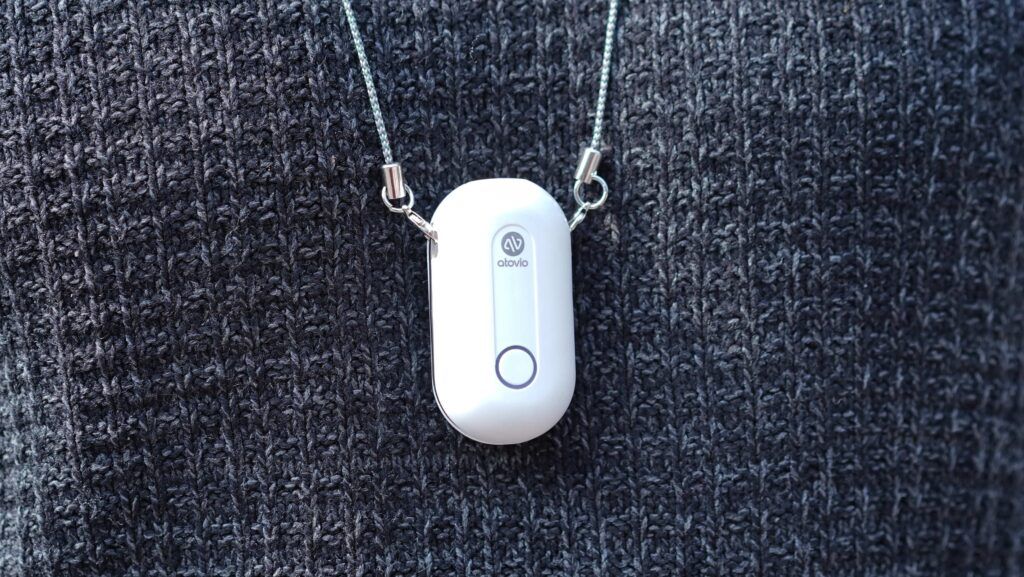
Amidst this, portable air purifiers like the Atovio Pebble, which are small enough to hang around your neck, have been selling very well. But what do they actually do, and when does buying a device like this actually make sense? Let’s find out.
Tech powering portable air purifiers
Before moving forward, let’s understand the tech that powers these portable air purifiers. You see, unlike a room purifier that draws air through a HEPA filter, wearable air purifiers, on the other hand, use a technology called ‘ionisation’, which is a fundamentally different approach. Don’t get confused because of the name; let me break it down for you in simple terms.
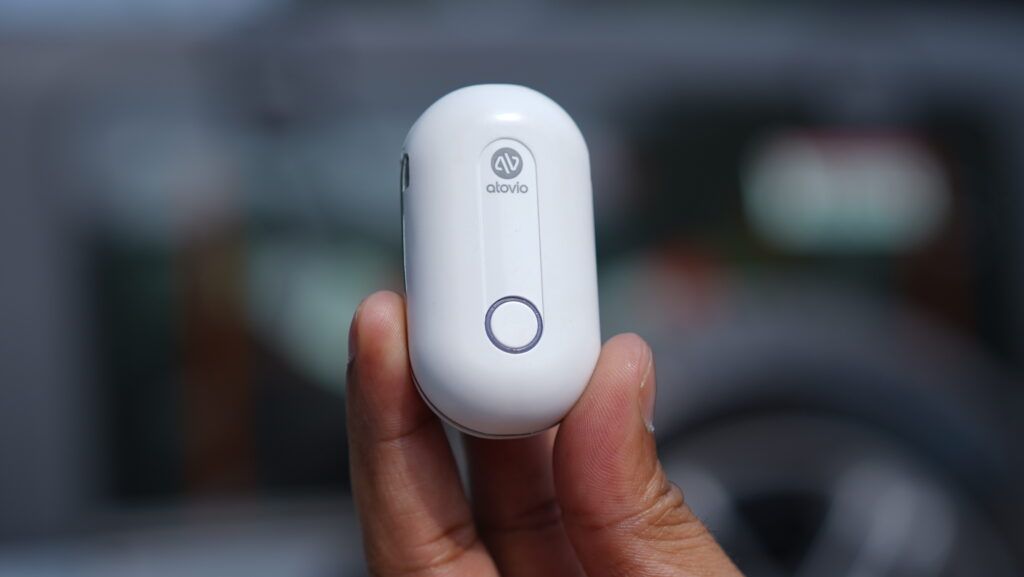
Well, it works as the device releases a continuous stream of negative ions into the air around you. These ions attach to airborne particulates like PM2.5, PM10, dust, and smoke, causing them to be removed out of your immediate breathing zone before you end up inhaling them inside your body. Unlike air purifiers, there are no fans and no filters to replace, which naturally means there’s no noise produced.
Speaking of one of the popular products in this lineup, the Atovio Pebble has been one of the few made-in-India entries in this space, and it has been selling quite well in the market as well. It operates on this exact principle and was independently tested at IIT Kanpur’s National Aerosol Facility to confirm both particulate reduction and ozone safety levels within international limits. If you’re interested in that particular product, I recommend checking out my colleague’s detailed review on the product, where he tried using it in Delhi NCR’s poor AQI environment.
Also Read: Atovio Pebble Review: Can a Wearable Air Purifier Deliver Meaningful Protection in Delhi-NCR?
What “Personal space coverage” actually means
If you’re looking to get a portable air purifier for yourself, I’m sure that by now you’ve most likely heard of the term ‘personal space coverage’. Well, this is the most important thing to understand before buying, as wearable devices like this one are not cleaning the room; instead, they are creating a localised zone of cleaner air around your face.
Detailed studies that test such wearable devices found that in controlled chambers performance varies significantly depending on airflow conditions. They saw that some devices were removing under 10% of particles in open, moving air. While the more capable units, tested under calm air conditions, reached about 50% particle removal after 15 minutes and nearly 100% after 90 minutes. So it’s safe to say that the ideal operative phrase is ‘calm air’ when you’re sitting. The moment you’re in traffic, walking outdoors, or in a room with a ceiling fan running, those numbers fall significantly. It’s not a flaw, but rather just how the ionisation technology works.
Where portable air purifiers perform well
While the lab report is useful, I can understand that most people might have a hard time figuring it out in their practical life. But don’t worry, I’ve done all the sorting-out work for you, so all you need to know about the usage is that the wearable personal air purifier works great in extended indoor use. That includes when you’re sitting at a desk, in a meeting room or on a car ride.
In enclosed, low-airflow environments, the conditions where most office workers and students spend most of their day, a wearable air purifier can make a meaningful difference. Again, it straight up won’t transform the air quality of the room entirely, but it does largely improve what you’re actually inhaling. For areas where a proper air purifier remains inaccessible, a portable one is definitely not a bad option at all.
Where they fall short
Due to the portable nature of the devices, they have to be heavily cut back as well. If you’re going outdoors under heavy smog or anywhere with active airflow, a wearable purifier’s ion cloud disperses too quickly to offer any sort of meaningful protection.
Not only that, but it also cannot do much against gases, VOCs, or cooking odours, since ionisation targets particulate matter like PM 2.5 only. If chemical pollutants or fumes are a concern, an activated carbon stage is required, something which no wearable air purifier in the category currently offers.
Should you buy one?
In the end, the big question that comes up is if a wearable air purifier even makes sense at all? Well, it works as a secondary layer of protection for people who spend long hours in indoor environments like offices or for students sitting in a classroom. If you are that audience and want something other than just a normal mask to protect yourself from the polluted air, it works quietly in the background while requiring no maintenance. But again, it’s important to understand that it isn’t a total replacement for a room purifier or an outdoor pollution solution. If used within limited boundaries, the category delivers on its narrow but claimed promises.
With that said, I hope this article helped you explain all you need to know about portable air purifiers. For much such detailed explainers like this, keep on reading Digit.in
Also Read: Air purifier not working as it should? Where to keep, how to use it properly
FAQs
How do wearable air purifiers clean the air without a filter?
Unlike traditional room purifiers that use fans to pull air through a HEPA filter, wearable purifiers use a technology called ionisation. The device releases a continuous stream of negative ions into the air around you and these ions then attach to particles like PM2.5 causing them to drop out of your immediate breathing zone before you can inhale them.
Can I use a portable air purifier while walking outdoors or in traffic?
Wearable air purifiers are not very effective outdoors or in moving air. They rely on creating a localized "cloud" of ions around your face, which requires calm, low-airflow environments to work properly. The moment you walk outside, sit in heavy traffic, or even sit under a fast-moving ceiling fan, the wind disperses the ion cloud too quickly to offer meaningful protection.
Do wearable air purifiers protect against strong odors and fumes?
No, they do not. Ionisation technology only targets solid particulate matter, such as PM2.5, PM10, dust, and smoke. It cannot filter out gases, chemical fumes, volatile organic compounds (VOCs), or cooking odors. Neutralizing those types of chemical pollutants requires an activated carbon filter, which portable, neck-worn purifiers currently do not have.


