
Why NASA used Nikon cameras throughout the Artemis II mission
 Follow Us
Nikon and NASA share a 50-year partnership in space exploration technology.
NASA selected Nikon's D5 and Z9 cameras for the Artemis II mission.
Engineers modified the Nikon Z9 to withstand extreme lunar surface conditions.
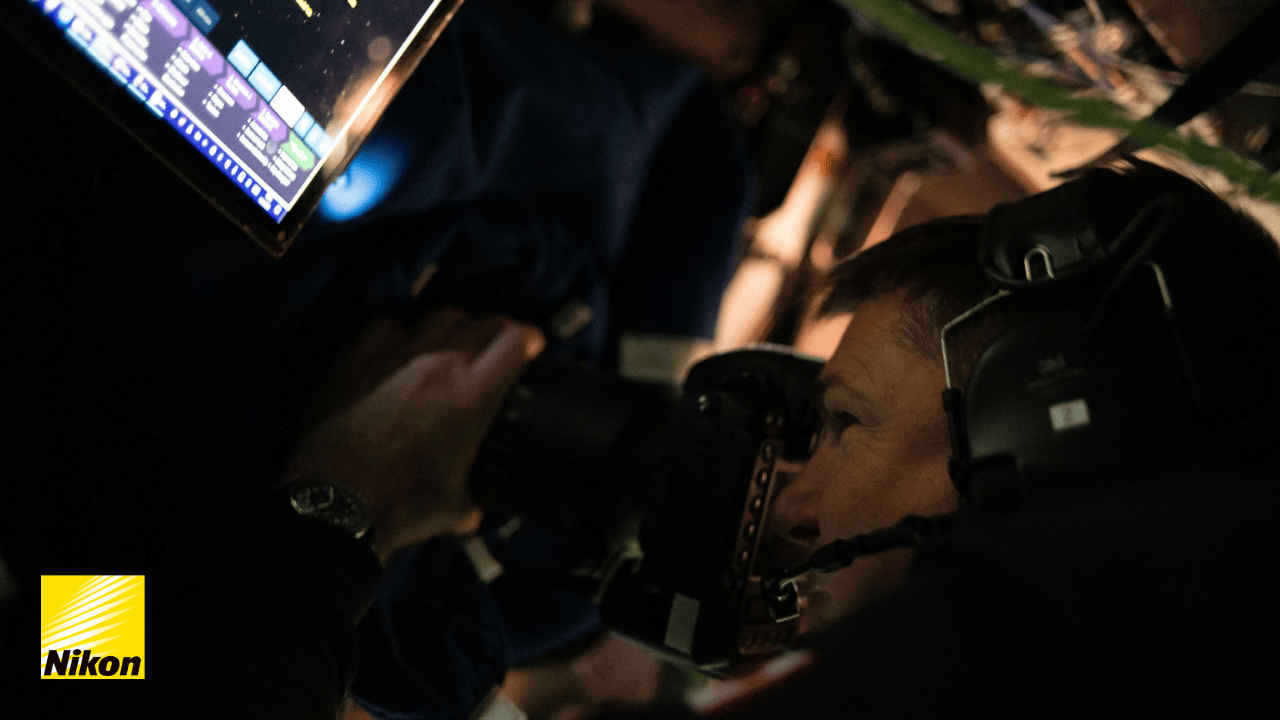

Whether you’re a professional photographer or just starting, you’re likely familiar with most camera brands and their dedicated fanbases. The likes of Sony and Canon have dominated the market for the past few years, and more recently, Fujifilm has become popular among people, too. However, many new photographers have consistently expressed their dislike for Nikon.
 Survey
But it’s not like the brand doesn’t have its own fan base; I would almost call it a cult following. Many veteran photographers still prefer Nikon, as it has a legacy, having been present throughout the evolution of photography tech. Be it 35mm film cameras, DSLRs, and more recently, the mirrorless segment.
Though their transition to newer tech hasn’t been smooth, which is a major reason why other brands have gained more popularity. But a major shock to the photography world came in when NASA, the space giant, took the 10-year-old DSLR from Nikon, the D5, along with the flagship Z9, to space for clicking pictures throughout their Artemis II mission.
Many might not be aware, but there’s a strong reason why they chose to go with these particular cameras. Let’s understand why NASA prefers Nikon cameras over its competitors.
Also Read: Apple’s iPhone 17 Pro Max got approved for the Artemis II moon mission, here’s how
Long-running partnership between Nikon and NASA
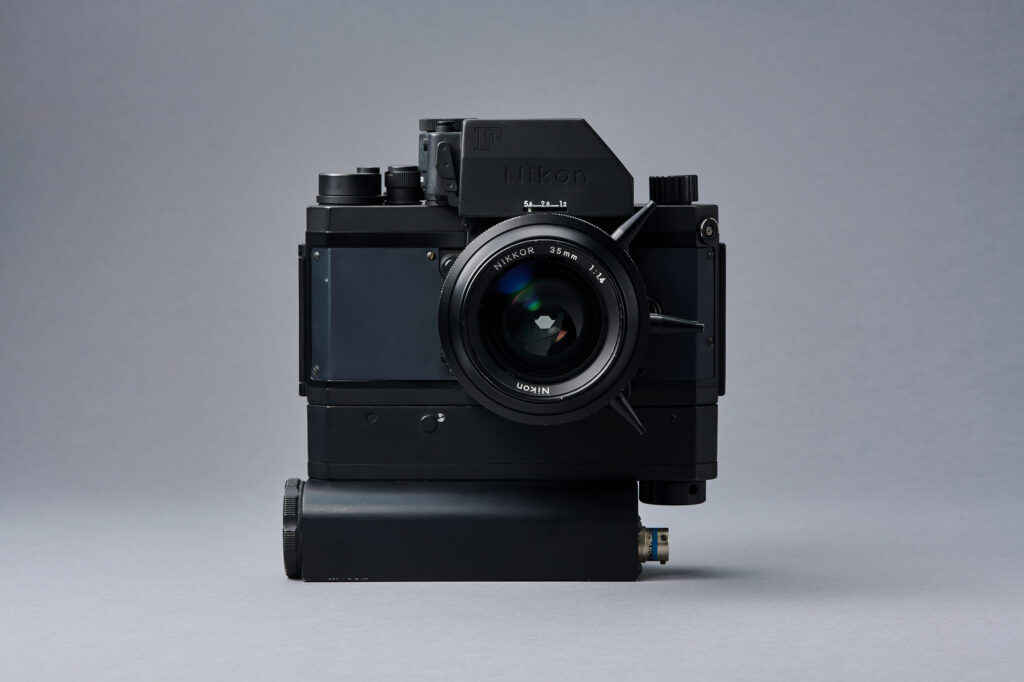
It’s not like Nikon is new to the space game. They have been supplying NASA with space-capable cameras for decades. The first time a Nikon camera was used was all the way back in 1971, which was a specially modified camera based on the Nikon Photomic FTN, and it was used during the Apollo 15 mission. Though it wasn’t the only camera to be present, as many other Hasselblad cameras were also used.
Most might know that the Hasselblad cameras were known to be the ‘space cameras’ for a long time. And that was because, during the 1960s, NASA used various Hasselblad cameras for their missions. Though after a point, with the move to newer technologies, especially from film to digital, the space giant started to prefer Nikon instead.
Over more than five decades, Nikon cameras have supported well over a hundred missions. That trust from NASA doesn’t just come from Nikon’s marketing, rather, it comes from decades of engineering that Nikon has put into specifically developing their cameras for extreme environments. Be it modifying cameras by enlarging controls for use with thick gloves or redesigning components to withstand radiation.
Nikon and Artemis program partnership
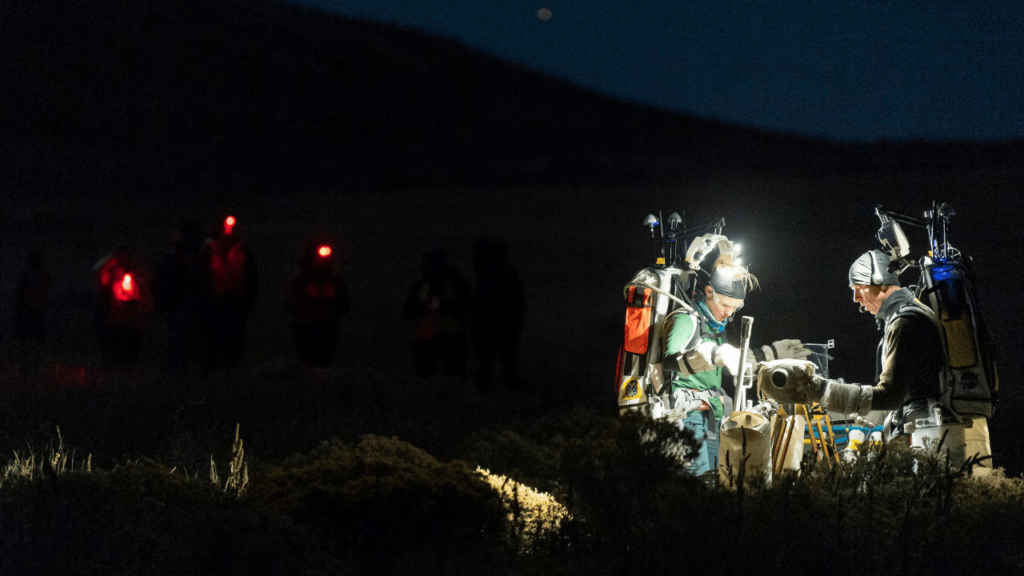
Back in 2024, NASA announced their partnership with Nikon for the Artemis program. In their initial announcement, they told how the team performed their testing on a standard Nikon Z9 camera to determine the specifications a camera would need to operate on the lunar surface.
After this, the design of the Z9 camera was modified along with Nikkor lenses with NASA’s thermal blanket to protect the camera from dust and extreme temperatures. A custom grip with modified buttons was also added to use the camera even when they have their gloves on.
In addition, they also announced that the camera incorporates the latest imagery technology and will have modified electrical components to minimise issues caused by radiation, ensuring the camera operates as intended on the Moon.
Why use the decade-old Nikon D5?
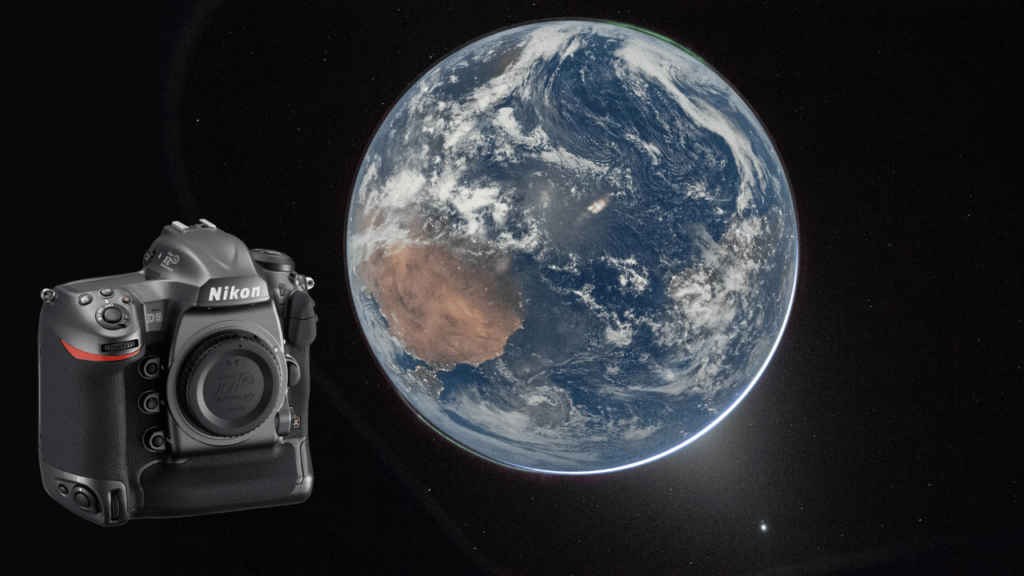
Yet another question that comes to mind is that while using the Nikon Z9 for its space-ready capabilities makes sense, why did NASA also decide on carrying over the 10-year-old Nikon D5 with them? After all, it’s not even a modern mirrorless camera, but rather a DSLR instead.
The answer might surprise you, but it’s purely because of the imaging the D5 provides. Even after so many years and so many new camera releases, the Nikon D5 remains the best-ever digital camera for high ISO performance. The more modern Z9 tops out at ISO 102,400, while the D5’s ISO range extends up to 3,280,000, roughly 30 times higher than the Z9.
It’s a big reason why NASA decided to carry over the older DSLR with them, too. During missions such as Artemis II, where the crew would be shooting the dark side of the Moon, a higher ISO number would be required. One of the images that NASA shared from the mission recently was a view of Earth, which was captured using the Nikon D5 at ISO 51,200.
Also Read: Smartphones, cameras: Artemis II astronauts will use all these tech gadgets on moon flyby


