
UWMS explained: Artemis II astronauts will use a $23 million toilet in space
 Follow Us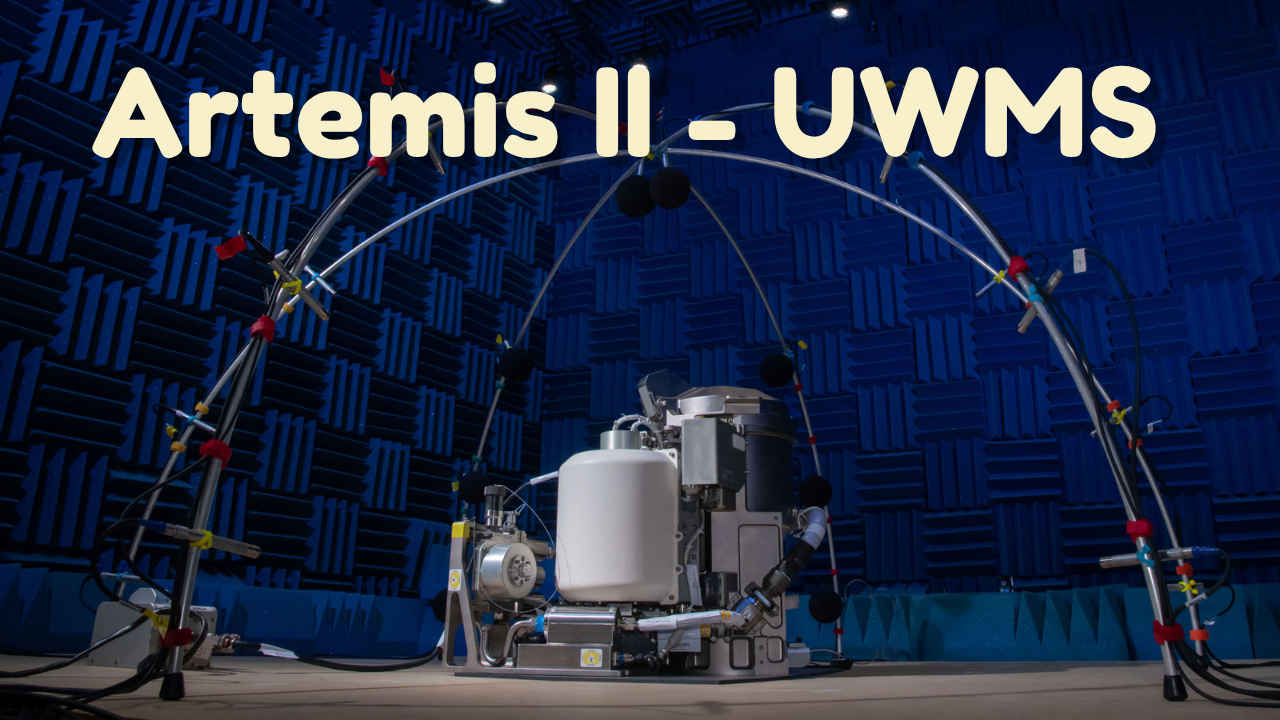

Houston, we finally have a bathroom… but it costs $23 million. Artemis II lifted off on April 1, carrying four astronauts on NASA’s first crewed lunar flyby since Apollo 17 in 1972. There’s a lot to say about what’s changed in half a century of space travel, the rockets, the suits, the computers. But one upgrade that doesn’t get enough credit is what’s waiting for the crew when nature calls.
 Survey
Also read: NASA Artemis II mission isn’t landing on moon: Here’s why
For a long time, nature calling in space was the worst part of the job. During the Apollo missions, astronauts had no toilet. What they had were adhesive-rimmed plastic bags they strapped to themselves, a packet of germicide to mix in by hand to prevent bacterial buildup, and the sincere hope that nothing escaped into the cabin. It was as bad as it sounds. On Apollo 10, a stray piece of fecal matter floated through the air mid-mission. On Apollo 8, the crew had to chase down blobs of vomit and feces that had drifted loose. NASA’s own post-mission reports described the system as “objectionable” and “distasteful” – which looks to me to be heavily restrained language.
Also read: Smartphones, cameras: Artemis II astronauts will use all these tech gadgets on moon flyby
Things improved incrementally from there. The Space Shuttle introduced an actual commode, a vacuum-based system that used suction to pull waste away from the body and prevent it from floating back up. Astronauts had to strap in, position themselves precisely over a four-inch opening, and hope for the best. NASA reportedly built a training simulator with a camera inside the hole and a crosshair to help astronauts learn correct positioning. The ISS eventually got its own upgraded version of this system, though it still had significant limitations around usability, maintenance, and efficiency – particularly for female crew members.
How the UWMS works
The Universal Waste Management System, developed in partnership with Collins Aerospace and officially contracted in November 2015, is NASA’s most sophisticated waste management hardware yet. It is 65% smaller and 40% lighter than the toilet previously used on the US side of the ISS, uses automatic airflow that kicks in the moment the lid is lifted, and critically, allows simultaneous urination and defecation – something that earlier systems couldn’t handle. The funnel and seat can be used at the same time, a design change that was driven directly by feedback from female astronauts.
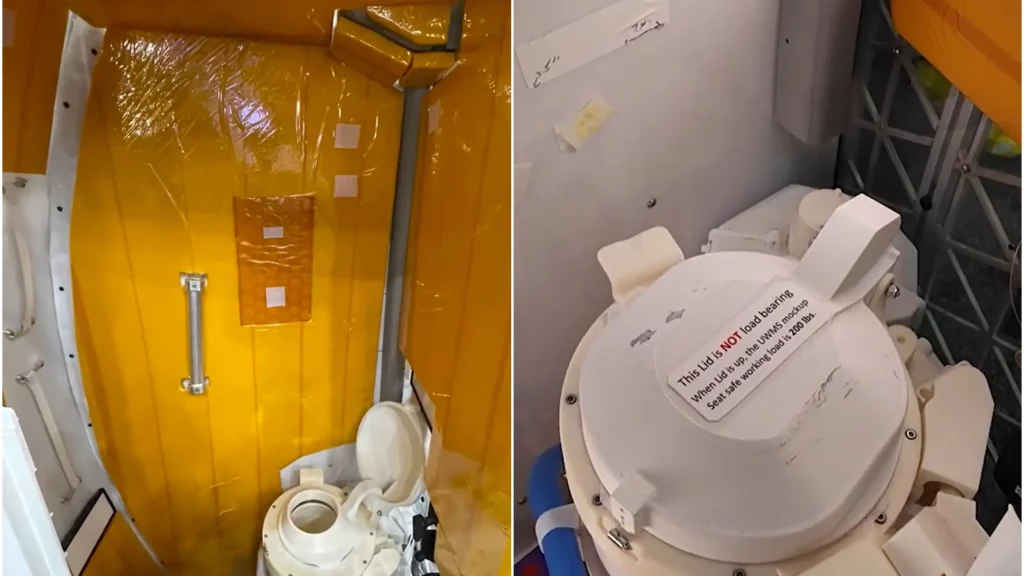
It also comes with a door. After decades of open-air bathroom situations in cramped capsules, Artemis II astronauts get atleast the illusion of privacy, along with handholds, foot restraints, and ergonomic design built for both male and female crew members up to the 95th percentile. Sixty years of iteration, one $23 million toilet. In space, even the bathroom is rocket science.
Also read: Artemis II explained: How humanity is making its first lunar trip since 1972


