
SpaceX’s Exploding Rockets: 5 Starship Mishaps That Fueled the Future
 Follow Us
SpaceX’s Starship failures reveal critical engineering lessons behind the world’s most powerful reusable rocket program.
June 2025’s Ship 36 blast underscores how SpaceX learns fast by failing faster.
Each Starship crash accelerates SpaceX’s mission to build a reliable rocket for interplanetary human travel.

“The path to Mars is paved with fireballs.” That’s not SpaceX’s official slogan, but it might as well be. In its quest to build the most powerful, fully reusable rocket in history, Elon Musk’s team has embraced a development style that’s as bold as it is combustible. The Starship program, aimed at ferrying humans to the Moon and beyond has seen success, but it’s also left behind a trail of shattered steel, scorched concrete, and spectacular failures.
 Survey
On June 18, 2025, that trail grew longer. At Starbase, Texas, Ship 36 was preparing for a routine ground test when it suddenly erupted in a massive fireball well before its engines were even supposed to light. The blast rattled windows, scattered debris, and served as a visceral reminder: SpaceX doesn’t fear failure. It studies it.
Here are five defining Starship mishaps that didn’t just blow up, they blew open new understanding.
Also read: Airtel partners with SpaceX to bring Starlink internet services to India: All you need to know
SpaceX Starship 36 in June 2025
There wasn’t even time for a countdown. Ship 36 was on the stand, being fueled for a static fire test, all standard procedure. But then something went catastrophically wrong.
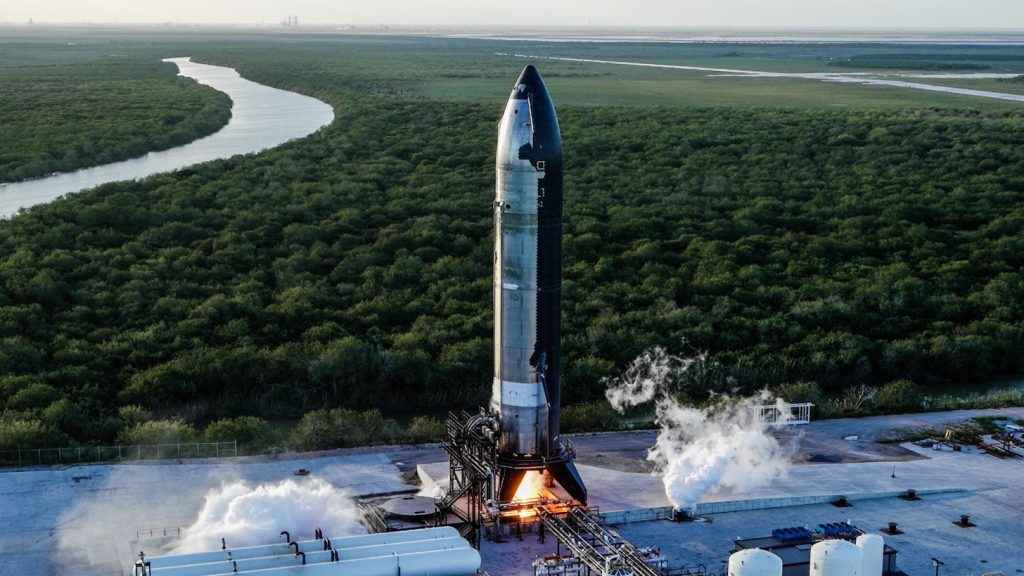
A high-pressure nitrogen tank inside the nose, an unassuming piece of plumbing known as a COPV, ruptured. The result was a concussive explosion that lit up the night sky and ripped apart the prototype before it could even prove itself. This wasn’t just a fluke. It was the first known failure of that specific tank design. It exposed a blind spot in how secondary systems are tested, and prompted a redesign of both the COPV itself and the safety protocols that surround ground operations. Luckily, no one was hurt. But the timeline for Starship’s tenth test flight suddenly got a lot less certain.
SpaceX Flight 9 in May 2025
The ninth flight was ambitious. Starship was meant to deploy eight Starlink dummy satellites and test how it handled reentry with 100 heat-shield tiles intentionally removed. But space doesn’t reward ambition, it tests it. Midway through reentry, a leak in the fuel system triggered a slow-motion failure. The vehicle began to spin. Contact was lost. Somewhere over the Indian Ocean, it silently broke apart.
The culprit? Unexpected vibrations during flight had stressed components far beyond what simulations had predicted. That leak triggered a cascade that the spacecraft couldn’t recover from. The flight also revealed another flaw, a payload door that refused to open. But rather than chalk it up to bad luck, SpaceX compiled a list of 11 engineering fixes. This was failure, turned into feedback.
SpaceX Starship Flight 8 (March 2025)
It started with triumph: for the first time, the Super Heavy booster was caught mid-air by the towering “chopsticks” on the launch tower, a futuristic ballet of robotics and rockets. But then came the second act. As the Starship upper stage continued its journey, four of six engines shut down. The rocket began to lose control, spinning above Earth before finally breaking apart over the Atlantic. One step forward, one explosion back.
Also read: Elon Musk vs Trump: Impact on Tesla, SpaceX, and Musk’s tech empire

The data pointed to a flash of flame near one engine, then what engineers called “an energetic event.” The failure was traced to propellant mixing inside the engine bay, an uncontrolled fire that caused the rest to shut down. But the successful booster recovery proved one half of the system worked. Now the challenge was getting the second half to survive the journey.
4. SN10 (March 2021): Land, Stand and Detonate
For a few glorious minutes, SN10 looked like a breakthrough. The rocket soared to 10 kilometers, flipped into a belly flop, and then, against all expectations, landed upright. The team at SpaceX erupted in cheers. Eight minutes later, they were picking up the pieces. Flames at the rocket’s base, likely fueled by pooling methane, led to a delayed explosion that launched the 16-story vehicle into the air one last time.
The landing maneuver was real and it worked. That alone made SN10 a milestone. But the fire exposed flaws in the landing legs, fuel drainage, and post-landing safing procedures. SpaceX engineers went back to the drawing board, not to rewrite the landing, but to ensure that future rockets didn’t celebrate by self-destructing.
5. The First Orbital Test (April 2023)
It was the launch that made history and a crater.
On April 20, 2023, Starship roared off the pad at Starbase. Engines thundered, dust and debris flew skyward, and for a few moments, the vehicle became the most powerful ever flown, breaking the record long held by the Soviet N1. Then it began to lose engines, one by one. Control slipped. Four minutes in, the self-destruct system activated, blowing it apart mid-air.
The power was there, but not the control. The flight revealed that thrust vectoring needed work, engine clustering was risky, and perhaps most critically, the launch pad wasn’t strong enough. Massive chunks of concrete were hurled into the air. In the aftermath, SpaceX built a flame trench and redesigned the pad itself, ensuring that future takeoffs wouldn’t start with their own ground-shaking disaster.
SpaceX: Failure is fuel
There’s something poetic about watching a giant steel rocket soar, then crash. But for SpaceX, there’s something essential about it too. Where traditional aerospace companies fear public failure, SpaceX uses it as leverage. They don’t treat explosions as the end of a mission, but as the beginning of a smarter one. Every disassembly, scheduled or not, pushes the Starship program forward.
With NASA’s Artemis program banking on Starship to deliver astronauts to the Moon, and with Mars still in Musk’s sights, the stakes are higher than ever. But so is the learning curve.
Because sometimes, to reach the stars, you have to blow up a few rockets first.
Also read: Starlink vs Broadband vs Mobile Internet: How is Satellite Internet Different?


