
OpenAI’s AgentKit explained: Anyone can make AI Agents with ease
 Follow Us
Build AI agents easily with OpenAI’s powerful new AgentKit toolkit
AgentKit brings drag-and-drop AI automation to developers everywhere
OpenAI bridges chatbots and true agents with its new AgentKit platform

OpenAI’s newest launch, AgentKit, could mark the next major shift in how we build and interact with artificial intelligence. Just as ChatGPT made large language models accessible to everyday users, AgentKit aims to make AI agents – autonomous systems that can reason, plan, and take actions – accessible to developers, startups, and eventually, even non-coders.
 Survey
At its core, AgentKit is OpenAI’s answer to the growing complexity of building “agentic” systems. Until now, developers had to stitch together multiple libraries, APIs, and frameworks like LangChain, LlamaIndex, or bespoke orchestration code to make an agent that could do something useful. AgentKit packages all that messy plumbing into a unified, open ecosystem that can build, test, and deploy intelligent agents safely and efficiently.
From chatbots to agents
To understand AgentKit’s promise, it helps to grasp the distinction between a chatbot and an agent. A chatbot like ChatGPT can answer questions or generate text based on prompts, it’s reactive. An agent, on the other hand, can act. It can plan a sequence of steps, call APIs, fetch data, execute commands, and adapt its strategy as it learns from feedback.
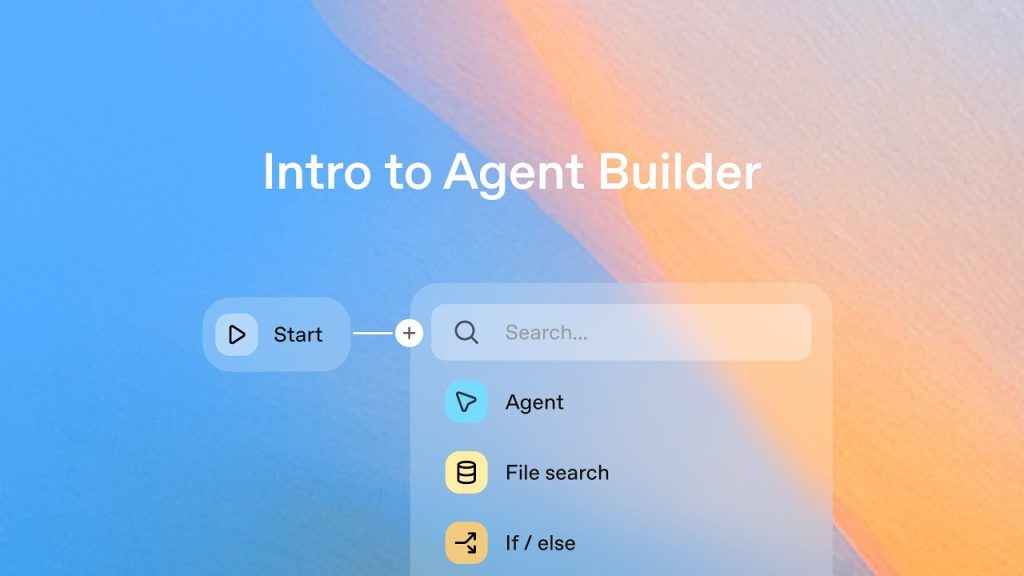
OpenAI’s AgentKit provides the infrastructure to build such systems. It offers both code-level APIs for developers and a visual Agent Builder that allows teams to design workflows through a drag-and-drop interface. This means you can literally draw your agent’s logic – define what tools it can use, what safety constraints it must follow, and how it should handle failures without needing to write everything from scratch.
The idea: anyone with a basic understanding of how AI works can create an agent that books travel, monitors spreadsheets, manages data pipelines, or even helps automate customer support, all powered by OpenAI’s language models.
The Building Blocks of AgentKit
The toolkit revolves around four key components:
- Agent Builder: A visual canvas where users can map an agent’s decision logic, connect data sources, and version different workflow designs. Think of it as a Figma-like interface for AI behavior.
- Connector Registry: A centralized library of integrations for popular platforms like Google Drive, Slack, SharePoint, and Dropbox. This ensures agents can interact with real-world tools securely and consistently.
- Guardrails: OpenAI’s modular safety system. These are pre-built layers that detect risky behavior, mask sensitive data, or prevent agents from performing unwanted actions, essential in enterprise settings.
- ChatKit: A UI toolkit that lets developers quickly embed conversational agent interfaces into websites or apps, complete with theming and streaming capabilities.
Together, these tools make the process of building, testing, and deploying agents dramatically simpler. For teams that have struggled with fragmented frameworks or security concerns, AgentKit offers a cleaner, more governed path forward.
Safer, smarter, and sharper agents
OpenAI is also introducing advanced evaluation systems and reinforcement fine-tuning (RFT) for agents – essentially letting them learn over time. Developers can now measure how often an agent picks the right tool or produces a reliable answer, and refine it automatically based on real-world performance.
Also read: Google introduces Gemini 2.5 Computer Use AI model: Here’s how it works
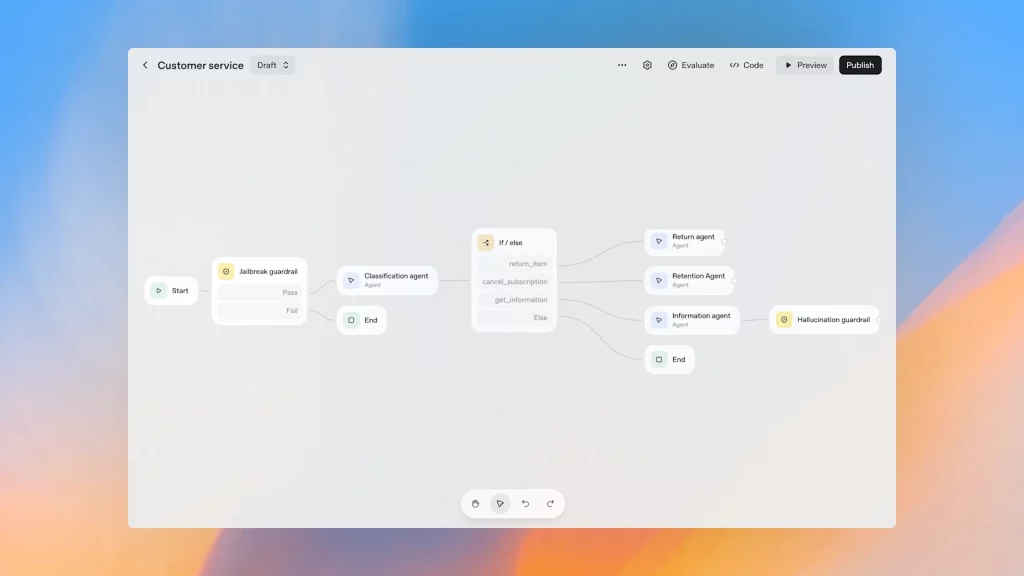
Crucially, this isn’t just about building clever bots, it’s about building trustworthy ones. The built-in Guardrails help developers enforce data privacy and compliance, which are key barriers to AI adoption in corporate environments.
What it means for developers and businesses
With AgentKit, OpenAI is lowering the barrier to entry for agentic AI in the same way ChatGPT lowered the entry point for conversational AI. For startups, it’s a shortcut to automation without needing a huge machine-learning team. For enterprises, it’s a framework that blends safety, scalability, and ease of iteration.
AgentKit’s design also signals OpenAI’s intent to own more of the agent stack, from model to middleware to interface. It’s a strategic move that positions OpenAI not just as a model provider, but as the backbone for AI-driven automation across industries.
Some components, like the Agent Builder and Connector Registry, are still in beta, but their direction is clear: OpenAI wants to make building AI agents as intuitive as making a PowerPoint deck. Developers can already experiment with ChatKit and the underlying Python SDK, with broader access expected in the coming months.
Also read: After NVIDIA, OpenAI chooses AMD chips for ChatGPT’s future: But why?


