
Meet Nemotron Nano AI model from NVIDIA: What does it do better?
 Follow Us
NVIDIA’s Nemotron Nano brings enterprise-grade AI to edge devices with unmatched efficiency
Small language model delivers blazing-fast reasoning, real-time processing, and multilingual support
Nemotron Nano redefines AI performance, balancing speed, cost, and advanced reasoning capabilities

NVIDIA’s Nemotron Nano AI model is redefining the possibilities for small language models (SLMs), bringing cutting-edge AI to resource-constrained devices like PCs, workstations, and edge hardware. With versions like the Llama-3.1-Nemotron-Nano-8B-v1 and the Nemotron-Nano-9B-v2, this compact yet powerful model is turning heads for its efficiency and performance. But what exactly makes Nemotron Nano stand out in a crowded field of AI models? From blazing-fast performance to innovative reasoning capabilities, here’s a deep dive into why this model is a game-changer.
 Survey
Also read: NVIDIA brings Blackwell to the cloud, announces GeForce Now’s biggest upgrade yet at Gamescom 2025
Efficiency meets power
Imagine running a sophisticated AI model on a single NVIDIA RTX GPU or an edge device without needing a sprawling data center. That’s the promise of Nemotron Nano. With 8 to 9 billion parameters, it’s designed for low-latency, cost-effective deployment on devices like the NVIDIA A10G, H100, or even consumer-grade GPUs. Unlike larger models that demand massive computational resources, Nemotron Nano brings enterprise-grade AI to the edge, making it a game-changer for industries where real-time processing is critical.
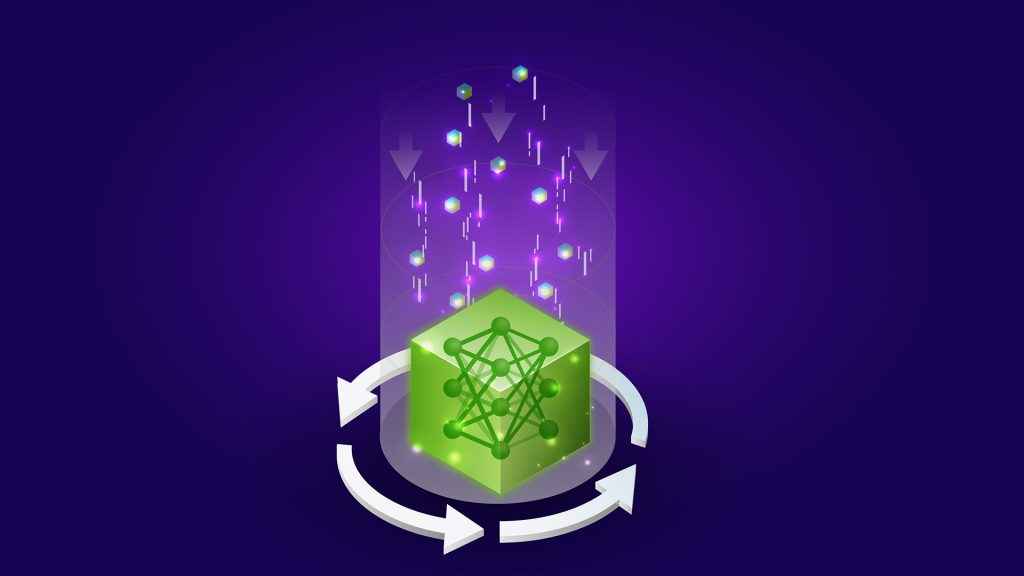
Take customer support, for example. Businesses can deploy Nemotron Nano to power chatbots that respond instantly to customer queries, all while running on a single GPU. This efficiency translates to lower operational costs and the ability to scale AI solutions without breaking the bank. “Nemotron Nano is about bringing AI to where the data lives,” says an NVIDIA spokesperson. “It’s about making AI accessible and practical for real-world applications.”
The Nemotron Nano v2, with its hybrid Mamba-Transformer architecture, is a speed demon. By using only four attention layers, it achieves up to six times higher throughput than similarly sized models like Qwen3-8B on a single NVIDIA A10G GPU in bfloat16 precision. This makes it ideal for applications where every millisecond counts, such as real-time customer interactions or autonomous agent workflows.
For developers, this speed means more than just faster responses. It’s about enabling AI to handle high volumes of queries without lag, whether it’s processing thousands of customer inquiries or analyzing data streams on the fly. In benchmarks, Nemotron Nano’s throughput sets it apart, making it a go-to choice for enterprises looking to balance performance and cost.
Reasoning on demand
One of Nemotron Nano’s most innovative features is its “reasoning on/off” toggle, controlled via tokens like /think or /no_think. This allows developers to fine-tune the model’s behavior based on the task at hand. Need a quick answer to a simple question? Turn reasoning off for lightning-fast responses. Facing a complex math problem or coding challenge? Activate reasoning mode for step-by-step logic that rivals larger models.
This flexibility shines in benchmarks. Nemotron Nano scores an impressive 72.1% on AIME25 (math), 97.8% on MATH500, 64.0% on GPQA (general knowledge), and 71.1% on LiveCodeBench (coding). These numbers put it neck-and-neck with models many times its size, proving that small doesn’t mean less capable. Developers can even adjust the “thinking budget” to control how many tokens are used for reasoning, optimizing performance for edge devices where resources are tight.
For tasks beyond text, the Llama Nemotron Nano VL (8B) takes things to the next level. This multimodal vision-language model leads the OCRBench V2 leaderboard for document understanding, excelling at extracting and analyzing information from complex documents like PDFs, charts, tables, and diagrams. Whether it’s parsing financial reports, medical records, or legal contracts, Nemotron Nano VL delivers precision on a single GPU, making it a boon for industries like finance, healthcare, and law.
Picture a hospital using Nemotron Nano VL to scan and summarize patient records in seconds, or a financial firm extracting key data from dense quarterly reports. Its ability to handle optical character recognition (OCR), text spotting, and table extraction with high accuracy makes it a versatile tool for automating document-heavy workflows.
Open and Enterprise-Ready
Nemotron Nano isn’t just for English-speaking users. It supports a wide array of languages, including German, Spanish, French, Italian, Japanese, Korean, Portuguese, Russian, and Chinese. This makes it a powerful ally for global enterprises looking to deploy AI across diverse markets. Whether it’s a customer support bot in Tokyo or a document processor in São Paulo, Nemotron Nano delivers consistent performance across languages, breaking down barriers in international workflows.
Also read: NVIDIA becomes first company ever to hit $4 trillion mark, spurred by AI
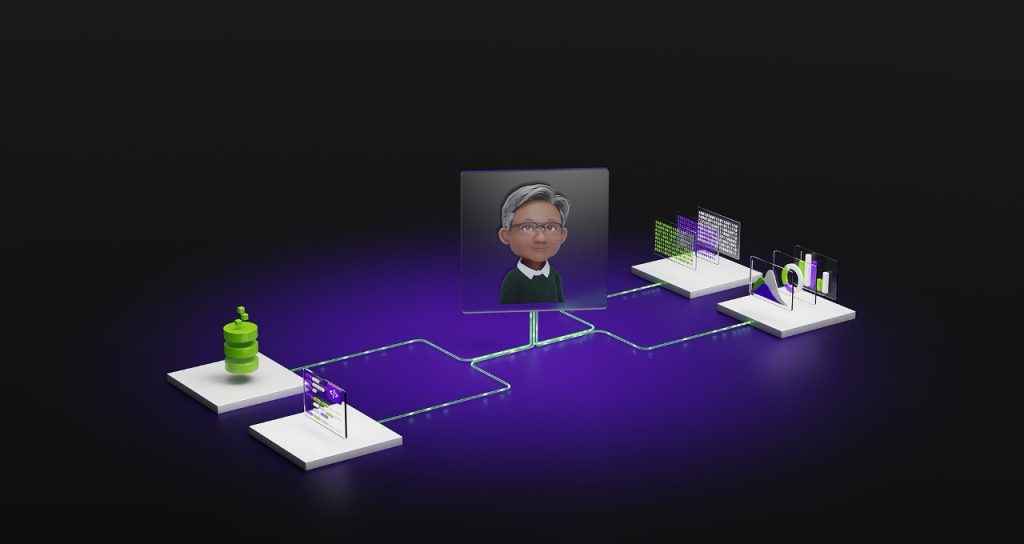
NVIDIA’s commitment to openness sets Nemotron Nano apart. Released under the permissive NVIDIA Open Model License, it allows immediate commercial use with minimal restrictions, provided safety guardrails and compliance are maintained. NVIDIA also shares most of the pretraining dataset – 6.6 trillion tokens, including web crawl, math, code, and multilingual Q&A – giving developers unprecedented transparency and the ability to customize the model for specific needs.
Integration with NVIDIA’s ecosystem, like the NeMo framework for model customization and NIM microservices for scalable deployment, makes Nemotron Nano a plug-and-play solution for enterprises. “We’re not just giving you a model; we’re giving you the tools to make it your own,” says an NVIDIA engineer. This openness, combined with enterprise-grade performance, positions Nemotron Nano as a favorite for businesses looking to innovate without proprietary constraints.
Where it shines and where it doesn’t
Nemotron Nano’s strengths lie in its efficiency, speed, and versatility, but it’s not without limitations. Its 8B-9B parameter size means it can’t match the raw power of larger models like Nemotron Ultra or Llama-3.1-70B for the most complex tasks. And while it’s optimized for NVIDIA GPUs, organizations using non-NVIDIA hardware may face compatibility challenges.
Still, for edge AI, document processing, multilingual applications, and tasks requiring fast, accurate reasoning, Nemotron Nano is hard to beat. Its ability to deliver high performance on modest hardware makes it a democratizing force in AI, bringing advanced capabilities to businesses and developers who might otherwise be priced out.
As AI moves from the cloud to the edge, models like Nemotron Nano are paving the way. Its blend of speed, efficiency, and intelligence makes it a standout in NVIDIA’s AI portfolio, offering a glimpse into a future where powerful AI runs on the devices we already own. Whether it’s powering smarter chatbots, automating document analysis, or solving complex problems on the fly, Nemotron Nano is proving that big things can come in small packages.
For developers and enterprises ready to harness AI at the edge, Nemotron Nano is more than a model, it’s a catalyst for innovation. As NVIDIA continues to refine and expand its capabilities, one thing is clear: Nemotron Nano is setting a new standard for what small language models can achieve.
Also read: AMD Challenges NVIDIA with MI350 Series, ROCm 7, and Free Developer Cloud


