

Joel Hellermark wants to end the workday as we know it with AI
 Follow Us
Joel Hellermark envisions an AI-powered Renaissance transforming traditional workplaces
Workday bets on autonomous agents to reinvent enterprise software
Hellermark's ambitious vision raises questions about jobs and hierarchies
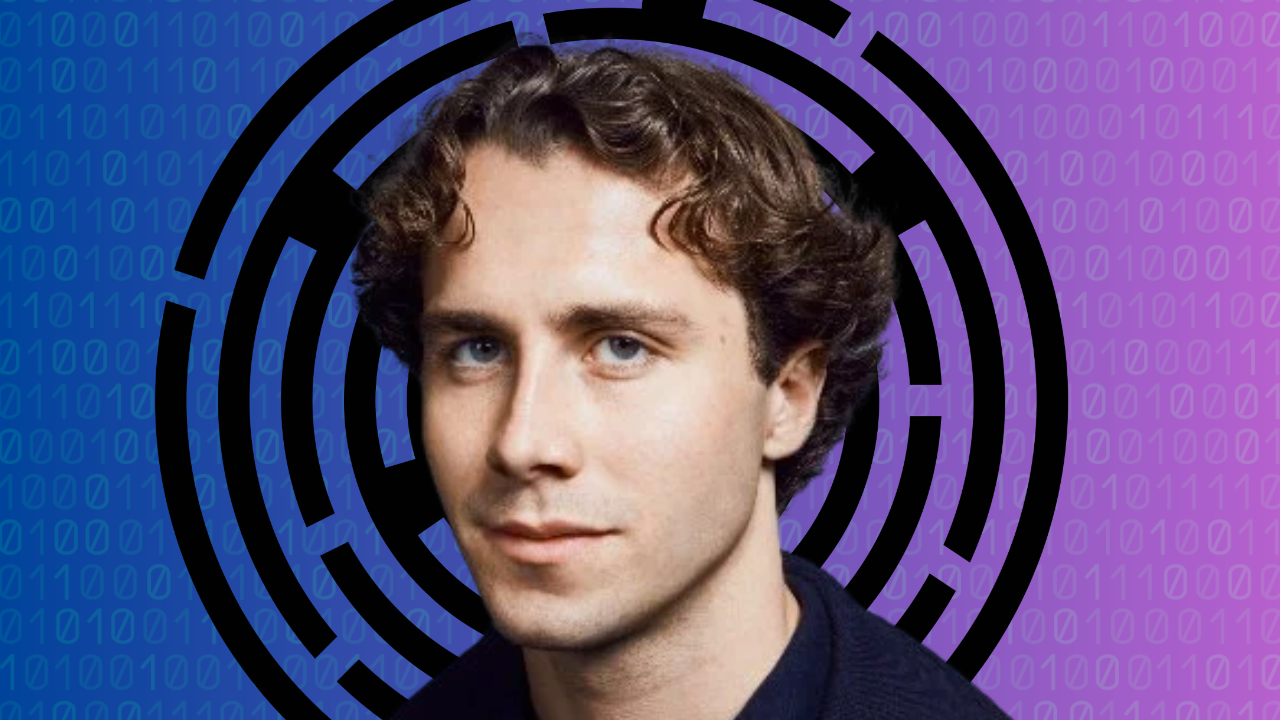

Somewhere inside Workday, an engineer is apparently instructing AI agents while out windsurfing in the middle of the week. And his boss considers that work, believe it or not, according to Joel Hellermark, Chief AI Officer at Workday.
 Survey
But that’s exactly the kind of unimaginable workday scenarios AI will enable more into the future. “You wake up and you check in on your fleet of AI agents and it feels like you’re conducting this orchestra. You’re overseeing any escalations that they’ve done. You’re checking in on their progress,” Joel Hellermark tells me in an exclusive interview.
Throughout my conversation with Hellermark one thing becomes clear. He isn’t interested in building a faster version of today’s office, he actually wants to make most of it obsolete.
“I think the industrialization of knowledge work is quite depressing. We go into these huge buildings and we sit there and click through SaaS systems all day. Thanks to AI, I think there’s going to be a lot more time to do the things that we’re uniquely capable of doing in the future.”
It’s an incredible admission from Workday’s Chief AI Officer, given that his Fortune 500 employer built its entire business on precisely those SaaS systems that Hellermark wants to banish to history books.
Sana enters the Workday chat
A teenage computer prodigy from Sweden, Hellermark founded Sana in 2016 when he was just 19. This was years before the current GenAI craze on all things tech. A self-taught programmer, right from his teenage years Hellermark has believed that machines could transform learning and work, expressing his ideas through Sana. That belief was shared by Workday who bought Sana for approximately $1.1 billion in November 2025. As a result, Hellermark now has access to more than 11,500 Workday customers, including over 65% of the Fortune 500. A massive canvas to bring his vision to life.
Also read: Workday CEO Aneel Bhusri calls Oracle, SAP as AI ‘dinosaurs’
With Workday co-founder Aneel Bhusri returning to the company as CEO, Hellermark’s assignment is impossible to miss. Sana has now become the new Workday Home, an intuitive interface intended to turn natural-language prompts into accurate and meaningful work that cuts across HR, finance and IT – no small feat. A slew of new tools from Workday are aimed at doing just that – like Sana Concierge for handling employee service requests, Autopilot Agents for handling repetitive tasks in recruiting, payroll and accounting, among other things.
Hellermark regards the leap from startup to software giant as a return to his roots, a thought echoed by CEO Aneel Bhusri who calls his own return to Workday as its “re-founding” moment.
“I think this is very similar to being a founder,” says Hellermark. “It’s more similar to being an early stage founder than a late stage founder. So, it feels like going back to the founding of Sana. We’re developing so many new products. We’re re-founding the company. There’s an incredible amount of founder energy in the company.”
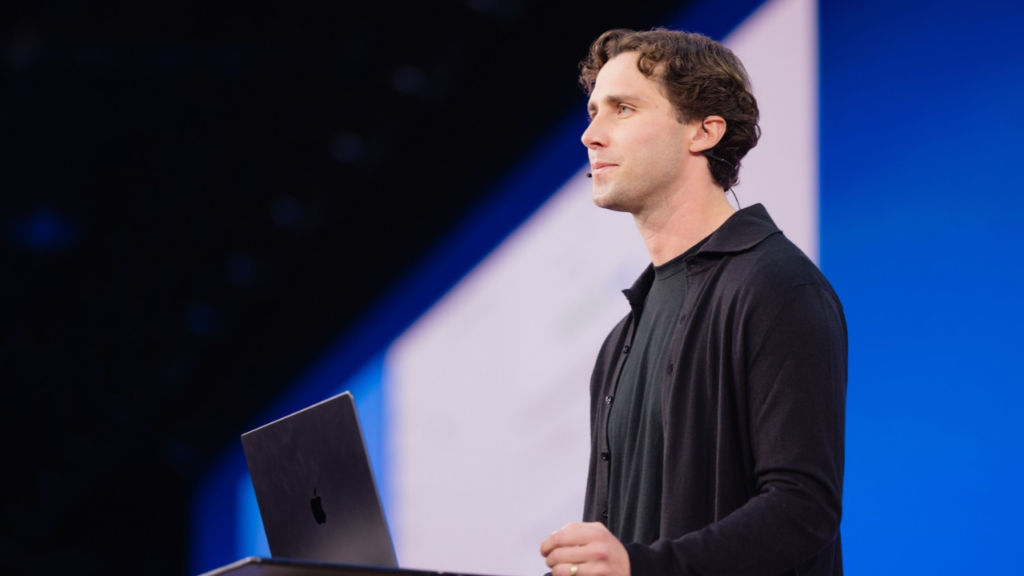
Hellermark made a revealing distinction between vision and execution, explaining how while his ambition remains expansive, the horizon to plan things has shrunk dramatically.
“It’s hard to plan even more than six weeks out. And you need to be sort of relentlessly focused in exploration and sort of incremental improvements to the product and evolving to the model capabilities. And that historically was viewed as very reactive. But I actually think now you have to do more reactive product development. Because a new model release can entirely change the paradigm of the products that you’re building.”
Workday’s challenge is to operate at AI-startup speed without asking customers to gamble their payroll on a moving target. An unenviable undertaking that Hellermark finds an exciting challenge.
Working like ten startups inside a Fortune 500 company
Hellermark insists that scale doesn’t necessarily mean surrendering speed, especially given how he operates inside Workday.
“We operate in very small, talent-dense teams, and they operate as sort of startups inside of the company.” Hellermark adds that these small teams are interdisciplinary, have no layers of management, and are empowered to own their project pipelines end-to-end. “They basically all report up to me directly,” he says.
In this vein, Hellermark considers his role equivalent to founding ten startups simultaneously. However, Workday isn’t ten startups. It’s a business entrusted with sensitive information and consequential processes across hospitals, banks and multinational employers. Its innovations must survive legal review, deployment complexities, and the ordinary messiness of existing tech systems.
Nor is every promised capability ready for every Workday customer. For instance, the new Workday Home is available, but administrators choose whether to enable it. Similarly, Sana Concierge remains in early access, with broader availability expected in early 2027. Enterprise AI’s promised future is destined to arrive in stages, from the looks of it.
When I teasingly suggest Bhusri treats him almost like an adopted son, perhaps even a prospective successor, Hellermark laughs before he gets serious. “Both Gerrit and Aneel have been incredibly generous with me. They’ve given me more trust than I deserve. I feel a lot of responsibility to deliver on that and make sure we win.”
For all the utopian dreams of tomorrow’s workforce, Hellermark understands the responsibility of turning an audacious vision into something tangible that customers will actually trust.
An AI-enabled renaissance, not another factory
In my conversation, I find Hellermark’s most locked-in belief isn’t about software per se, but the people that software is ultimately supposed to serve. Across offices and industries, Hellermark sees knowledge locked in silos, people trapped in outdated workflows and information controlled by several layers. All potential bottlenecks to solve for.
Hellermark believes AI can dissolve some of those bottlenecks. He expects new graduates entering the workforce to instinctively get how to direct agents, even without decades of accumulated institutional expertise. And with that, Hellermark challenges one of the oldest assumptions about apprenticeship itself.
“I think knowledge transfer will be less important,” he says. “The idea of sitting next to someone over a couple of years to maybe transfer that knowledge. I think you will have instant access to it going forward. And new grads will be the most AI-pilled people you have in your organizations.”
In that case, what happens to corporate hierarchies inside big companies, I ask him? “I think it will be an inverted pyramid where the folks that historically have been at the bottom will be at the top. And the individual contributors will be the most valuable people in the organization. And a lot of the hierarchies of management will dissolve.”
For a company selling human-capital management software, that’s a deliciously disruptive thought. Where Hellermark imagines teams assembling around tasks and missions rather than reporting hierarchies, and the future of work might require managing considerably fewer managers. Where humans become conductors of intelligent systems instead of operators of applications.
“Yeah, I think this will be like the return of the polymath, a generation of Da Vinci’s. And I think it will be much more like the Renaissance than the Industrial Revolution,” imagines Hellermark.
If AI takes the routine assignments away from juniors joining the workforce, where does the next generation get their instincts from? On this note, Hellermark offers no detailed transition plan, assuming that valuable skills will change quickly. Workday’s newly announced Work Intelligence, designed to separate jobs into tasks that AI can automate, augment or leave to humans, is one attempt to confront that problem. But that still doesn’t answer the question of how to build a career ladder when the lower rungs of upward mobility disappear with AI.
Designing for AI imperfection
Underneath the Renaissance rhetoric, the stubborn engineering problem still remains. Generative AI is probabilistic, but payroll, identity permissions, and financial ledgers are not. I ask Hellermark how he designs around imperfect AI.
“You apply human judgement at the end of it. Then there’s the transition from probabilistic to deterministic workflows, and probabilistic workflows getting upgraded to deterministic workflows once they work. And that means once you trust this to run, you can upgrade it to a deterministic workflow, and then you just call on that deterministic workflow whenever you need it, knowing fully well it will just work.”
That distinction tracks with Workday’s recent announcements. The company unveiled a Trusted Agent Platform with audit trails and policy controls, an Anthropic partnership allowing Claude to work alongside Sana’s enterprise context. Workday also announced an agreement to acquire C1.ai, whose identity-management tech helps determine what each human and AI agent is allowed to access.
The ambition is bigger than a smarter HR help desk. “Agents cross many applications. Where does HR end and IT begin is unclear to me.” Hellermark says.
Who gets to conduct the orchestra?
The symmetry to Hellermark’s story is difficult to miss. A founder who began with AI-powered learning now believes the next great skill will be the ability to command systems that can learn and act on our behalf. Hellermark believes tomorrow’s ideal worker won’t be a data-entry clerk nor a software administrator, but a polymath with an orchestra at their fingertips – even while windsurfing on a weekday.
“I think this role of overseeing this AI orchestra and being very empowered to do that is an inspiring one. I don’t think there will be a lot that we will miss with the existing paradigms. I think quite the opposite, we will be surprised that that’s how the world worked,” emphasises Hellermark.
That remains to be seen, of course. For now, the boy wonder has a Fortune 500 platform, a founder’s appetite for reinvention and a CEO willing to bet on him. The real test of Hellermark’s Renaissance isn’t restricted to Workday demonstrating an agent completing a workflow. It will be visible if AI makes work more humane (minus all the drudgery), while keeping open the opportunities through which people become capable and valuable parts of the digital industrial workforce. And it will also depend on whether a company built on enterprise processes can disrupt itself without losing the trust that made it successful in the first place.
Also read: Workday’s Gerrit Kazmaier on why AI won’t take the human out of work


