
Workday’s Gerrit Kazmaier on why AI won’t take the human out of work
 Follow Us
Workday's Gerrit Kazmaier calls AI at work "the great liberation"
Workday draws firm lines on where humans stay in control
JLL's transformation chief says changing human behaviour is the real hurdle
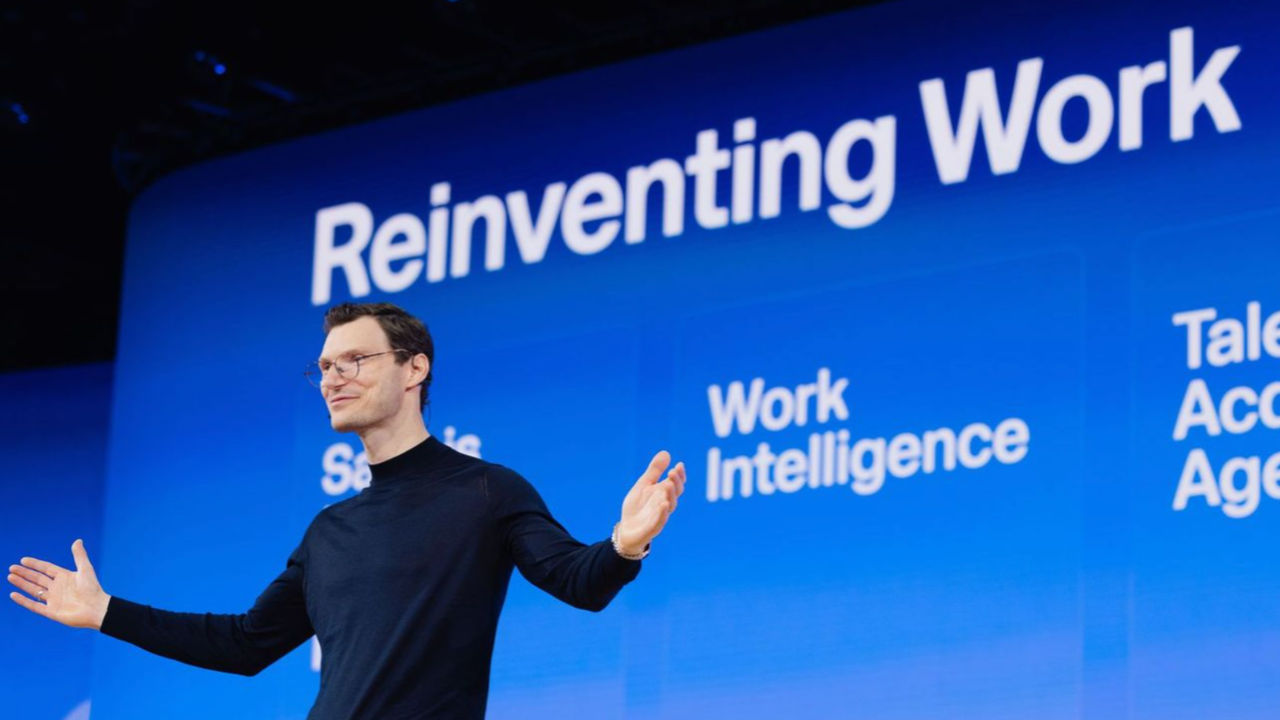

Every few years, hasn’t a new tech innovation promised to give us our time back? And still we end up being busier than before! Email was supposed to reduce official memos, collaboration tools were supposed to kill email, and now AI agents are entering the conversation. Especially in HR tech.
 Survey
Besides all the productivity and efficiency wins, when software starts screening resumes, scheduling interviews and clearing expense reports by itself, an inevitable question arises. If AI takes over so much of the work, what’s left of the human side of it? Is AI the end of serendipity at work?
I put that question to Gerrit Kazmaier, President, Product and Technology at Workday, during a select media roundtable. He didn’t hesitate in his response, “I actually think it’s the great liberation. And I think it’s actually what brings back fun and excitement and engagement at work. The reality today is most time at work is spent on work about work: over-alignment, over-coordination, waiting for approvals, handovers. A recruiter not thinking about and engaging with talent, but reading through resumes or scheduling interviews. Or a financial analyst spending the day downloading data and finding the right data, versus really developing new ideas on how they could grow the business.”
According to Kazmaier, the risk isn’t that AI will strip work of its humanity. Because modern work has already lost a good deal of it – bogged down under status updates, coordination calls and waiting for approvals. Customer success teams, Kazmaier pointed out, are a case in point.
“When you look into what customer success managers are doing, they’re not really engaging with customers. They’re not really being strategic advisors. They are not really working on the next big project with them. They’re actually stuck reading emails, documents, PowerPoints, getting status, aligning status,” he said.
True growth with AI, not just operational efficiency
This is where Workday wants to differentiate itself from others. Plenty of enterprises see AI as a cost-cutting exercise, which is thinking way too small, argues Kazmaier.
“There is a world where some companies think about AI as a pure efficiency game. Look at all the things that you do and just make them faster and cheaper. Workday is very different, we think of AI as a growth opportunity,” said Kazmaier. “We think about AI in a way that allows you to unlock new market opportunities, have insanely good customer retention, do more and do it faster, because we are giving you back so much time through the AI automation we can drive in that mundane category of work.”
Also read: Workday CEO Aneel Bhusri calls Oracle, SAP as AI ‘dinosaurs’
To drive his point home, Kazmaier highlighted the industry’s fascination with fully self-running companies. “Frankly, some companies dream of an autonomous enterprise. We think that’s a very cold and soulless way to think about an enterprise,” he said.
Cold and soulless are, of course, strong words. Especially from someone whose job is to build AI that runs hiring, payroll and finance for some of the world’s largest companies. However, for Kazmaier, it all boils down to one thing – that people, not algorithms, are the real multiplier. “We think that talent, the people, that’s your ultimate growth driver with AI. And we know from research that great talent drives amazing outcomes with AI.”
Where ‘almost right’ is wrong in AI-enabled workflows
Of course, liberation from the drudgery of work only works if you can trust the machine doing the liberating. And in HR and finance, the margin for error is razor thin, and the stakes are always high, something that Kazmaier perfectly understands.
“We know we are in a space where almost right is wrong. And I think this is actually one of the biggest challenges our customers have when they’re trying to apply AI, because they’re applying it to mission-critical processes, like paying people, like making hiring decisions,” emphasised Kazmaier.
Workday’s answer is a three-tier framework – human in the loop, human on the loop, and human out of the loop – mapped to how much a given decision affects a person’s life.
“There are jobs where we want humans to have ultimate oversight, like a hiring decision – everything which materially influences the income or employment of a person. There are humans on the loop, which means they are informed about actions that AI systems take. A classical example would be travel and expense management approvals. And then there are systems where the human should be out of the loop. For instance, transaction sampling and financial compliance of accounting records. And the reason is that AI is accurate enough, way more accurate than a human ever could be. It’s doing it in real time. No person can do it. And it’s not directly impacting a human or a person’s access to opportunity.”
Hiring sits firmly in the first bucket. Interview scheduling doesn’t – and the reasoning behind that is surprisingly human, according to Kazmaier.

“Workday does not automate hiring decisions, because we ultimately think it’s always going to be a human-in-the-loop decision. There is more to this than just algorithmic judgment. But what we decide to do automatically is interview coordination and scheduling. And there is a simple reason for that. People apply for their next job when they are usually done working in their current job. That’s the time most recruiters don’t work, because they finish their workday too. So sometimes they have to wait a day or even a weekend.”
In other words, taking the human out of the loop here isn’t about replacing the recruiter. It’s about not losing a great candidate because everyone on the hiring side happened to be offline on a Saturday.
That’s precisely the problem JLL set out to fix. The global real estate services firm, and a Workday customer since 2018, JLL rolled out its recruitment agent (called HireBuddy) globally just this summer. Jane Curran, Chief Transformation Officer, JLL, explained why hiring was the obvious place to start.
“We’re 111,000 and we hire about 30,000 people a year… This summer was the time when we launched the whole thing globally end-to-end, not just automated interview scheduling, which is amazing, but also rethinking how you hire for high-volume positions, and how you redo the recruiter’s experience and the manager’s experience, and ultimately the candidate’s, because some of these people are on the market for 10 days. So you don’t want to lose out because you have a bad, slow process,” highlighted Curran.
Ultimately the process drives results, AI only assists
Underpinning all of this is what Kazmaier calls “lawful AI” – a design philosophy where AI doesn’t run the show on its own. It’s dictated by the process governing the principles at play.
“When we apply AI, we design it in a way that we don’t have an AI system driving a process. We have a deterministic process that is using AI at points where we can use AI judgment instead of waiting for a human operator. That’s a very different way to look at AI automation. Because repeatability, auditability, traceability are all things that we want to have guaranteed. That’s what we mean when we say lawful AI,” according to Kazmaier.
It’s a subtle but important distinction, and it makes sense, if you think about it. AI as a component inside a governed workflow, rather than the workflow itself. And on the customer side, those guardrails need their own checks. Lavanya VNV, Director, Product Management, JLL, described how her team keeps tabs on what the AI is doing – and why. “We made sure that AI has guardrails. We are also capturing its reasoning on why it is telling what it is telling. And we have audit processes, which go and check the intent of the AI… We’re also realising that delegating work to AI also means there’s a lot of work in checking AI’s work,” emphasized Lavanya.
If the guardrails settle who decides, the bigger question is how work itself should change. This is where Kazmaier offered his most interesting idea and a sharp diagnosis of why so many AI rollouts underwhelm.
Also read: Workday opens its platform to AI agents: Autopilot Agents and Headless Access explained
“The interesting thing with even the frontier AI models is that they are hyper-proficient in some of those aspects, and in some aspects they are not. This is what’s called the jagged line of AI. It’s really hard to predict sometimes. So when a customer of ours comes to us and says, ‘How do I apply AI to my work?’, we have to understand work differently. We have to understand work through the lens of AI automation. And that’s not skills. That’s not workflows. That is the fundamental task,” explained Kazmaier
Break a job down to that level, according to Kazmaier, and every task falls into one of three buckets. “Once you disaggregate your work into tasks, you basically see three pools. One pool is AI can automate this task. A second pool is that AI can assist the task. And the third pool is that it is a task that humans do best, or that you want humans to do,” he said.
That’s the job of Workday’s Work Intelligence, which maps a company’s existing job profiles into tasks and projects which ones AI can automate, assist with, or leave to people. Once you do that, something unexpected happens to the job titles themselves.
“What we see right now is that the job profiles rearrange. Product manager, software engineer, designer – they’re more or less becoming the same, because we took the coding part and using a design tool out of all of these specialised profiles. Now you have a converged profile which is much more flexible.”
At JLL, Curran sees the same shift playing out inside HR itself, where thousands of people currently spend their days answering routine queries.
“In the age of AI, orgs are changing, skills are changing. In HR, we would like those people to be focusing on: how do I reskill the people I have? How do I design new organisations? That’s where we want humans working in HR, and not on highly repeatable tasks.”
The hidden gem test
Which brings us back to serendipity. And whether an algorithm can spot the candidate whose resume doesn’t tick every box, but who might be exactly the right hire? Kazmaier turned the question on its head.
“We should not underestimate the efficacy of a well-designed AI system. The question really is the other way around. How do you specify what your company culture is, what that thing is that makes you as a company uniquely you, what you’re looking for, in a way that an agentic solution can support? Because that’s possible. Why does great talent become the biggest leverage for AI? Because they can actually paint that picture.”
Still, not everyone on the front lines finds an AI-saturated workday purely liberating, as evidenced by Lavanya’s refreshingly honest take on what it feels like to spend your days surrounded by agents. “Personally, as a techie, when I have a personal agent, Claude Code and so many other things with me, it can sometimes actually be daunting not to work with people who speak to you, and you’re already working with agents,” she revealed.
And for Curran, the biggest risk in JLL’s AI journey isn’t the technology at all. “The tech will work. We can clean the data. We can rewrite the process. But I’ve got to change hearts and minds to say this is better than that,” said Curran.
It’s a telling reminder that the “great liberation” Kazmaier describes won’t arrive just because the agents are ready. Workday’s vision for the next generation of ERP depends on people choosing to work differently too. If Workday pulls it off, serendipity at work may not disappear at all. It may simply move back to the places where humans were always meant to be. Whether enterprises are ready for it remains to be seen.
Also read: Workday Rising 2026: Workday wants to be the system of record behind every AI assistant


