

International Space Station Crisis: Why Limited Tech Forced NASA to Scrub Crew-11
 Follow Us
ISS limits force NASA to scrub Crew 11 mission early
Why limited space station technology triggered unprecedented NASA crew evacuation
Crew 11 crisis exposes International Space Station diagnostic gaps critical
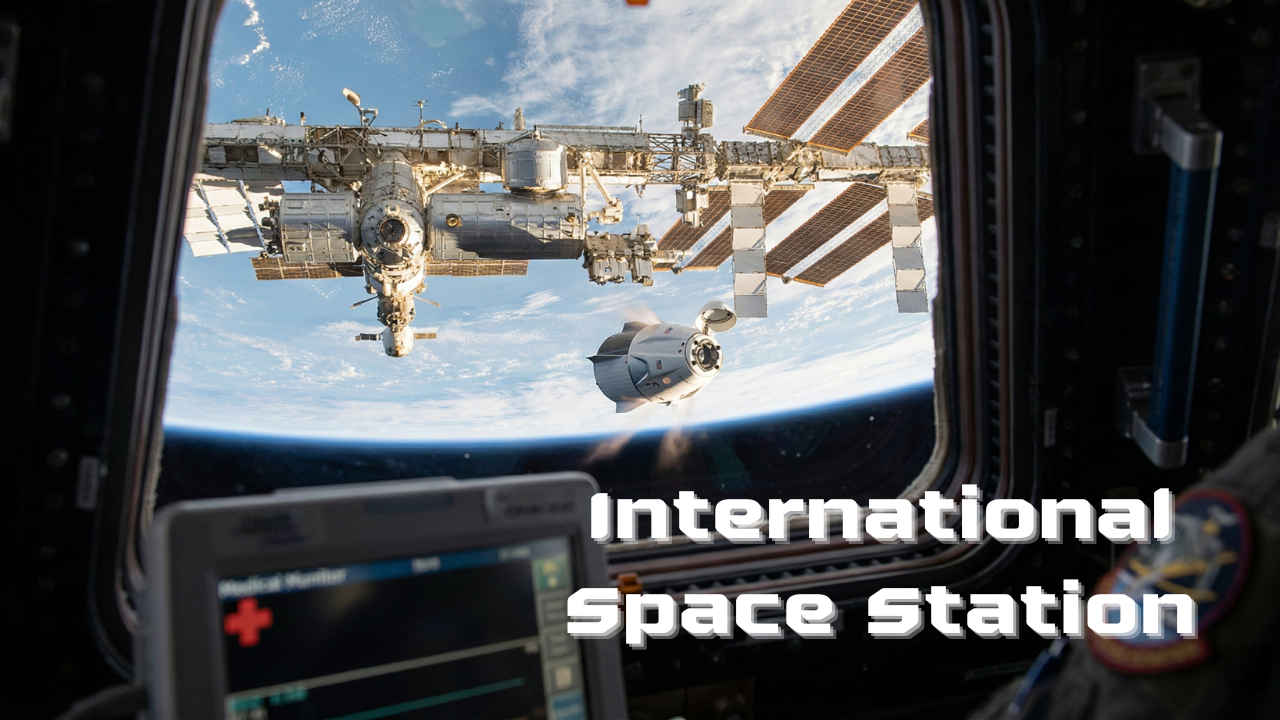

For 25 years, the International Space Station (ISS) has orbited as humanity’s greatest engineering achievement – a microgravity fortress capable of recycling its own water, shielding its crew from cosmic radiation, and docking spacecraft traveling at 17,500 mph. But that fortress has revealed a critical vulnerability.
 Survey
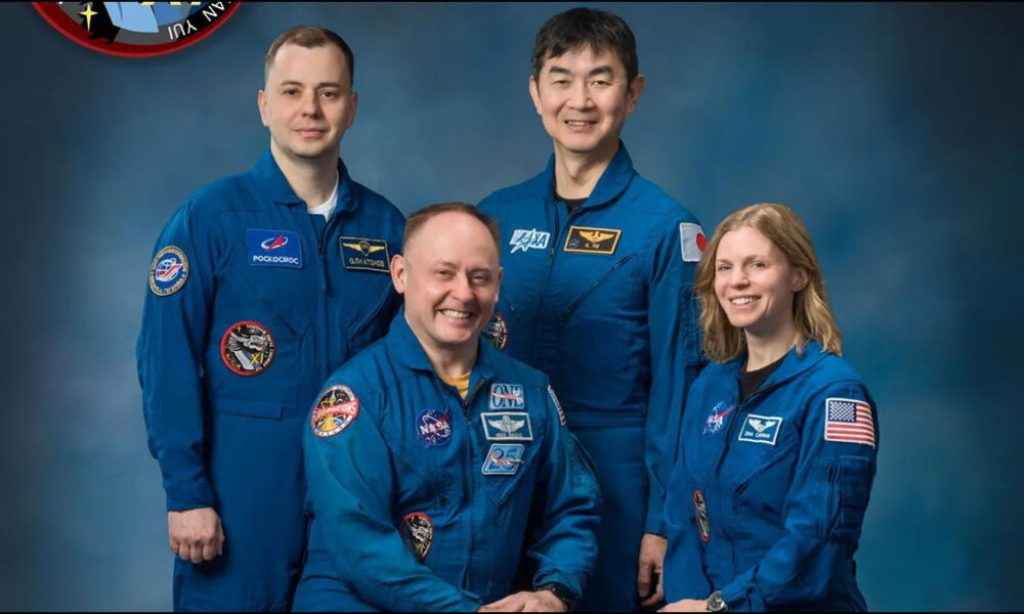
For the first time in its history, NASA is aborting a mission mid-stream. The entire four-person Crew-11 team, Commanders Zena Cardman, Mike Fincke, Kimiya Yui, and Oleg Platonov, is evacuating the station on the SpaceX Dragon Endeavour to bring a single astronaut home for medical care.
Also read: Best Samsung The Frame TV alternatives that double as art for your living room
NASA describes the patient’s condition as “stable” and “not life-threatening.” This phrasing has left many wondering: If the astronaut isn’t dying, why end a multimillion-dollar mission months early?
The answer lies in a technological paradox: The ISS may be the most advanced laboratory in existence, but its medical bay is effectively stuck in the 20th century.
The “blind spot” in orbit
To understand why Crew-11 is coming home, you have to understand what flight surgeons on Earth couldn’t see.
The medical capability on the ISS is governed by the Crew Health Care System (CHeCS). While impressive for a spaceship, CHeCS is functionally equivalent to a high-end ambulance or a remote battlefield medic station, not a hospital.
The station’s primary imaging tool is a portable ultrasound machine. Ultrasound is excellent for soft tissue analysis, spotting blood clots (a known risk in zero-g), and basic organ monitoring. However, it hits a hard limit when dealing with complex internal diagnostics.
The ISS completely lacks CT (Computed Tomography) and MRI (Magnetic Resonance Imaging) scanners. These massive, heavy, magnetic machines are currently impossible to launch or operate in the station’s delicate environment.
This creates a dangerous “diagnostic blind spot.” If an astronaut reports a persistent headache, abdominal pain, or neurological symptom, the onboard ultrasound can rule out the obvious. But it cannot see through bone to image the brain, nor can it provide the high-resolution, 3D cross-sections needed to rule out tumors, aneurysms, or deep-tissue infections.
When onboard tech hits that wall, the risk calculus changes immediately. In space, “uncertainty” is treated as a fatality waiting to happen. If NASA cannot prove the astronaut is safe using onboard tools, they have no choice but to bring them to a machine that can-on Earth.
No surgery, no sterile field
Also read: MedGemma 1.5 & MedASR explained: High-dimensional imaging and medical speech-to-text
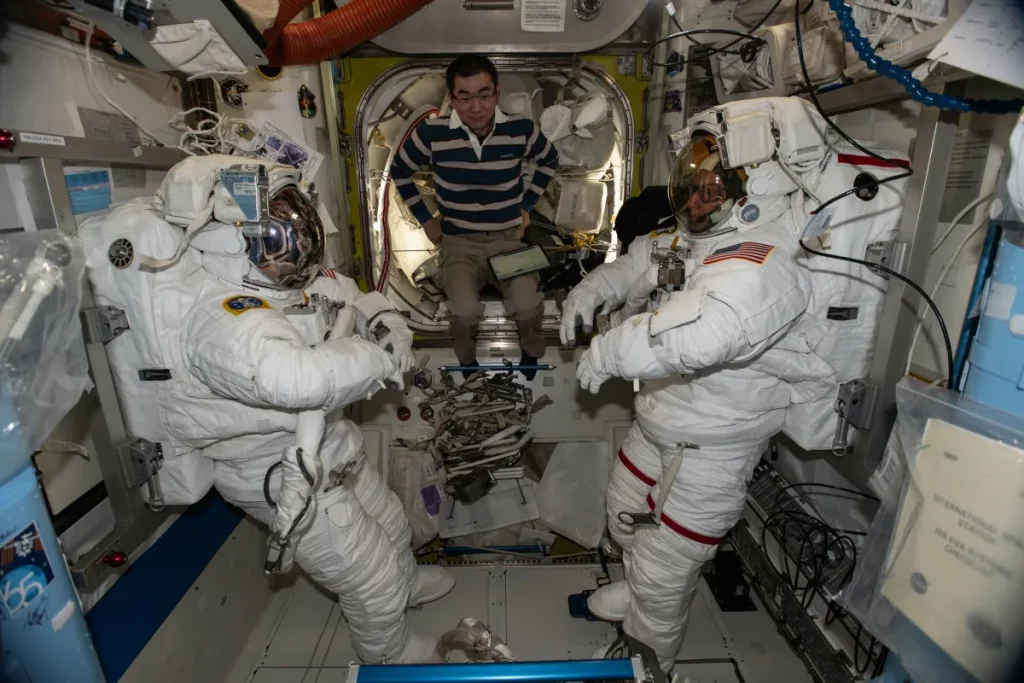
The decision to evacuate also highlights the station’s inability to intervene if a condition worsens.
The ISS environment is a soup of floating skin cells, dust, and microbes. Creating a sterile surgical field in microgravity is nearly impossible. There is no surgical suite, no general anesthesia, and no blood bank.
The medical kit includes:
- Advanced Life Support (ALS): Defibrillators and intubation equipment.
- Ambulatory Care: Suture kits for cuts and basic pharmaceuticals (antibiotics, painkillers, epinephrine).
This kit is designed to stabilize a patient for transport, not to cure them. If a diagnostic uncertainty suggests even a 1% chance of a condition requiring surgery – like appendicitis or a kidney stone requiring lithotripsy – the crew must leave immediately. The 24-hour return trip is the only treatment plan available.
The ‘lifeboat’ protocol
The tech limitations extend beyond the medical bay to the getaway vehicle itself.
SpaceX’s Crew Dragon is designed as a fully integrated “lifeboat.” The pressure suits and seat liners are custom-molded to each astronaut’s body to survive the crushing 4G forces of reentry.
Furthermore, NASA’s flight rules dictate that the ISS cannot be left without an escape vehicle for every soul on board. If the Dragon Endeavour were to depart with just the sick astronaut and a pilot, the remaining two crew members would be stranded on the station. In the event of a fire or depressurization, they would have no way home.
Therefore, the technology dictates the protocol: One sick passenger means the entire bus turns around.
A reality check for Mars
As the Crew-11 capsule prepares for splashdown off the coast of California, the space industry is breathing a sigh of relief that the astronaut is stable. But this event serves as a sobering reality check for the future.
We are currently planning missions to Mars, a trip that takes seven months one-way. On a Mars transit, there is no “splashdown tomorrow.” There is no U-turn.
The Crew-11 evacuation proves that our current deep-space medical tech is insufficient for missions where Earth is out of reach. Before we go to the Red Planet, the “ambulance” model of space medicine will need to evolve into a “hospital” model, likely featuring AI-driven diagnostics, surgical robotics, and advanced compact imaging, because next time, coming home may not be an option.
Also read: Apple Creator Studio vs. Adobe Creative Cloud: Which creative bundle is best for you?


