
India is one of Canon’s most important markets: Toshiyuki Tiger Ishii
 Follow Us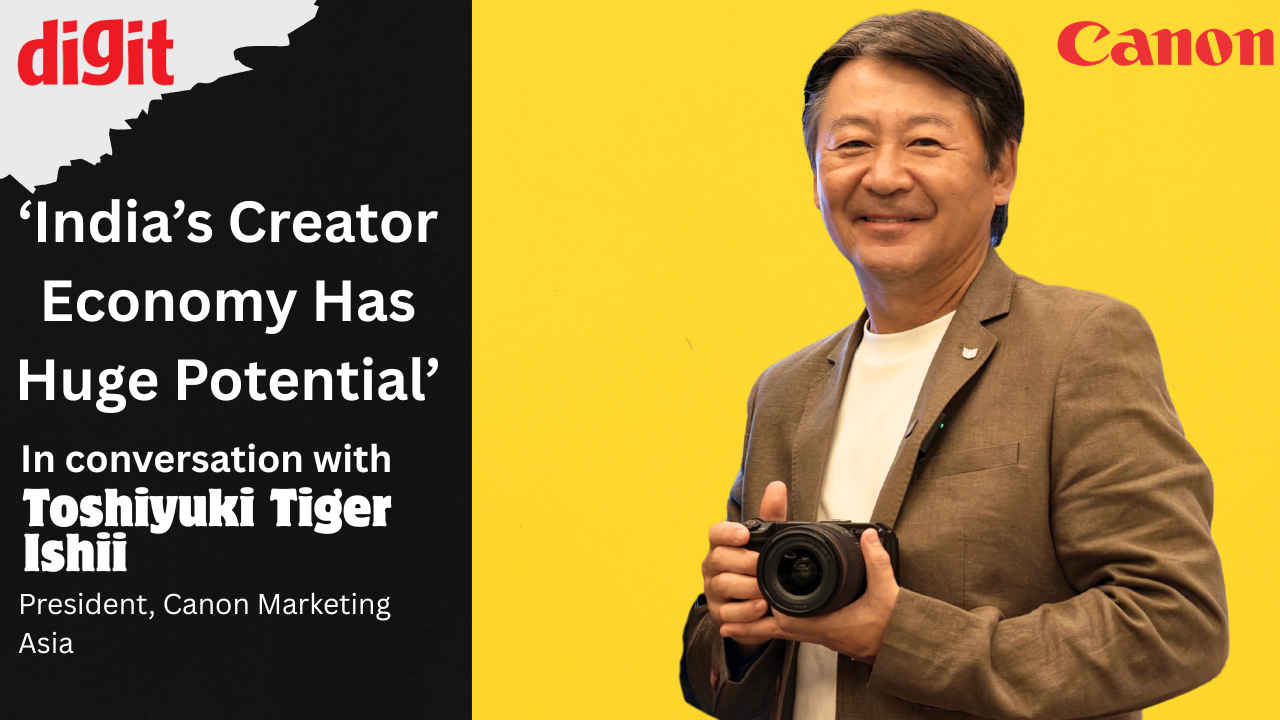

The way people create content has changed a lot over the past few years, and naturally, camera brands are changing with it. When you look at creators in today’s day and age, they are shooting everything from YouTube videos and Instagram reels to livestreams and short films, often switching between formats on the fly. At Canon’s global EOS R6 V launch event in India, we spoke to Tiger Ishii about how the company sees this shift, the growing role of AI in imaging, smartphones versus dedicated cameras, and why India has become such an important market for Canon globally. Here are the key excerpts from the conversation.
 Survey
Q) What’s the biggest vision behind the newly launched Canon EOS R6 V?
Tiger Ishii: We’re so happy to be here to launch this new model in India. India has huge potential, not only because of strong economic growth, but also because of its younger generation and the huge potential of YouTubers and content creators here.
That’s why we are very happy to make India the centre of this launch globally. In fact, every country, including the US, Japan and Europe, followed India’s launch timing for this product. We centralised the launch around India because we believe this market is extremely important for Canon.
Q) Most creators today shoot content on smartphones. Some filmmakers have even shot films on iPhones. So, according to you, what still makes a camera a camera, especially Canon cameras?
Tiger Ishii: Actually, many people may say smartphones are competitors to cameras, but I don’t think so at all. Smartphones are actually friends and partners of cameras.
Smartphones have helped make the world of imaging bigger and bigger. We sincerely appreciate the role smartphones have played in expanding photography and video creation.
At the same time, now people are starting to step up towards cameras because they want deeper views, wider perspectives and more flexibility for different kinds of shooting situations. So we want to collaborate with smartphones and encourage users to gradually step up to cameras when they want more creative possibilities. That’s how Canon sees this relationship.
Q) India has become one of the fastest-growing creator economies in the world. How important is the Indian market for Canon right now?
Tiger Ishii: As I mentioned earlier, India is a market with huge potential. It’s one of the most important markets for Canon right now.
That’s exactly why we launched the EOS R6 V globally, using India as the centre point. Even the launch timings for countries like Japan, Europe and the US followed the India schedule because we wanted to centralise the global launch around India. That itself shows how important this market has become for Canon.
Q) AI is becoming a huge part of imaging right now. How is Canon using AI in cameras without taking away the human creativity part of photography?
Tiger Ishii: AI is very important for Canon in two ways.
The first is productivity. Across research and development, manufacturing, factory production and even office work, we are using AI to improve productivity and efficiency.
The second part is integrating AI technologies into our products and imaging solutions. But at the same time, we don’t want to simply follow AI blindly because photography and creativity should always belong to humans.
That’s why we want to create collaboration between AI and human creativity. We always want to respect the photographer’s intention, imagination and creative vision while using AI as a supporting tool rather than replacing the human factor. That is Canon’s approach.
Q) Creators today shoot vertically, horizontally and even livestream directly from cameras. How much does creator behaviour influence Canon’s product design now?
Tiger Ishii: Creator behaviour influences product development a lot. That’s why we continuously learn from creators and understand how they shoot content today.
For example, vertical shooting has become extremely important now, so we added a dedicated tripod hole placement to make vertical shooting easier. We also added features where images can automatically shift vertically and included several creator-focused improvements inside the camera.
A lot of the ideas implemented in this camera actually come from understanding modern creator workflows and shooting habits. We want creators to use the camera comfortably and naturally for the way they create content today.
Q) Smartphone cameras are becoming more advanced every year. Brands are now offering telephoto converter kits and professional-style accessories as well. Do you think the gap between smartphones and professional cameras is narrowing?
Tiger Ishii: I still don’t think smartphones are competitors to cameras. As I mentioned earlier, smartphones are our friends and partners.
Together, smartphones and cameras can help create a much larger imaging industry and encourage more people to enjoy photography and videography. Canon wants to grow together with smartphones and continue helping people enjoy imaging, photo-taking and video shooting in different ways.
Q) If you had to describe the future of Canon cameras in one sentence, what would that sentence be?
Tiger Ishii: Canon cameras in the future will become products for everyone’s shooting needs. That’s what Canon would like to become.


