
GPT-5 launched: Sam Altman’s 3 key claims on AI, AGI and India
 Follow Us
GPT-5 offers instant software creation and PhD-level problem solving for users
Sam Altman stresses GPT-5 isn’t full AGI yet but marks a big leap forward
India emerges as OpenAI’s fastest-growing market with tailored AI features

After months of hints, delay and prolonged expectation, OpenAI unveiled the highly-anticipated GPT-5 (the fifth big version of ChatGPT) with Sam Altman making a number of key proclamations that are worthy of taking note.
 Survey
In typical Sam Altman fashion, the unveiling of ChatGPT-5 or GPT-5 wasn’t just a product launch – it was an exercise in expanding the collective imagination of humanity, with Altman at the centre of proceedings. “This era where one person can do more than any person, or every person, in history is incredibly exciting,” he told the whole world, positioning the GPT-5 model not as another software update to ChatGPT, but as a genuine leap towards Artificial General Intelligence (AGI).
ChatGPT-5 gives PhD-level expertise
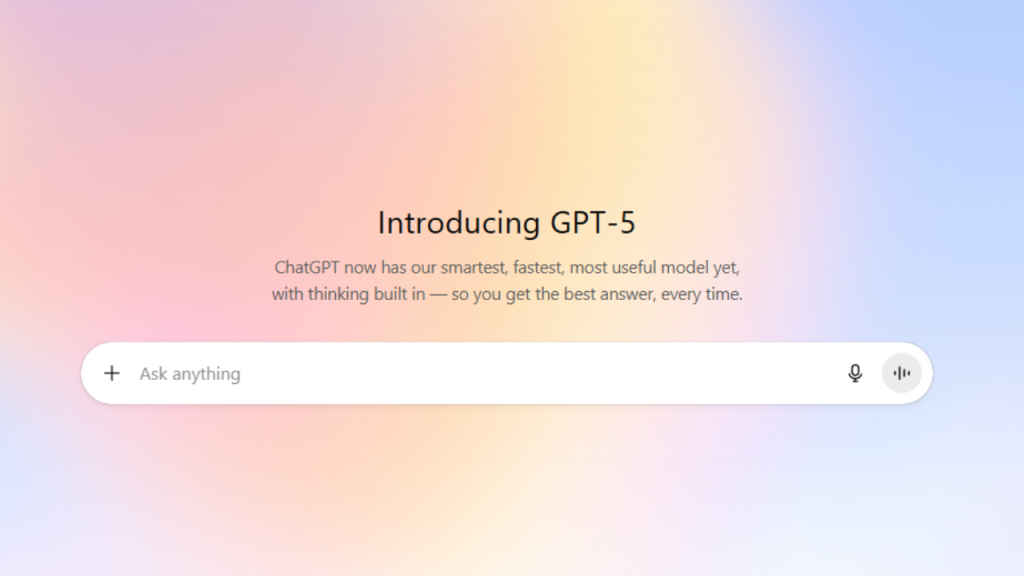
Altman called GPT-5 “a major upgrade over GPT-4o and a pretty significant step along our path towards AGI,” which any ChatGPT user would agree with for the most part. “One of the coolest things it can do is write you good, instantaneous software,” he said furthermore, underscoring what he believes will be a defining trait of the new model – “The idea of software on demand is going to be one of the defining features of GPT-5.”
Also read: OpenAI launches GPT-5, its most advanced model yet: What’s new, what it can do, and who gets access
And then came the line that you will see repeated in headlines all over: that ChatGPT-5, Altman said, is like having “a team of PhD-level experts ready to go and help you with whatever your goals are.” That is enough to give some serious mental pause as well as conjure up possibilities at the same time. Visions of start-ups, research projects, novels, apps, and policy papers emerging from conversations with a model that doesn’t get tired or bill by the hour. Music to everyone’s ear, right?
Not quite AGI – yet
For all the lofty framing of this newest version of ChatGPT, Sam Altman was careful to not get carried away and acknowledge what GPT-5 still can’t do. “This is clearly a model that is generally intelligent,” he said, “although I think in the way that most of us define AGI, we’re still missing something quite important, or many things quite important.”
Chief among those missing pieces, I hear you ask? The ability to learn autonomously in the wild. “One big one is, you know, this is not a model that continuously learns as it’s deployed from the new things it finds, which is something that to me feels like AGI,” Altman explained. Without that persistent, self-updating loop, GPT-5 – however dazzling – remains on the near side of the AGI frontier. “But the level of intelligence here, the level of capability, it feels like a huge improvement.”
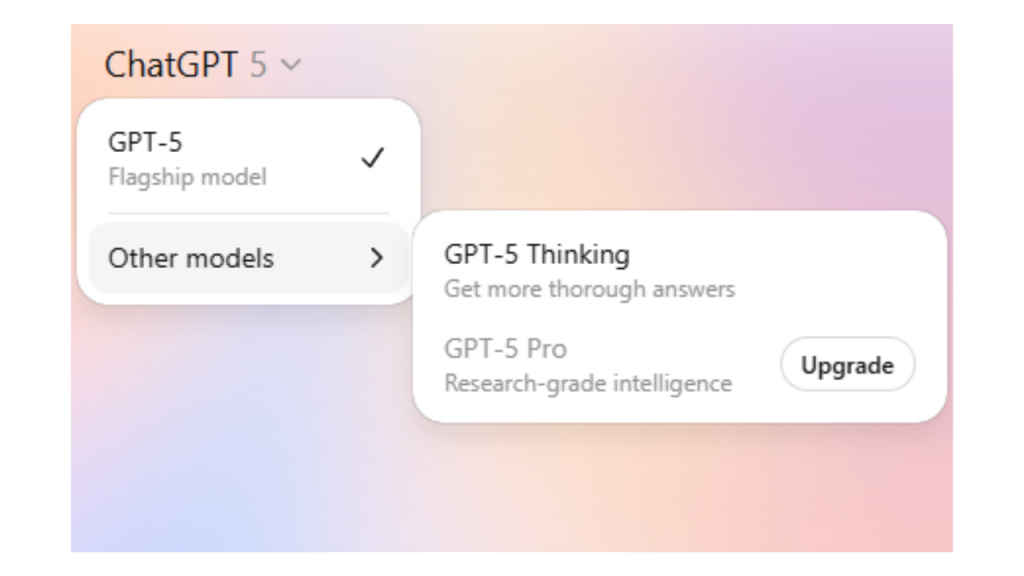
Also read: GPT 5 vs GPT 4: From customisation to personalisation, here’s everything new
It was a rare moment of tempered candour in a launch culture that often paints every new model as the breakthrough. Altman’s subtext here is one of extreme care, that AGI isn’t a marketing term OpenAI will casually pin to their mast just yet.
India’s AI possibilities
If there was a surprise in the briefing, it was how prominently India featured in Altman’s vision for GPT-5. Calling India as OpenAI’s second-largest market, he didn’t shy away from predicting a change in the rankings: India “could well become our largest market in the world,” he said. “What citizens of India are doing with AI is really quite remarkable… the way it’s been integrated into people’s lives and businesses and started new companies with that.”
OpenAI, he stressed, is “especially focused on bringing products to India” and working with local partners to “make AI work great for India, make it more affordable for people across the country.” The attention, he admitted, is a function of the “rate of growth” – an acknowledgement that India’s AI adoption curve isn’t just steep, it’s vertical.
Behind that focus is a deliberate push to make ChatGPT-5 resonate in diverse cultural contexts. “We have tried to make GPT-5 better in different cultural contexts and languages and at a wide variety of different tasks,” Altman said. “So we think this is maybe the biggest single step forward we have ever taken in our mission of very broad global accessibility of a true frontier model.”

Also read: Sam Altman says OpenAI is better than Meta for two key reasons
It’s a telling statement, if you think about it. Accessibility here doesn’t just mean a free tier or a mobile app, according to Altman. With this fifth iteration of ChatGPT, it means a GPT-5 that can parse the nuance of Hindi idioms or generate marketing copy tuned to the sensibilities of a Tamil audience – all without losing cultural relevance.
Have you tried it yet?
For now, GPT-5 arrives with lots of new bells and whistles. A ChatGPT update that feels, in Altman’s words, “generally intelligent” and yet is missing something essential for being AGI. It’s deliberate, by design, not a bug but a feature, according to Altman. Have you given it a try?


