
Elon Musk’s crazy idea to turn Grok into an AI agent for your PC
 Follow Us

I’ve covered a lot of Elon Musk announcements, and I’ve learned to apply a fairly aggressive discount rate to the claims. But his tweet about a joint xAI-Tesla project called Macrohard – also going by the name Digital Optimus – is worth slowing down on, because the architecture he’s describing is genuinely interesting, even if the execution is unproven.
 Survey
Also read: Elon Musk’s R-rated rule for Grok Imagine: A disaster waiting to happen?
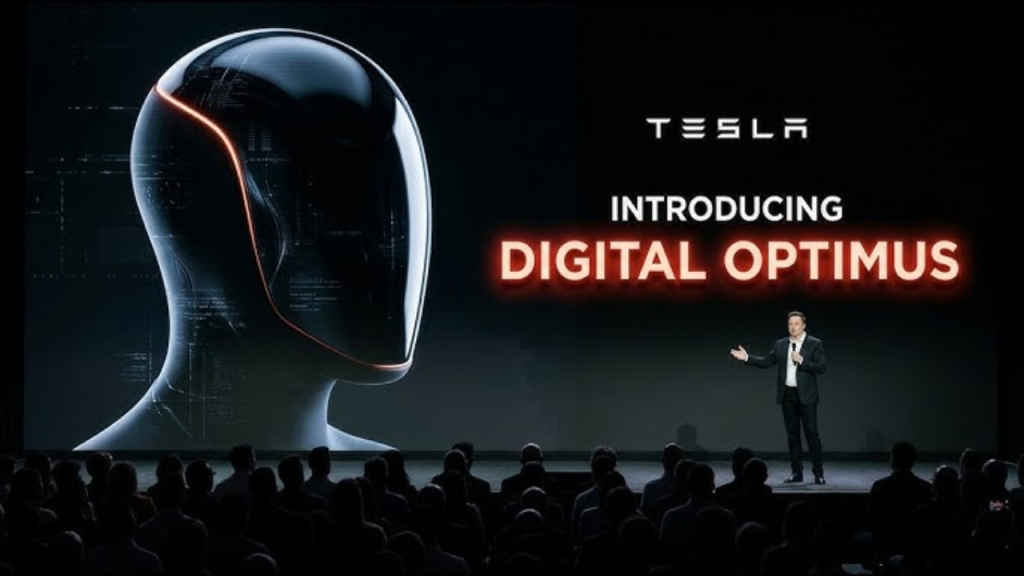
The basic idea is this: two AI systems working in tandem on your computer. Digital Optimus watches your screen continuously, processing the last five seconds of video and tracking your keyboard and mouse activity, acting as the fast, reactive layer and doing things. Grok sits above it as the intelligent conductor, understanding context, making decisions, and directing Digital Optimus on what to do next. Musk frames this using the System 1/System 2 model from cognitive psychology, fast instinctive action paired with slow deliberate reasoning. It’s a genuinely clever framing, and it maps reasonably well onto what he’s describing technically.
The part that actually matters
Also read: Elon Musk’s AI chatbot Grok sparks outrage with racist, offensive replies
What makes this worth taking seriously isn’t the AI architecture, it’s the cost structure. Musk claims the system runs competitively on Tesla’s AI4 chip, which retails at $650, with relatively light use of the far more expensive xAI Nvidia hardware. If that’s true, it changes the economics of deploying this kind of agentic system dramatically. Most serious AI infrastructure today requires hardware investment that puts it out of reach for individuals and small businesses. A capable computer-use agent running primarily on a $650 chip is a different proposition entirely.
The competitive landscape context matters here too. Anthropic’s Computer Use, Google’s Project Mariner, and OpenAI’s Operator are all working on similar agentic capabilities. Musk’s claim that “no other company can yet do this” is doing a lot of work, and I’d treat it with appropriate skepticism. The real-time continuous screen processing is a specific design choice that distinguishes Macrohard from some rivals, but the field is moving fast enough that exclusive advantages tend to be measured in months, not years.
Musk named the project Macrohard as a jab at Microsoft, implying the system could eventually emulate the function of entire companies. That may be the most distant claim of all. But the underlying architecture, a cheap reactive agent directed by a powerful reasoning model, is the kind of idea that sounds crazy until it doesn’t.
Also read: Iranian hackers’ cyberattack on US: 5 times modern warfare went online


