Duolingo’s Tara Kapur on building inclusive tech and smarter ed-tech
 Follow Us
Technology is redefining assessment beyond traditional testing models
Leadership in tech now demands adaptability, curiosity, and empathy
Inclusive design and access are key to global education growth


India’s fast-evolving edtech landscape is being quietly reshaped by technology, whether it’s access or assessment. As India Market Lead for the Duolingo English Test, Tara Kapur brings together insights from media, entertainment, and education to rethink how learning and leadership should keep pace with a fast-evolving digital-first world.
 Survey
In this exclusive interview recognising key voices from women in tech in March 2026, Kapur reflects on the structural barriers women continue to face in leadership. She also provides insight on how technology is redefining both assessment and opportunity, and why the future of leadership in tech is as much about empathy and curiosity as it is about data.
Edited excerpts from the interview follow:
Q) Women leadership representation still lags in tech. Where do you see the biggest structural barriers?
Tara: I have been fortunate to work in an environment where strong female leadership is visible at the highest levels. That kind of visibility builds belief in ways that are difficult to quantify but is deeply felt, and I feel very fortunate to have that within my professional ecosystem.
Beyond individual experiences, there are still structural barriers that shape women’s leadership journeys. One of the biggest is access to decision making spaces. While more women are entering the workforce, they remain underrepresented in roles where strategic decisions are made. Another challenge is the expectation of linear career paths. Many talented women take non linear journeys because of life stages, caregiving responsibilities, or shifts in personal priorities. Organisations are beginning to recognise this reality, but there is still work to be done in building systems that support diverse career trajectories rather than penalising them. Ultimately, representation at the top plays a powerful role in shifting culture.
Q) Your career spans media, entertainment, and edtech. How has that informed your perspective on leadership?
Tara: By working across these categories and at a time when technology continues to adapt so rapidly, what has become clear to me is that leadership in modern tech companies requires a very different mindset from traditional leadership models. Three qualities, in particular, have become essential: adaptability, a willingness to keep learning, and an unwavering focus on the consumer.
Also read: SBI to Salesforce: Arundhati Bhattacharya on Women in Tech leadership

Each of the industries I have worked in has gone through a major technological shift. When I started my career in journalism, the world was transitioning from television to digital platforms. Later in entertainment, streaming was redefining how audiences consumed content. In education technology, data and digital platforms are fundamentally changing how learning and assessment are becoming more accessible. In environments like these, the pace of change is constant. Leaders cannot rely only on past playbooks, adaptability is critical. They have to stay flexible, respond quickly to new information, and guide their teams through uncertainty.
In many ways, technology has made leadership both more complex and more human. Data and platforms provide powerful tools, but the most effective leaders are those who combine that technological understanding with curiosity, humility, and a deep empathy for the people they serve.
Q) What does technology fundamentally change about how we measure learning and potential?
Tara: Technology fundamentally changes the way we think about assessment because it allows us to move beyond static, one-size-fits-all testing models. Digital platforms open up the possibility of evaluating skills in far more dynamic and adaptive ways. With modern assessment technology, including platforms like the DET, we can analyse not just whether a student’s answer is correct but also how they approach a question, how quickly they adapt and how consistently they demonstrate proficiency across different types of tasks.
For example, adaptive testing technology allows the difficulty of questions to adjust in real time based on a student’s responses. This creates a more personalised assessment experience while also producing a more accurate picture of a learner’s ability.
What excites me most is that technology allows us to think about assessment in a more holistic way. Instead of simply measuring how well someone performs in a single testing moment, digital platforms can provide a richer understanding of how people learn, how they think and how they apply their skills. In many ways, technology is helping transform assessments from a gatekeeping mechanism into a more accurate reflection of a learner’s true potential and that is a shift that benefits both students and institutions alike.
Q) What kinds of support made the biggest difference in your leadership journey?
Tara: When I was starting out, access to mentorship and strong professional networks was not as easy as it is today. There were fewer structured opportunities to meet leaders outside your immediate workplace, and building those relationships often required a lot more time and persistence. But they cannot replace the work required to walk through those doors. Ultimately, you still have to prove your ability, deliver results, and build credibility through your own effort.
In my own journey, I was fortunate to work with leaders who trusted me with responsibility quite early on. They encouraged me to take on challenges that initially felt intimidating and pushed me into situations where I had to stretch beyond what I thought I was capable of. That trust was incredibly valuable, but it also meant putting in the work to ensure those opportunities did not go to waste.
Equally important are peer networks. Colleagues and friends who are going through similar experiences often become some of your most important sounding boards. They provide honest feedback, encouragement, and perspective during moments of uncertainty.
Q) How do you see technology expanding access to global education, particularly for girls and students from Tier-2 and Tier-3 India?
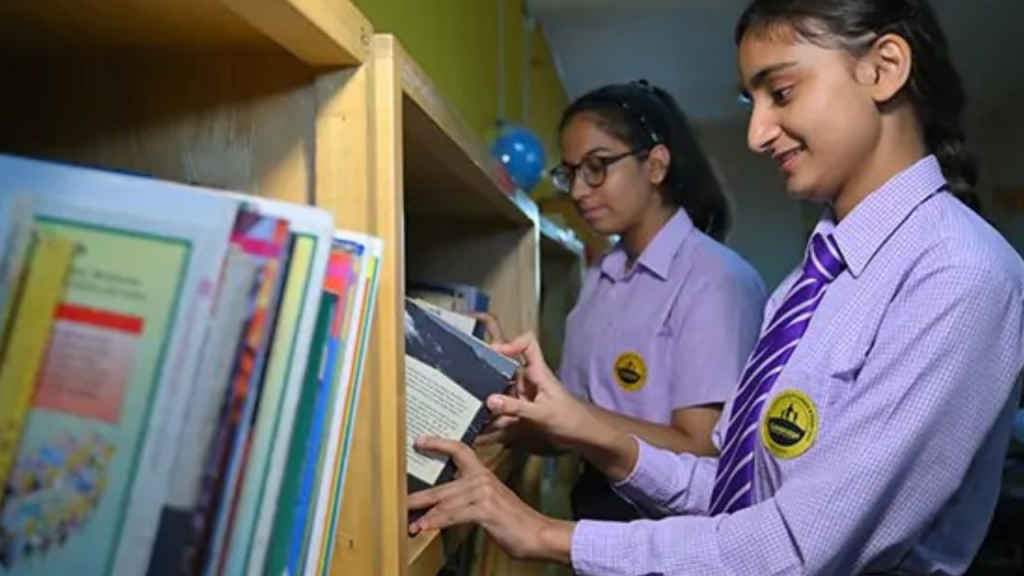
Tara: Technology has the power to remove many of the traditional barriers to global education. For students in Tier-2 and Tier-3 cities, access to resources, guidance and testing centres has historically been limited. Digital platforms are changing that by making information, preparation tools and assessments accessible from anywhere.
For girls in particular, this accessibility can be transformative, especially in contexts where mobility or travel may be constrained. When technology lowers logistical barriers, it allows talent to emerge from places that may previously have been overlooked.
Q) What mindset or skills should a young woman in tech prioritise over the next decade?
Tara: I would encourage her to cultivate three things: curiosity, resilience and confidence. Curiosity is essential because technology evolves constantly. The willingness to learn, adapt and ask questions will always be an advantage. Resilience is equally important. Careers rarely follow a straight line, and setbacks are part of growth. The ability to keep moving forward despite uncertainty is what ultimately builds leadership. And finally, confidence, not in the sense of having all the answers, but in trusting your perspective and your voice. Leadership often begins with the belief that your ideas and contributions matter.
Also read: ‘Feel the fear and do it anyway’: Lenovo’s Fiona O’Brien tells women in tech


