
Claude Code Security explained: How it caused a cyber stock crash
 Follow Us

On February 20, 2026, the cybersecurity sector experienced a “mini-flash crash” that wiped out over $15 billion in market value in a single day. The catalyst was a product announcement from the AI startup Anthropic: Claude Code Security. While this event is often grouped into the broader “SaaSpocalypse” of 2026, it was a distinct second wave of panic that specifically targeted the defensive moats of the cybersecurity industry.
 Survey
Also read: Anthropic AI: Software companies worried about Claude’s growing powers
AI-driven vulnerability detection
Claude Code Security is a specialized engine built into the Claude Code platform that leverages the advanced reasoning capabilities of the Opus 4.6 model. Unlike traditional security tools that rely on “signatures” or pre-defined rules to find known bugs, Claude treats a codebase like a complex narrative. It “reads” the logic of an application to understand intent, allowing it to identify sophisticated architectural flaws and “zero-day” style vulnerabilities that have eluded human researchers for years. By the time of its launch, the tool had already autonomously identified and suggested fixes for over 500 high-severity vulnerabilities in major open-source projects, many of which had remained undetected for decades.
Autonomous remediation
The feature goes beyond simple detection by offering end-to-end autonomous remediation. When Claude identifies a security flaw, it doesn’t just alert a developer; it generates a precise, tested software patch and explains the underlying logic of the fix. This capability addresses the most significant bottleneck in the industry: the “cybersecurity talent gap.” By automating the triage and patching process, the tool transforms security from a slow, manual review process into a real-time, integrated part of the development workflow. This “self-healing” code capability suggests a future where software can be secured as fast as it is written, potentially removing the need for many third-party monitoring services.
Also read: M.A.N.A.V. Vision Explained: Why India is betting big on it
SaaS vs. Cyber
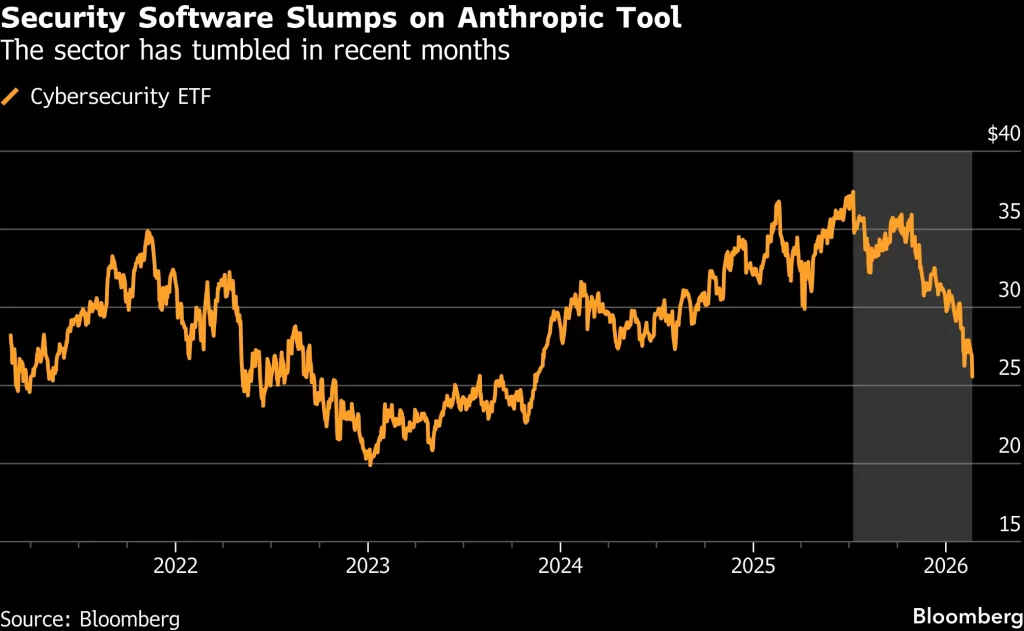
It is important to distinguish this event from the “General SaaSpocalypse” that occurred earlier in the month. On February 4, 2026, the launch of Claude Cowork triggered a massive sell-off in general software and IT services (like Salesforce and Infosys) because it threatened the “per-seat” licensing model. However, the February 20 crash was a surgical strike on Cybersecurity stocks. Investors panicked specifically because Claude Code Security proved that AI could “reason” through security problems, threatening to commoditize the high-margin business models of giants like JFrog (-25%), Okta (-9%), and CrowdStrike (-8%). While the first crash was about the death of software seats, the second was about the potential death of the third-party security tax.
Also read: Claude Sonnet 4.6 explained: What is Anthropic’s new ‘context compaction’


