
Before ChatGPT, Sundar Pichai quietly bet Google’s entire future on AI
 Follow Us
Google's pivotal shift came when they transitioned from mobile-first to AI-first under Sundar Pichai in 2016
Pichai's calm, methodical style enabled major structural changes without internal friction.
By investing early in TPUs and data centers, it helped Google gain a technical advantage over others.

Exactly 10 years ago, back in 2016, the tech space was very different from what we’re used to now. Smartphones were all the rage back then, and every phone maker was trying to figure out innovations that would give them an edge. But at that time, Google, under the leadership of Sundar Pichai, set out to do something completely different, which tried to reimagine Android from the ground up. Something way more radical.
 Survey
In the 2016 Founder’s Letter, Pichai had stated how Google would become an AI-first company. He said, “We will move from mobile first to an AI-first world.” And later, when he set foot on the 2016 Google I/O keynote stage, he announced the launch of Google Assistant. Arguably, this was what laid the foundation for Gemini and all the other AI products Google has launched so far.
In this edition of Digit Game Changers, we will be examining Sundar Pichai’s quiet bet on Google’s entire future! How his bet on AI played off for the search engine giant and ensured that Google would be one of the biggest players in the AI market.
Also Read: India AI Impact Summit 2026: What the India AI Stack means for you
Pichai’s “quiet approach”
A big part of Google’s success comes from the direction that the company gets from a leader like Sundar Pichai. Unlike other CEOs who are known to get things done fast and loud, Pichai’s style has always been different.
He isn’t like Elon Musk or Sam Altman, but instead, Pichai has always been known to have a quiet and calm persona. In fact, a report by Business Insider about him reads, “Pichai maintains an almost impressively calm composure in meetings, even in heated discussions, quietly absorbing the conversation around him before weighing in with questions.”
He understands how essential it is to get the basics right in a quiet approach before shifting full focus towards the entire model. This is exactly what helped Google transition from a mobile-first company into an AI-first company, and that too without the internal friction that usually destroys large organisations.
From mobile to AI
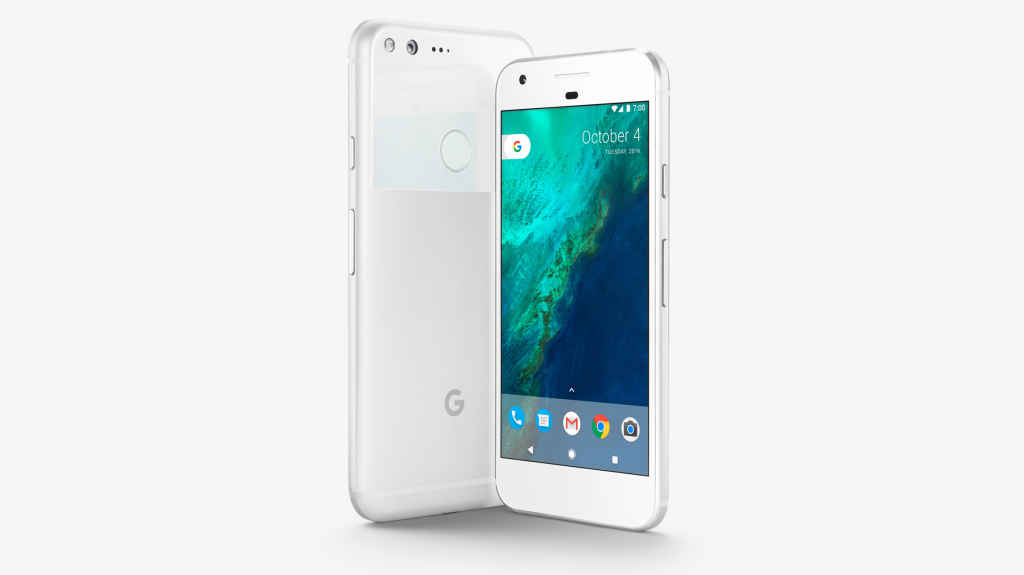
Well, we know that Google’s big move was moving from the mobile phone market (with Android) to focusing more on AI across the company, but let’s understand how they deeply implemented it.
If you think about it, Google’s main focus has always been on mobile devices, and that came in the form of their operating system, Android. But starting from 2014, Pichai changed the way Google looked at future opportunities for disruptive growth and impact.
DeepMind was something that Sundar Pichai had in mind. He had seen all the work done by them in such a short time and decided to acquire the company back in 2014. This allowed Google to lead with a lot of innovative AI products and services, backed by groundbreaking research done by the hardcore AI unit run by Nobel laureate Demis Hassabis.
Google also shifted their focus to building the Tensor Processing Unit (TPU), and it was first deployed internally back in 2015. These chips were designed specifically with one thing in mind, and that was to accelerate “TensorFlow”, which is Google’s open-source machine learning library.
Not only that, but looking back at 2016 now, it can be seen that Google heavily invested a lot of their resources in data centres. They poured in tens of billions of dollars to set up data centres all over the globe. While most might have called this decision a big gamble at the time, given today’s day and age, it is safe to say this was a crucial step they took early on.
How Google embedded AI everywhere
Whether you like it or hate it, it’s safe to say that Google really changed the way we interact with AI. Sure, they have an AI chatbot in the form of Gemini; however, even before the launch of the chatbot, they quietly integrated numerous AI features into their most popular products.
Firstly, let’s start with the most popular one, Google Search. The introduction of RankBrain, back in 2015, was the stepping stone for how we interact with search today. It allowed Search to give relevant results even if the user didn’t type all the exact words required for the search. It worked by understanding all the content that is related to other words and concepts.
Next up, Gmail was the next popular product, where Google decided to implement their AI systems. Many didn’t even realise it, but features like smart reply and smart compose were what brought AI to Gmail. Both these features used AI to predict what the next word you would use.
What’s interesting is that while it was a convenient feature for many, on the other hand, for Google, it worked as a live training model for their AI. Feedback is critical when testing new features on any AI. By integrating the features into Gmail, Google essentially got feedback for its AI model every time someone used the feature.
Something similar was seen with Google Photos as well. The AI used in the Photos app was pretty huge, as instead of having to rename a particular picture or endlessly scroll, the AI model implemented understood every pixel of all the photographs captured.
Not only did it help in finding pictures easily, but it also helped train Google’s AI for the future. After just a few years of introducing AI into Google Photos, they managed to make smart features like Magic Eraser. This was all thanks to all the previous data they collected, which helped the Magic Eraser understand what to replace the removed object with.
Finally, AI was even introduced to Google Maps. I’m sure that you look at Google Maps before leaving for any destination. And that’s clearly because of the smart features added to Maps, which make it easy to understand many things about the route.
By implementing the AI into Maps, Google integrated machine learning to analyse historical traffic patterns while also understanding the real-time data that it already gets. All in all, this smart combination helped in predicting traffic before it even happened.
Though the integration didn’t stop at user utilities, it also made Google rethink their revenue streams. For example, with Google Ads, they integrated AI in such a way that would allow them to move from simple keyword matching to Smart Bidding. This feature uses machine learning to analyse millions of signals in milliseconds to set the perfect bid for every single auction.
While on YouTube, AI algorithms shifted from merely suggesting videos to predicting viewer intent, allowing for highly targeted advertising that feels native to the user experience. By embedding AI into AdSense, Google automated the “Quality Score” system. Rewarding relevance and ensuring that every ad attached to a video is actually aligning with a user’s actions.
It is safe to say that by implementing all these features into their popular services, Google really played it smart. On one hand, it was a big bet, as AI was still new. But on the other hand, it also helped them get the most amount of feedback that they could have gotten. Not to forget, all this also helped them in training their AI, which is now known as Gemini.
What They Got Right & Wrong
Everyone makes mistakes, and that’s how they learn. Well, the same can be said for Google. While they have perfected many things, which have given them a head start in the AI race, it is viable to say that they’re still not in first place.
The Bard controversy serves as a prime example. In the rush to respond to the sudden public hype for generative AI, Google’s initial rollout faced criticism. There were so many factual errors during their live demos that it even led to many questioning Google’s future in AI.
I’ve also felt that Google hasn’t been very vocal about its work. Even after doing so much, the public doesn’t know about half their achievements in the space. On the other hand, companies like OpenAI, which have worked equally hard, have always been recognised more by the general public. Safe to say the ‘quiet’ approach does come with its own set of disadvantages.
But yes, they’ve also had many winning stories in the meanwhile too. Recent breakthroughs like Veo, Google’s most capable generative video model, and Gemini Nano, designed for on-device efficiency, prove that Google’s AI engine is more powerful than ever. These innovations follow a decade of work that most competitors completely lack.
Putting focus into developing custom Tensor Processing Units, which we already looked at previously, is easily one of those things that helped Google a lot. See, while the competition keeps fighting for Nvidia chips, Google had already spent nearly a decade building its own TPUs. This integration has vastly helped them and has allowed them to train massive models like Gemini with efficiency, while others struggle to match their pace.
The long game
The AI-first world that Sundar Pichai has been working on isn’t just a roadmap anymore, it’s the reality we live in. Pichai’s steady, quiet approach has ensured that Google isn’t just participating in the AI race but instead leading it. By betting the company’s future on intelligence before it was a trend, Pichai didn’t just save Google’s relevance, he defined the next era of computing.
All this work has been so good for them that they’ve managed to become one of the top three AI companies for the past few years. But with that said, it’ll be interesting to see where the future lies when the competition amongst all the AI companies gets even more fierce!
Also Read: Microsoft warning: AI being brainwashed to favour some brands


