India AI Impact Summit 2026: What the India AI Stack means for you
 Follow Us

India is building what it calls an AI Stack, a system that turns data and computing power into services people can actually use. From a consumer point of view, a proper AI system could aid in better healthcare access, faster public services, smarter farming advice and more personalised learning. At its core, the idea is that AI should work at scale and solve everyday problems in India, in Indian languages, at affordable costs.
 Survey
Here is how that stack works and why it matters to you.
What is an AI stack, in simple terms
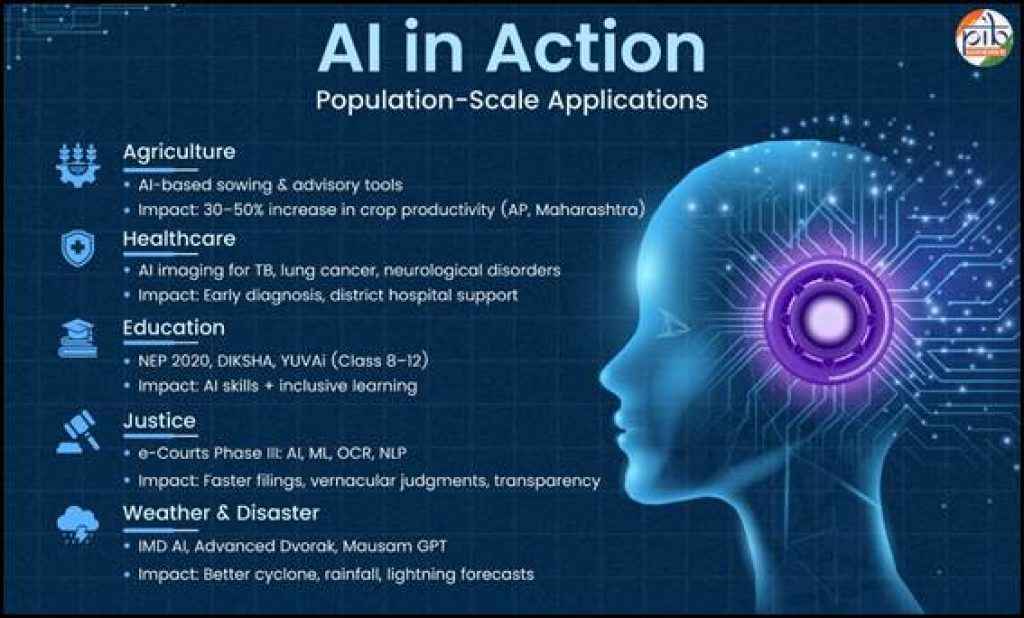
India AI stack consists of five connected layers:
- Applications you use
- AI models that power those apps
- Computing infrastructure that trains and runs models
- Data centres and networks that connect everything
- Energy that keeps the system running
If one layer is weak, the whole system struggles. If all five are strong, AI can scale across the country. Let’ss understand each layer in depth.
Also Read: India AI Impact Summit 2026: Organisers warn about fake registrations and fees
Application layer: Where you interact and feel the impact
This is the part you interact with directly. It includes chatbots, language translation tools, health diagnostics apps, crop advisory platforms, and public service portals.
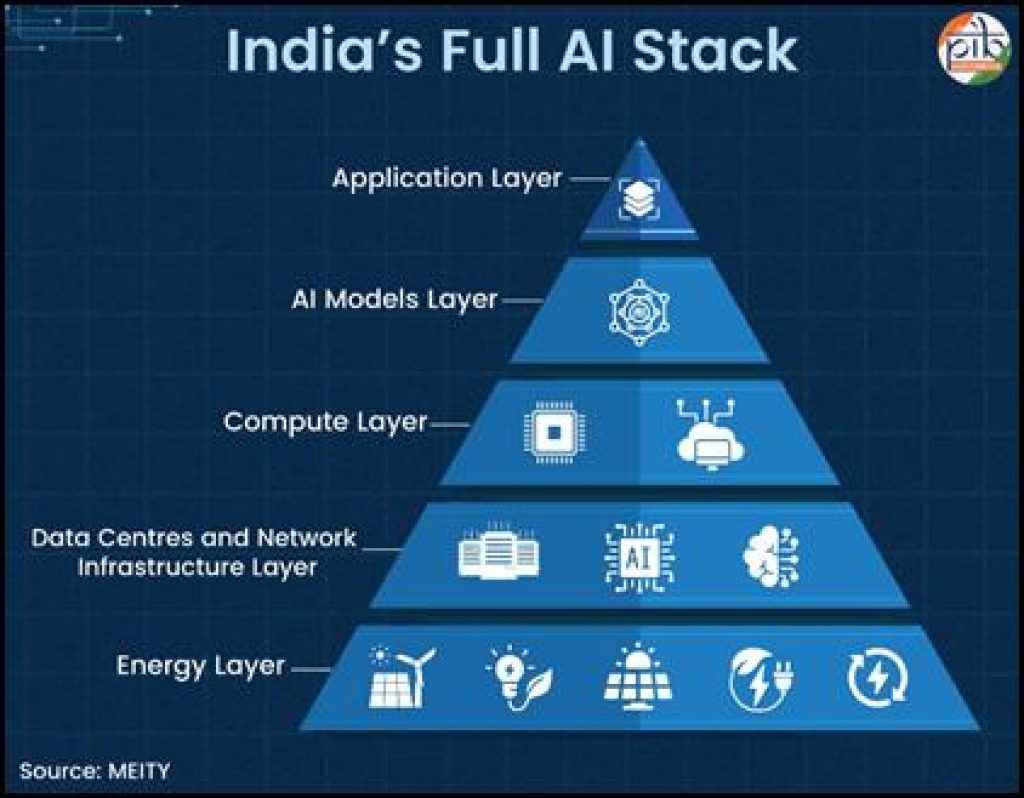
In agriculture, AI tools are helping farmers decide when to sow, how much fertiliser to use and how to manage risks. Some state-level deployments have reported productivity gains of up to 30 to 50 percent.
In healthcare, AI systems assist in early detection of tuberculosis, cancer and neurological conditions. For patients, that can mean earlier diagnosis and lower treatment costs.
In education, AI learning modules are being integrated into school curriculum and digital platforms. Students are not just using AI tools, but can also learn how to build them.
In courts and governance, AI is being used for translation, scheduling and case management. That improves access, especially in regional languages.
From a consumer perspective, this layer determines whether AI feels useful or irrelevant. If services are available in local languages, work reliably and reduce friction, adoption will grow. The authenticity of the responses/solutions is paramount.
Model layer: Brain behind apps
AI models are trained on data to recognise patterns, answer questions or make predictions. These power the AI applications.
India is developing its own models under the IndiaAI Mission. This includes domain-specific systems for healthcare, agriculture and public services. Platforms like BharatGen and Bhashini are focused on Indian languages and multimodal capabilities, including speech and text.
If models are trained on Indian languages and datasets, they are more accurate in local contexts. That reduces errors in translation, improves voice interfaces and makes digital services more inclusive.
It also reduces dependence on foreign AI ecosystems, which has implications for data sovereignty and regulatory control.
Compute layer: Runs the brain
Training and running AI requires heavy computing power, usually powered by advanced GPUs and specialised chips.
India has allocated Rs 10,300 crore under the IndiaAI Mission and launched a compute portal that offers access to tens of thousands of GPUs and over a thousand TPUs at subsidised rates, reportedly under Rs 100 per hour. Globally, such access often costs more than Rs 250 to Rs 300 per hour.
Cheaper compute means startups can experiment, build and launch AI services at lower cost. That can translate into more affordable AI-driven apps and faster innovation cycles.
At a broader level, domestic chip design initiatives and supercomputing projects could strengthen self-reliance and reduce global supply-chain risks and price volatility.
Data centres and networks: Storage and infrastructure
AI services depend on fast networks and reliable data centres.
India now has 5G coverage across almost all districts, with high population coverage. Installed data centre capacity stands at around 960 MW and is projected to grow sharply by 2030, driven by AI and cloud workloads.
Major global companies, including Microsoft, Amazon and Google, have announced large investments in Indian data centres and AI infrastructure.
For users, better infrastructure means faster response times, fewer service outages and more reliable cloud-based applications. It also means data is increasingly stored and processed within the country, which has implications for privacy regulation and national control.
Energy layer: Electricity
AI consumes large amounts of electricity. Data centres run 24/7, and everything should run stably.
India’s installed power capacity has crossed 500 GW, with more than half from non-fossil sources. Plans for pumped storage, battery storage and expanded nuclear capacity are aimed at supporting energy-intensive sectors, including AI.
If AI growth outpaces energy supply, costs can rise. However, if things are planned and maintained well, AI expansion could align well with climate goals.
The larger picture
Globally, AI development has been concentrated in a few countries and companies with deep pockets and massive compute resources. Open-source models and cloud platforms have started to reduce that gap.
India’s strategy with AI Stack appears to be spreading AI across many sectors like agriculture, healthcare, education and government services on a large scale. We could hope for more localised AI assistants, better language support in apps and government portals, and faster, more accurate digital public services.
India’s AI stack is ambitious. It attempts to build every layer, from models to energy, rather than relying entirely on external ecosystems. Let’s see how India will implement in terms of real-world usability, data quality and safety.
Keep reading Digit.in for similar stories.
Also Read: India AI Impact Summit 2026: Why US companies are turning up in record numbers


