
Anthropic CEO: AI will replace every software engineer by 2027
 Follow Us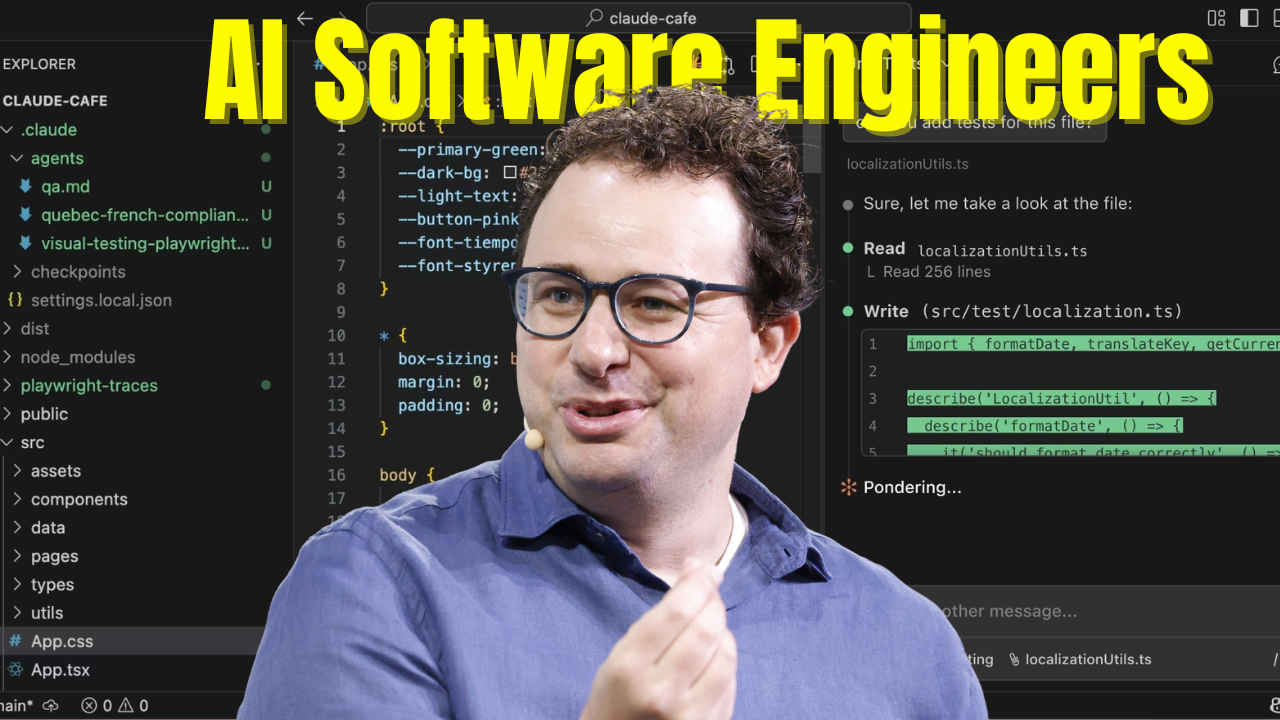

At the World Economic Forum in Davos yesterday, Anthropic CEO Dario Amodei issued a forecast about coding. His prediction is stark: within the next 6 to 12 months, artificial intelligence models could be capable of performing “most, maybe all” of the end-to-end tasks currently handled by software engineers.
 Survey
This timeline places a fundamental pivot point in the industry as early as mid-2026. According to Amodei, the era of the “coder” – the professional defined by their ability to manually write syntax – is rapidly drawing to a close.
Also read: ChatGPT to soon show ads, OpenAI says AI responses won’t be affected
The rise of the “conductor”
Amodei offered a glimpse into Anthropic’s own engineering culture to validate his claims. He revealed that his teams rarely write code from scratch anymore. Instead, the role has shifted from creation to orchestration. Engineers now operate as “conductors,” defining high-level problems and prompting advanced AI systems to generate the implementation. The human effort is subsequently refocused on reviewing, refining, and integrating that output into larger systems.
This shift is not theoretical. At frontier labs like Anthropic, OpenAI, and Google DeepMind, internal coding agents built on models like Claude 3.7 and GPT-4o are already outperforming average human developers on standardized tasks. Humans are moving away from the “how” of coding to the “what” and “why” of architecture and design.
A convergence of visionaries
The prediction gained significant weight when Ryan Dahl, the legendary creator of Node.js, publicly corroborated the sentiment. Shortly after Amodei’s comments circulated, Dahl posted a concise declaration on X: “the era of humans writing code is over… writing syntax directly is not it.”
Also read: Elon Musk and OpenAI: How a partnership became a $134 billion legal war
Dahl is a foundational figure in modern web infrastructure, and his agreement bridges the gap between AI research and practical, open-source application development. When the creator of the runtime that powers millions of servers agrees that manual syntax is obsolete, the industry listens.
Skepticism meets velocity
Despite the high-profile endorsements, skepticism remains. Practicing engineers point out that real-world development involves navigating messy legacy codebases, interpreting ambiguous stakeholder requirements, and enforcing strict compliance, nuanced tasks where AI currently struggles. The “last mile” of software engineering is often the hardest to automate.
However, the velocity of improvement in reasoning chains and context windows throughout 2025 suggests these barriers are eroding faster than anticipated.
The implicit message for developers is unambiguous: adaptation is urgent. The future belongs to engineers who can excel at system-level thinking, domain expertise, and AI orchestration.
As the definition of “software engineer” expands to include the management of intelligent agents rather than the manipulation of text files, professionals must pivot. Those who view AI as a collaborative partner will thrive; those who cling to line-by-line coding may find themselves conducting a symphony that no longer requires their baton.
Also read: Explained: Special fiberglass cloth needed to make chips, which is in short supply


