
Elon Musk and OpenAI: How a partnership became a $134 billion legal war
 Follow Us
Elon Musk sues OpenAI and Microsoft over alleged nonprofit betrayal
Inside the OpenAI breakup that sparked a $134 billion lawsuit
How OpenAI’s Microsoft deal triggered Silicon Valley’s biggest legal war


It began with a dinner in Silicon Valley and a shared fear of Google. It has ended in a federal court filing in Oakland, demanding a sum of money so large it rivals the GDP of entire nations. On January 16, 2026, lawyers representing Elon Musk formally requested damages between $79 billion and $134 billion from OpenAI and Microsoft. The filing alleges that the most important startup of the 21st century was built on a “lie” – a conspiracy to swindle Musk out of his seed money and credibility under the guise of a non-profit mission, only to hand the keys to the world’s most valuable technology to Microsoft.
 Survey
With Federal Judge Yvonne Gonzalez Rogers fast-tracking the case for a jury trial on April 27, 2026, the tech world is bracing for a public reckoning. What started as a philosophical disagreement has mutated into the most expensive corporate divorce in history. Here is how two allies who set out to save the world ended up at war over who owns it.
Also read: Elon Musk seeks up to $134 bn from OpenAI and Microsoft, here’s why
2015–2017: The “counterweight” pact
The story starts in 2015. Elon Musk and Sam Altman were united by a common enemy: Larry Page’s Google. Google had just acquired DeepMind, and Musk was terrified that a for-profit giant monopolizing Artificial General Intelligence (AGI) would result in catastrophe.
The solution was OpenAI. The plan was simple: a non-profit research lab dedicated to building safe AGI for all of humanity, free from corporate shackles. “We are doing this to free the world from the grip of Google,” Musk famously told early recruits. He put his money where his mouth was, contributing around $44 million in seed funding – a big chunk of the non-profit’s early war chest.
But cracks formed almost immediately. As research costs ballooned, the leadership realized donations wouldn’t be enough. This is where the “Smoking Gun” enters the narrative.
In widely circulated court documents unsealed this month, personal journal entries from OpenAI President Greg Brockman date back to November 2017. In one handwritten note, Brockman wrestles with the optics of pivoting to a for-profit model so soon after raising money on a non-profit pledge: “I cannot believe that we committed to non-profit if three months later we’re doing b-corp then it was a lie.” For Musk’s legal team, this sentence is the cornerstone of their $134 billion case. They argue it proves intent to defraud: Musk was sold a non-profit dream while the founders were secretly architecting a for-profit reality.
2018: The power struggle
By early 2018, OpenAI was falling behind Google. Musk, never one for half-measures, proposed a radical solution: he would take full control of OpenAI, potentially merging it with Tesla to leverage the automaker’s supercomputers. The board, led by Altman, refused.
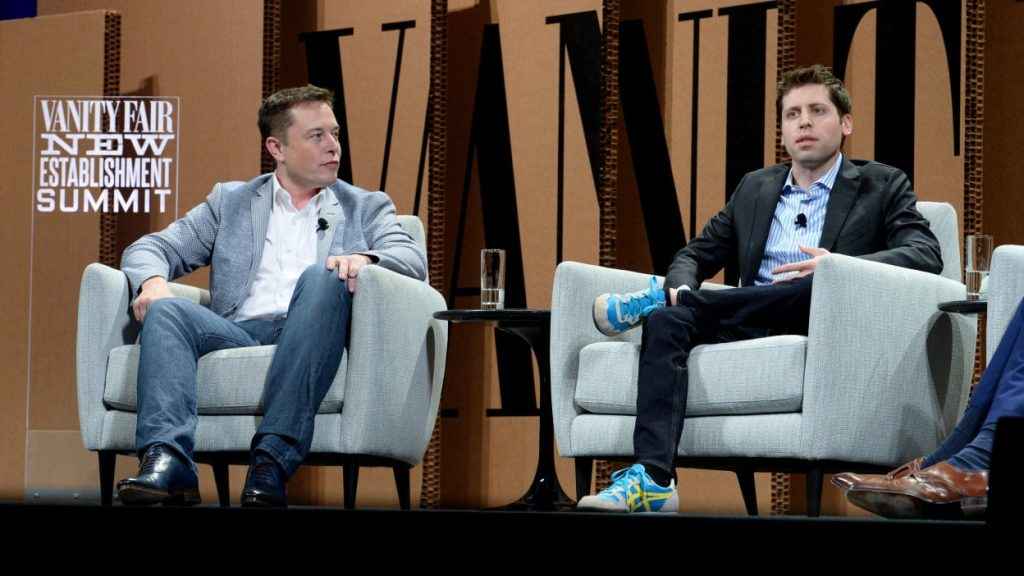
The rejection triggered a clean break. Musk resigned from the board in February 2018, publicly citing potential conflicts with Tesla’s AI development. Privately, he was furious. He reportedly told Altman the company would fail without him and cut off his funding. OpenAI was left parentless and broke.
2019: The Microsoft lifeline
Desperate for the billions in “compute” power needed to train massive models, Altman did the unthinkable in Musk’s eyes: he took a check from Big Tech.
In March 2019, OpenAI created a “capped-profit” subsidiary and accepted a $1 billion investment from Microsoft. This was the turning point. To Musk, it was the moment the “Open” in OpenAI died. To Altman, it was the only way to keep the lights on.
Also read: Sam Altman vs Elon Musk: Quiet tech war reshaping our future
2023–2025: From cold war to open hostilities
For years, the feud played out in passive-aggressive tweets. Then came ChatGPT. When OpenAI released GPT-4, it didn’t just succeed; it changed the world. Microsoft’s investment ballooned into a $13 billion stake, effectively integrating OpenAI’s brain into the Office suite. Musk watched from the sidelines as the non-profit he funded transformed into a closed-source product for his rival. His retaliation was two-pronged:
- Commercial: He launched xAI and its Grok model, a direct competitor trained on data from his social platform, X.
- Legal: In 2024, he fired the first legal shot, suing OpenAI for breach of contract.
The situation escalated in late 2025. Following news of the “Stargate” supercomputer project – a $100 billion collaboration between Microsoft and OpenAI – Musk refiled his suit in federal court, adding fraud charges.
Jan 2026: The $134 Billion Bill
This brings us to today. The latest filing relies on expert testimony from financial economist C. Paul Wazzan, who argues that because Musk’s early funding was essential to OpenAI’s survival, he is entitled to a portion of the company’s current $500 billion valuation.
Musk is not asking for his $44 million back. He is asking for “disgorgement of wrongful gains,” effectively demanding that OpenAI and Microsoft forfeit the profits they made using the IP he helped fund. OpenAI dismisses the suit as a case of sour grapes, arguing Musk is simply trying to use the courts to hobble a competitor he mistakenly bet against. They point to emails where Musk himself acknowledged that OpenAI would eventually need to make money.
What Happens Next?
On April 27, 2026, a jury in Oakland will decide the fate of the most valuable alliance in tech. If Musk wins, it could force OpenAI to dissolve its partnership with Microsoft or pay a crippling judgment. If he loses, it will vindicate Altman’s strategy: that the path to saving the world sometimes requires selling a piece of it. For now, the only certainty is the irony. The organization founded to prevent a corporate AI monopoly is now being sued for becoming one.
Also read: Elon Musk vs Sam Altman: AI breakup that refuses to end


