

Sam Altman vs Elon Musk: Quiet tech war reshaping our future
 Follow Us
Altman and Musk are racing to reshape humanity’s technological future
Competing visions span AI, brain interfaces, infrastructure, and digital identity
Their rivalry reflects diverging philosophies on power, progress, and control
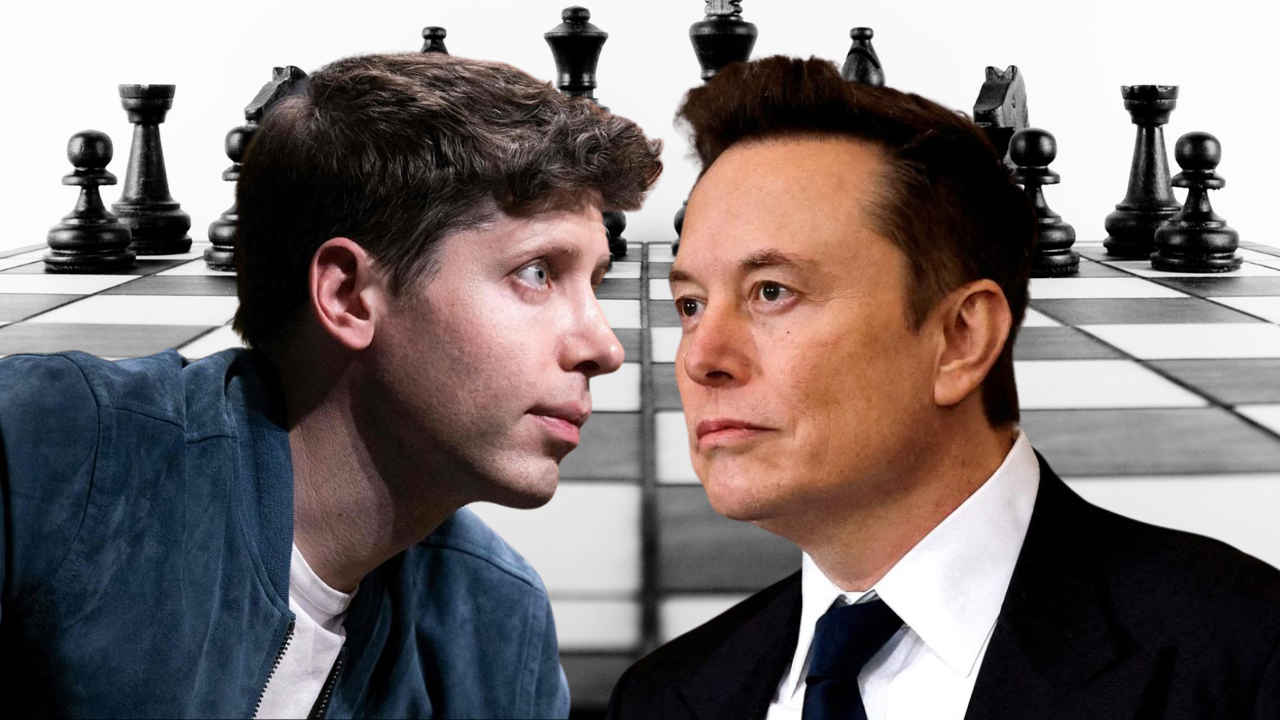

You could be forgiven for thinking the Altman-Musk rivalry begins and ends with ChatGPT vs Grok, two generative AIs slamming it out for internet mindshare. But peel back the layers just a little bit, and it becomes evidently clear this is no minor scuffle – it’s an ideological clash between two tech titans shaping parallel visions for humanity’s future. And in true Silicon Valley fashion, the battlefield stretches from AI tokens to planetary orbits and the inner folds of your cerebral cortex.
 Survey
What’s unfolding is less a squabble over who builds the better AI chatbot and more a cold war of computation, identity, cognition, and inter-planetary ambition.
Neuralink vs Merge: Rewiring human brain
Elon Musk wants to plug your brain into a computer with Neuralink’s coin-sized implants – surgically inserted hardware aimed at everything from healing paralysis to, eventually, merging with AI.
Also read: Altman vs Musk battle turns funny with ChatGPT vs Grok fight: Whom to trust?
Sam Altman, ever the ecosystem architect, is playing the same game but with a slightly different approach. Merge Labs, his quietly launched brain-interface startup co-founded with Worldcoin’s Alex Blania, is reportedly pursuing a less invasive approach to brain-computer interfaces (BCI). Rather than drill deep into your skull, Merge envisions a softer handshake between mind and machine, aimed at broader human-AI integration without requiring neurosurgery.
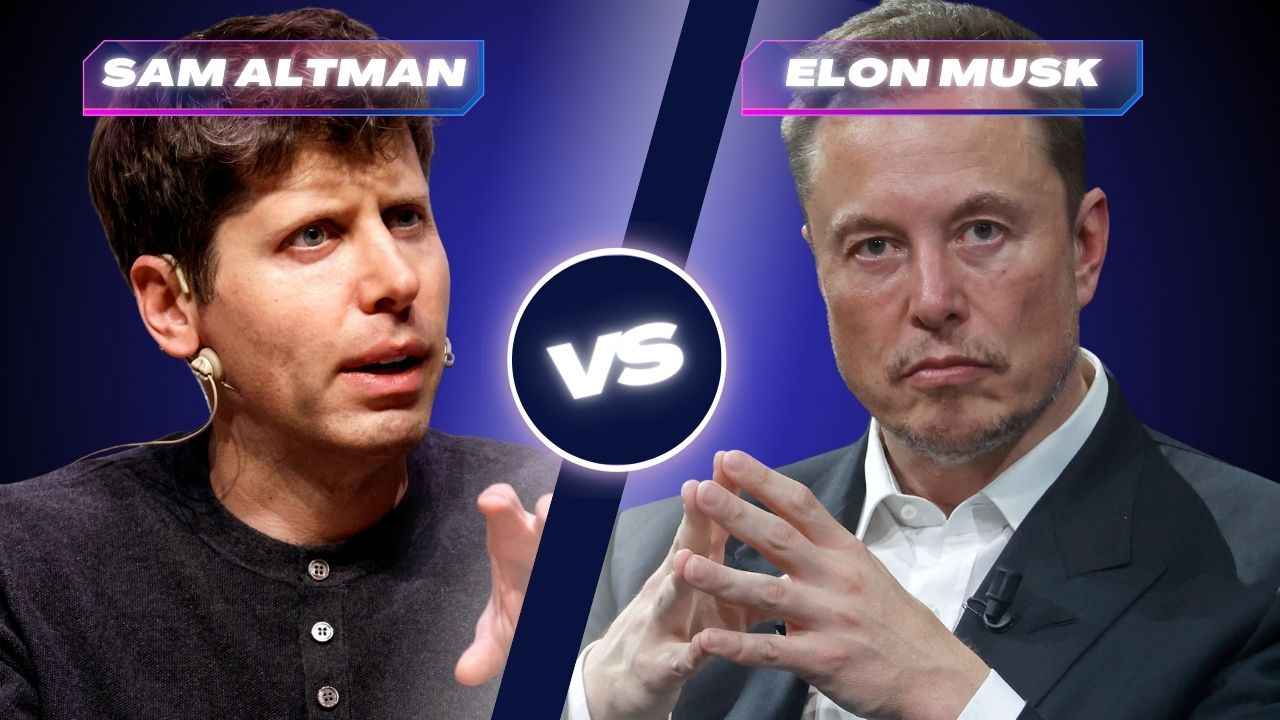
While Altman’s not in the operator’s seat day-to-day, he’s the financial and philosophical spine of Merge, which is rumored to be raising nearly a billion dollars – almost double Neuralink’s most recent round. That’s not just a funding war; it’s a bet that BCIs don’t need to be cyborgian to be transformative.
Musk, predictably, would argue that true mind-machine fusion needs to go deep. Altman seems to be wagering that ubiquity, not depth, will win the adoption race.
Stargate vs Starlink: Digital infrastructure moonshots
Musk’s infrastructure play is up in the skies, with Starlink’s low-Earth orbit satellite swarm is already beaming internet to the most remote corners of the planet, with SpaceX building the launch systems to back it.
Also read: Stargate to OpenAI: Why Elon Musk and Sam Altman are still fighting
Altman’s version is terra-bound but no less cosmic in ambition. In partnership with Oracle’s Larry Ellison, he’s building Stargate – a global network of supercomputing data centers designed to power the next era of AI training and deployment. If Starlink is the internet’s circulatory system, Stargate is the neural core for AI itself.
While Musk wants to colonize Mars and beam connectivity from above, Altman is laying the groundwork for an Earth-bound AI civilization, complete with training grounds, GPUs, and massive compute at planetary scale.
It’s a different kind of space race – one that doesn’t leave the atmosphere but could have just as many implications for who controls the scaffolding of future intelligence.
Worldcoin vs X: Impacting identity in the digital age
Elon Musk’s X (formerly Twitter) is morphing into a super-app of sorts: part social network, part payments layer, part ID platform. That’s eerily close to what Altman’s Worldcoin is trying to achieve, albeit through a very different mechanism – biometric identity (World ID).
Also read: Sam Altman rips into Elon Musk, accuses him of manipulating X for self-benefit
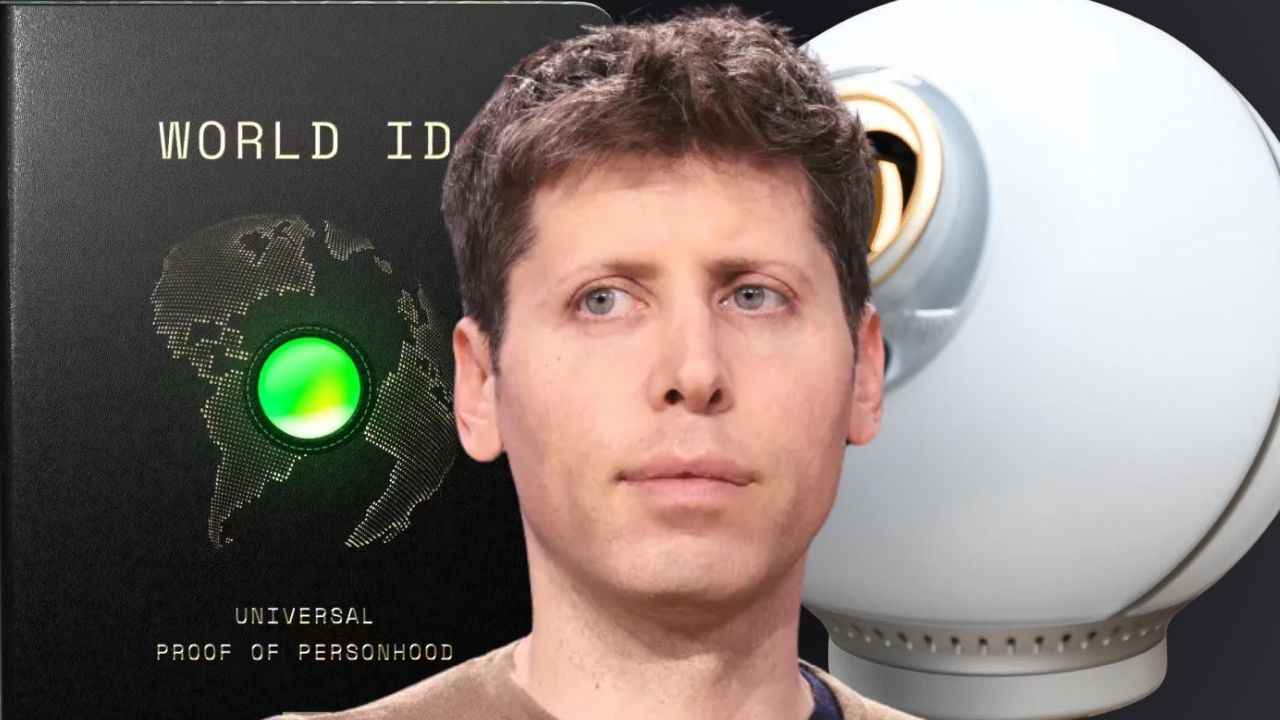
Where Musk sees X as the town square of the future, Altman envisions a crypto-driven, iris-scanning protocol that issues digital identity and universal basic income at scale. It’s wildly ambitious and, to critics, equally dystopian. But again, both men are grappling with the same challenge: how to verify identity, transact securely, and create new digital economies.
Also read: Grok Imagine: Elon Musk’s NSFW revival of vine with AI
Musk wants to own the rails. Altman wants to decentralize them. Either way, both believe future citizenship – online and offline – won’t look anything like today’s.
OpenAI vs xAI: Race for AGI
This is the most visible front in Sam Altman and Elon Musk’s conflict, and the most existential at its core. Musk helped birth OpenAI before famously falling out with the team over its direction. He went on to form xAI and launch Grok, an irreverent AI assistant baked into X.
Altman, meanwhile, has transformed OpenAI into the most influential AI company on the planet, with a model pipeline that’s moving faster than even some insiders expected.
Where Musk frames AI as an existential risk demanding aggressive alignment strategies (or even interplanetary insurance), Altman treats AGI as inevitable and is focused on building the infrastructure, tools, and interfaces to manage its ascent.
It’s optimism vs caution. Infrastructure vs hardware. Openness vs control. Either man could be remembered as the architect of the next intelligence epoch – or its cautionary tale.
Conquering the future

What makes this rivalry between Sam Altman and Elon Musk so very compelling isn’t the petty jabs or competing product launches – it’s how both men are, in essence, constructing end-to-end visions of the future. Musk’s ambition is well documented, but Altman’s footprint is quietly expanding too… from fusion energy investments in Helion to potential rocket ventures and a growing influence in climate tech. For every Musk moonshot, Altman seems to be building a parallel launchpad
They’re not just trying to build the next iPhone or launch the next unicorn. They’re redrawing the maps of human capability – each staking a claim on how we’ll think, talk, connect, and even feel in the years ahead.
Also read: Kaggle Gaming Arena: Google’s new AI benchmarking standard explained


