
3 months with Nvidia GeForce Now: I completed 5 AAA games and here is how it went
 Follow Us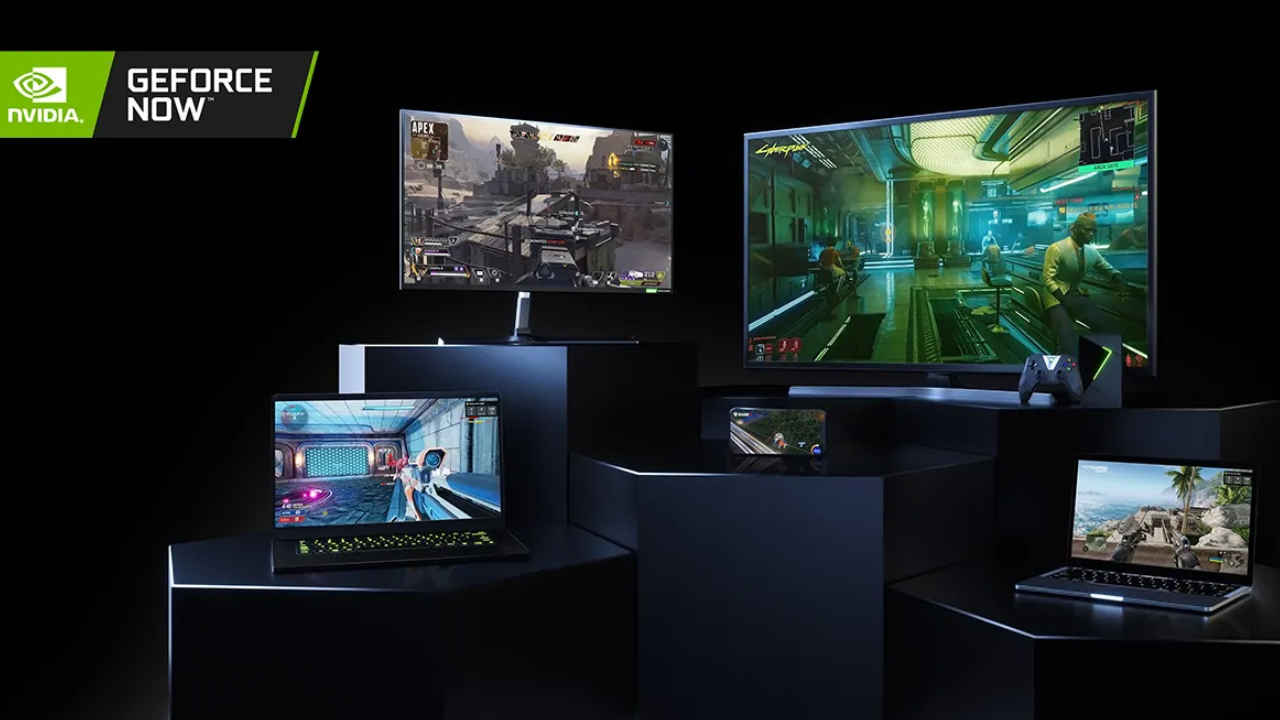

When I got my hands on the MacBook Neo in March this year, gaming was the last thing I expected to do on it. I was happily using Apple’s most affordable MacBook yet for writing articles, attending virtual meetings, binge-watching etc. But then came Nvidia’s cloud-gaming service, GeForce Now. And I found myself playing almost every AAA title on the device. Sure, I have a custom water-cooled gaming PC and a PS5 Pro at home. But neither of those can travel with me. The MacBook Neo can. And thanks to GeForce NOW, it has now become my go-to gaming device whenever I am away from home (and in an area with great internet).
 Survey
The service will soon complete 3 months of launch in India and before that happens, let me take you through some of the recent AAA games I have completed using it and how the experience has been so far. And before we delve deeper, it is worth noting that I have an Ultimate tier subscription which lets you play games powered by Nvidia’s RTX 50-series servers. Now that this is cleared up, read on.
007 First Light
007 First Light is an incredible game. It keeps you hooked throughout and there is never a dull moment. This is why I wanted to keep playing the game even when I took a short family trip last month. I carried the MacBook Neo with me and fired up the game on hotel WiFi using GeForce Now. And I played for hours, without interruptions.
I first tried the game with maxed out graphics DLSS Frame Generation set to 2x. In this case, the game comfortably stayed above 120 FPS while delivering some excellent image quality. From those intense action scenes to the more laid back sections of the game, everything felt smoother and there was absolutely no lag. Even when I turned frame gen off, the game continued to deliver around 80 FPS consistently.
Forza Horizon 6
There is nothing better than driving through the gorgeous streets of Japan virtually, especially when you can carry the experience wherever you go. And that is why I decided to try Forza Horizon 6 after 007 First light. Now in the case of such fast-paced racing games, the frame rates matter more than anything else. And in that department, thanks to GeForce Now, I faced 0 hurdles.
I played the game at 4K resolution with DLSS set to Quality and the graphics preset pushed all the way to Extreme. Even with those demanding settings, the game consistently delivered over 120 FPS. Note that this was without frame gen. When I finally enabled it, the frame rates went to crazy numbers (as high as 220 FPS).
Driving through busy cities, dense forests and changing weather conditions never caused any noticeable slowdown and the overall experience was as smooth as it would be on a high-end gaming PC.
Hogwarts Legacy
Hogwarts Legacy, with ray tracing enabled, is a demanding title and often brings several mid-range gaming laptops to their knees. So I was curious to see how GeForce NOW would handle it on my MacBook Neo. As it turns out, the experience was far better than I expected.
I started playing the game in 4K resolution, graphic settings set to Ultra, ray tracing option enabled, DLSS set to Quality and Frame Generation turned off. And even with such demanding settings, the game maintained a stable 90 FPS. Exploring Hogwarts Castle and the surrounding countryside looked stunning, with detailed reflections and realistic lighting throughout.
I then experimented with 1440p resolution while keeping DLSS on Quality. In this case, the game’s performance comfortably crossed the 100 FPS mark.
Pragmata
This was actually the very first game that I tried on GeForce Now, and I still remember getting absolutely awestruck. The moment I started the game out at my home WiFi, it was giving around 100 FPS without DLSS. I then tried getting the best possible performance by trying the game at 1080p with maximum graphics while enabling DLSS 4x on Performance mode. Once I did that, the frame rates climbed to nearly 300 FPS, making the overall experience feel incredibly fluid.
And even when I increased the resolution to 1920×1440, I was still getting around 200 FPS with great image quality. So of course, this became my preferred setting throughout the game. I played Pragmata for hours until the end credits rolled and the game didn’t have any lags or stuttering issues.
Resident Evil Requiem
In the case of Resident Evil Requiem, lighting and atmosphere are just as important as performance. And while my MacBook Neo took care of the display, I connected my airpods to get the best possible audio experience here. The rest, was handled by Nvidia Ge Force Now.
I tried out the game at 2560×1600 resolution and set lighting and shadow quality to High. At native settings, the game ran at roughly 40 FPS, which was surely playable but not ideal for a horror game where smooth camera movement makes a noticeable difference. But when I switched DLSS to Balanced mode and enabled 4x Frame Generation, the story changed.
Frame rates jumped to around 160 FPS and the game’s excellent lighting and reflections remained as they were. This means that those seemingly endless dark corridors, detailed environments and cinematic moments just looked like pure cinema.
Three months later, does cloud gaming still impress?
Three months in, my opinion has not changed. If anything, it has become stronger.
Over the past few months, I played five demanding AAA games without turning to my gaming PC or console. My MacBook Neo handled everything from horror games and racing simulators to cinematic action adventures, not because it suddenly became more powerful, but because GeForce Now shifted the heavy lifting to Nvidia’s cloud servers.
That said, your experience still depends on having a stable internet connection. But if you have that, GeForce Now feels like a practical alternative. For me, it has completely changed what I expect from a thin and light laptop, and I am super excited to see where cloud gaming goes next.


