
Projectors can replace TVs, but have not yet: ViewSonic MD Muneer Ahmad Khant
 Follow Us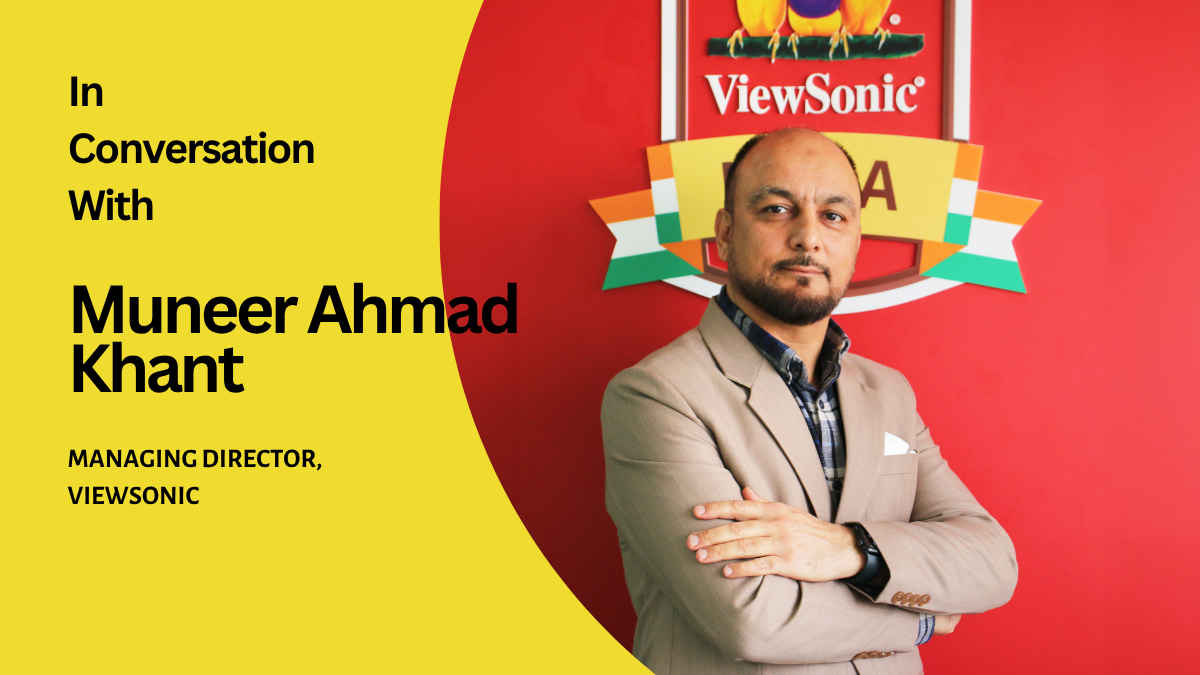

ViewSonic is a well-known brand in the display technology space. We recently spoke with the company’s Managing Director, Mr Muneer Ahmad Khant, about ViewSonic’s product direction and hardware roadmap for 2026. The discussion covered the company’s growing focus on gaming and professional workspace monitors, including upcoming OLED, dual-mode, and docking monitor solutions. On the projector side, the company is steadily shifting away from traditional lamp-based systems in favour of high-lumen laser projectors aimed at home theatre users and large enterprise deployments. We also discussed Interactive Flat Panels, large-format touch displays that ViewSonic is increasingly positioning toward education and government environments with AI-driven software features. Here are the key excerpts from the conversation.
 Survey
Q. ViewSonic has a wide range of monitors. From a business standpoint, which category do you find most dynamic right now?
Muneer Ahmad: Looking at the overall monitor market, last year was essentially flat. The decline was concentrated at the entry level. Basic monitors simply aren’t growing. However, featured monitors like gaming monitors, workspace monitors, and touch monitors are our key revenue drivers.
The workspace monitor segment, in particular, is showing real momentum. Corporates are increasingly investing in larger desktop screens for their employees. Our VG series is seeing strong sales momentum as a result. It’s a segment that bucks the flat trend we’re seeing elsewhere in the monitor market.
We are launching a 38-inch curved IPS monitor with an integrated docking station, as well as a 32-inch 4K monitor with USB Type-C that delivers both power and data through a single cable. This would lead to a clean, efficient workspace solution.
On the gaming monitor front, we are launching a dual-mode gaming monitor that operates at 144Hz in 4K and can switch to 288Hz in Full HD. Another model with a 27-inch QHD OLED panel is also coming soon. While workspace remains our primary focus, gaming is an area we’re investing in meaningfully.
Q. As for projectors, I understand ViewSonic is focusing more on higher-end laser models. What is driving this shift toward higher-lumen projectors? You must have data informing this direction.
Muneer Ahmad: In the second half of this year, you will see several laser projectors in the 5,000-lumen-and-above category, available in both 4K and Full HD / WUXGA formats. We have been active in this segment for the past couple of years and have seen strong traction. I can’t share specific model names just yet, but we will brief you ahead of the launches.
The lower end of the projector market has been largely commoditised and taken over by flat panels. The projector category now grows where panels can’t compete: large-format, high-brightness applications. A few years ago, 3,000–3,500 lumen projectors were the norm. Now those have been displaced by 4,000–4,500 lumen lamp models. Laser projectors at 5,000 lumens and above are now where the action is. We launched a well-priced 5,000-lumen laser projector about two years ago, and competitors have followed since. The market has progressively shifted to 6,000, 7,000, and 8,000 lumens because bigger screens simply demand more brightness.
Also Read: Meta Ray-Ban Display gets Neural Handwriting feature globally: How it works
Q. Do you see projectors becoming a mainstream alternative to televisions?
Muneer Ahmad: Home theatre projectors are on an upward trend. That, along with the 6,000-lumen-and-above segment, is where we’re seeing genuine growth. Gen Z, in particular, is drawn to larger screens for sports and movies, and projectors serve that need well.
That said, projectors haven’t fully replaced TVs. Not yet. In metro cities, though, the appeal is clear: smaller apartments paired with the desire for large-screen experiences make projectors a natural fit.
Q. Does affordability play a role in projector adoption in India?
Muneer Ahmad: Affordability is part of it, but the bigger historical barrier was recurring cost. Replacing lamps every one to two years was a real deterrent. Laser projectors have largely resolved that. Lamp life has extended from roughly 5,000 hours to around 30,000 hours. On top of that, price points have come down significantly. Projectors that once cost Rs 1.5–2 lakh are now available at Rs 1 lakh or below.
On the monitor side, we are expanding our VG series with new hybrid workspace solutions and additional models. On the projector side, we already have a 4,000-series laser range covering both short-throw and standard-throw configurations in Full HD and WXGA. New launches will move into the 5,500–6,000 lumen laser range.
Q. Are there any smart features users can look forward to in Viewsonic projectors?
Muneer Ahmad: We currently offer projectors running on Android with Google Play support, though adoption of that functionality is still limited. We are evaluating new projector models with built-in smart capabilities for later this year, but I’d rather not share specifics until the specifications are finalised.
Q. What would you say are ViewSonic’s primary strength areas now?
Muneer Ahmad: Our strongest area is Interactive Flat Panels (IFPs), which are touch-enabled displays used in boardrooms and classrooms. Our portfolio spans 55 to 110 inches for touch panels, and 43 to 105 inches for non-touch displays. One standout is a unique 92-inch panel with a 21:9 aspect ratio. Our upcoming panels will also come with AI software built in.
Note: Viewsonic also has a new PCAP hybrid touch monitor designed for usability with gloves and wet hands, targeting specialised use cases.
Q. What specific use cases does the AI enable on these Interactive Flat Panels?
Muneer Ahmad: The primary focus is education. For example, a teacher can input a topic into a lesson planner, and the AI automatically compiles relevant content and generates a ready-to-use presentation for the classroom. This is powered by Windows Copilot.
Q. What challenges is ViewSonic currently navigating in the Indian market?
Muneer Ahmad: India is a highly price-sensitive market. Local brands command a significant share by competing aggressively on price, and as a global brand, we position ourselves at a slight premium. That said, when compared directly with other established brands, we are very competitive, particularly given our on-site support and product quality.
Keep reading Digit.in for similar stories.
Also Read: Home projectors can easily create 100-inch or even 300-inch screens: BenQ’s Rajeev Singh


