
 E-Magazine
5 best gaming monitors under Rs 50000: From premium OLED to budget QHD displays
A gaming monitor upgrade can get expensive pretty quickly, especially if you have your eyes on an OLED panel or a high-refresh-rate QHD display. Until recently, getting both meant spending a sizeable amount. That has started to change in 2026, with manufacturers bringing newer gaming monitors to India across different price segments.
The options range from premium OLED displays with better contrast and picture quality to more affordable IPS monitors with high refresh rates. Some also offer useful extras such as USB-C connectivity, making them suitable for everyday work as well.
This list has something for every budget, whether you’re looking for an affordable QHD gaming monitor or a premium OLED display. Here are five options worth considering under Rs 50,000.
Samsung Odyssey OLED G6 G61SH
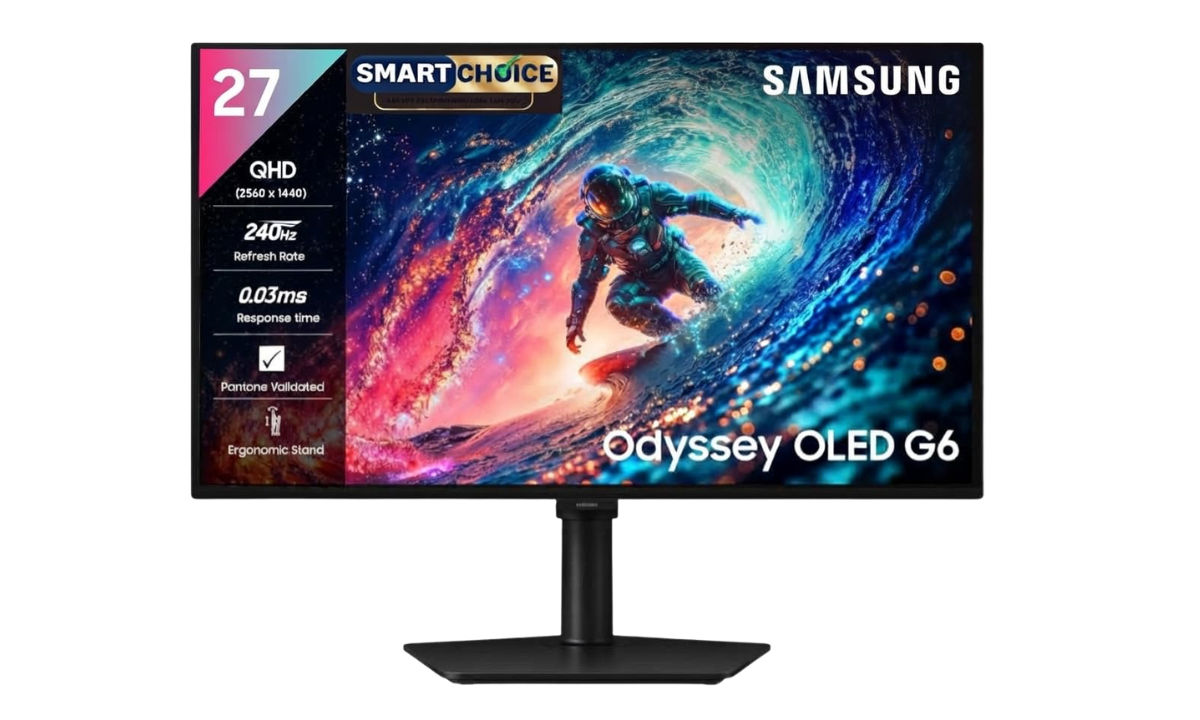
At around Rs 46,899, the Samsung Odyssey OLED G6 G61SH sits close to the upper limit of this budget. However, there is a reason it stands apart from most monitors in this list. It uses a 27-inch QD-OLED panel, rather than the IPS technology found in the more affordable options.
Since OLED pixels can switch off individually, the monitor produces deep blacks without the backlight bleed found on conventional LCD displays. This is useful in games with darker environments. The QHD resolution also offers sharp visuals without putting as much load on the GPU as 4K.
Samsung has paired the panel with a 240Hz refresh rate and a claimed 0.03ms response time. So, this isn’t a monitor that sacrifices responsiveness for better visuals. You get both, provided your PC can push sufficiently high frame rates.
OLED burn-in is one concern to keep in mind, particularly if static elements remain on the screen for long periods. The monitor includes protection features to address this, but it is still something buyers should consider.
Alienware AW2726DM
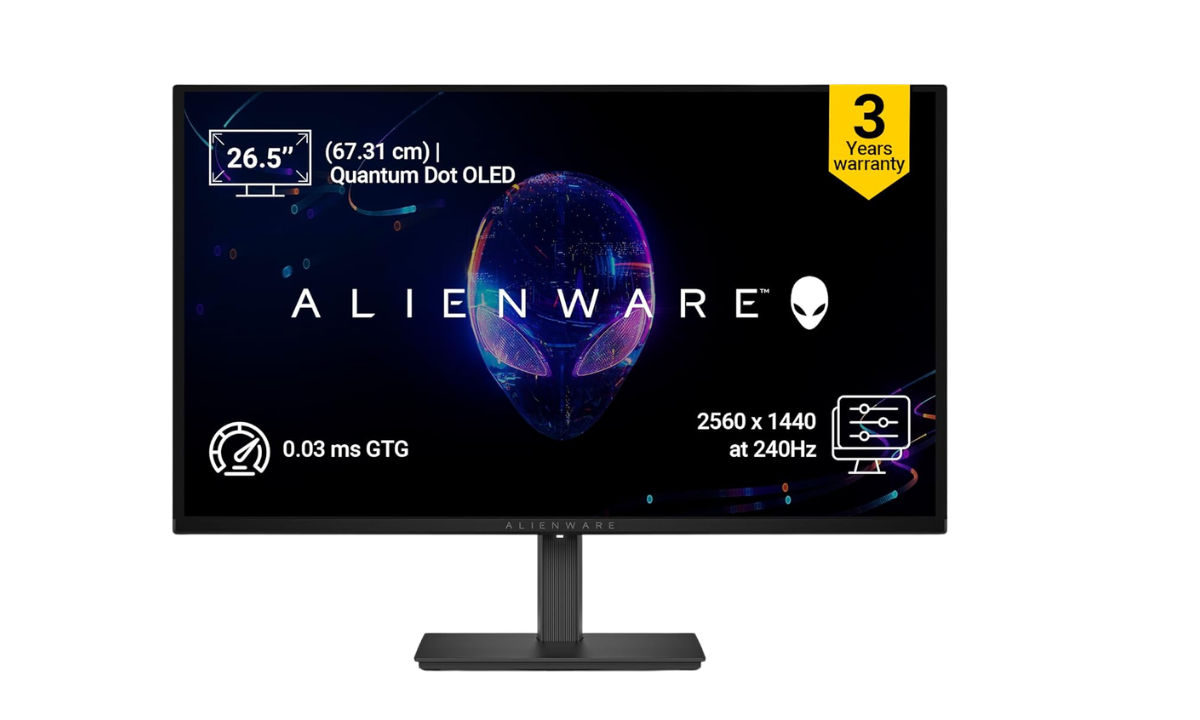
Samsung isn’t the only manufacturer bringing QD-OLED gaming monitors into this price bracket. Alienware’s AW2726DM offers a similar combination of QHD resolution, a 240Hz refresh rate and a 0.03ms response time, while its listed price is around Rs 39,799.
The 26.5-inch display has 99.3% DCI-P3 colour coverage, making it interesting beyond gaming as well. If you regularly watch films or play visually rich single-player titles, the panel’s contrast and colour reproduction should be a bigger attraction than the refresh rate alone.
There is also a practical advantage to buying this monitor from Dell. It comes with a three-year advance exchange service and premium panel exchange coverage, including protection against OLED burn-in. That’s worth considering when buying an OLED display, particularly if you intend to use it for several years.
The AW2726DM is therefore an interesting alternative to Samsung’s Odyssey OLED G6. Both target buyers looking for a premium gaming experience, but Alienware’s lower listed price leaves some room in the budget for other accessories.
BenQ EW270Q
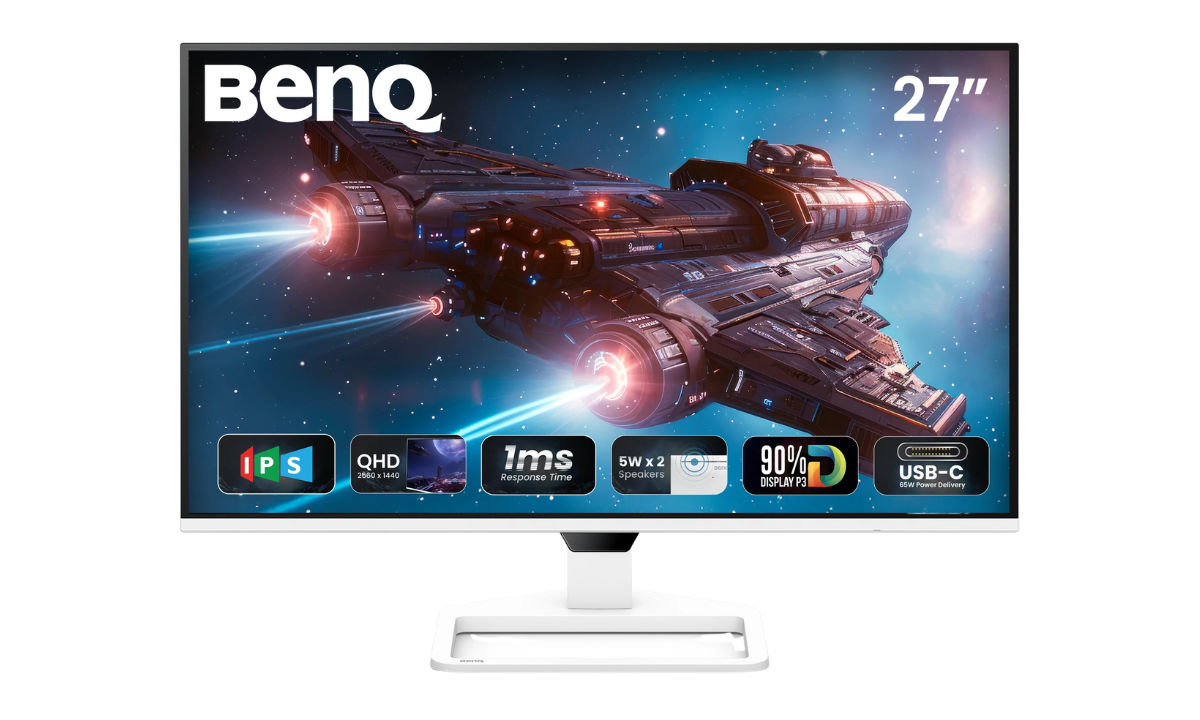
Not every monitor needs to be an OLED to justify an upgrade. The BenQ EW270Q takes a different approach, offering a 27-inch QHD IPS panel with a 200Hz refresh rate at around Rs 18,749.
Its specifications make it a reasonable choice for someone who plays competitive games but doesn’t want to spend close to Rs 40,000 on a display. The 200Hz refresh rate should provide smoother motion than conventional 60Hz or 75Hz monitors, while the QHD resolution gives you more detail than a Full HD panel.
What makes the EW270Q slightly more interesting is its USB-C port with 65W power delivery. You can connect a compatible laptop through a single cable and use the monitor for display output while charging the laptop. This is particularly useful if the same desk doubles up as a gaming and work setup.
Of course, an IPS panel cannot match the black levels of the two QD-OLED monitors mentioned above. But at less than half their price, the EW270Q isn’t really competing in that category. It is aimed at buyers who want a reasonably fast gaming display without giving up everyday usability.
ASUS TUF Gaming VG27AQ5A
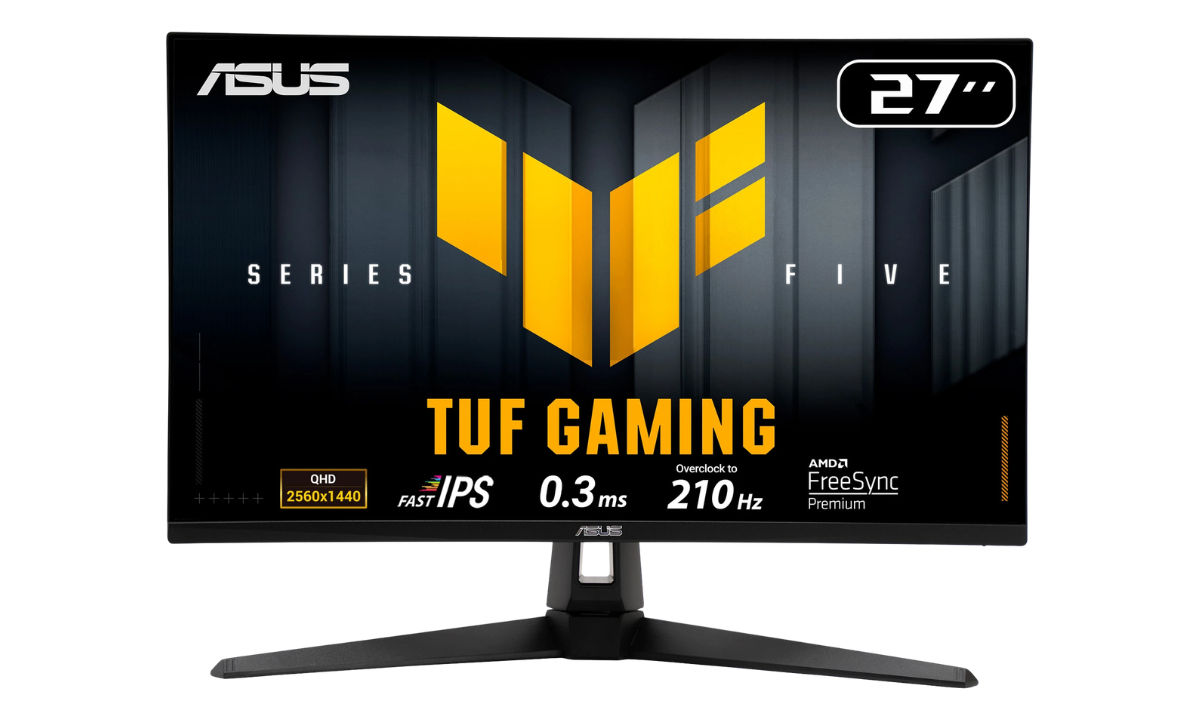
The ASUS TUF Gaming VG27AQ5A is another QHD IPS monitor, but its 210Hz refresh rate puts the focus firmly on gaming performance. At around Rs 16,499, it is among the more affordable options in this selection.
A high refresh rate is particularly useful in competitive shooters and multiplayer games where quick movements are common. You get smoother motion and can potentially spot moving objects more clearly, although the actual benefit depends on whether your graphics card can produce enough frames.
ASUS also includes Extreme Low Motion Blur Sync, which combines motion blur reduction with adaptive sync. Shadow Boost is another useful addition, as it improves visibility in darker portions of a game without unnecessarily brightening the entire screen.
There are also GamePlus overlays, which provide additional on-screen tools for gaming. These aren’t necessarily features everyone will use, but they add some flexibility.
The main attraction here is the combination of QHD resolution and a 210Hz refresh rate at a relatively low price. It makes more sense for someone who plays competitive games regularly than someone specifically looking for the best HDR or cinematic picture quality.
Lenovo LOQ 27Q-10
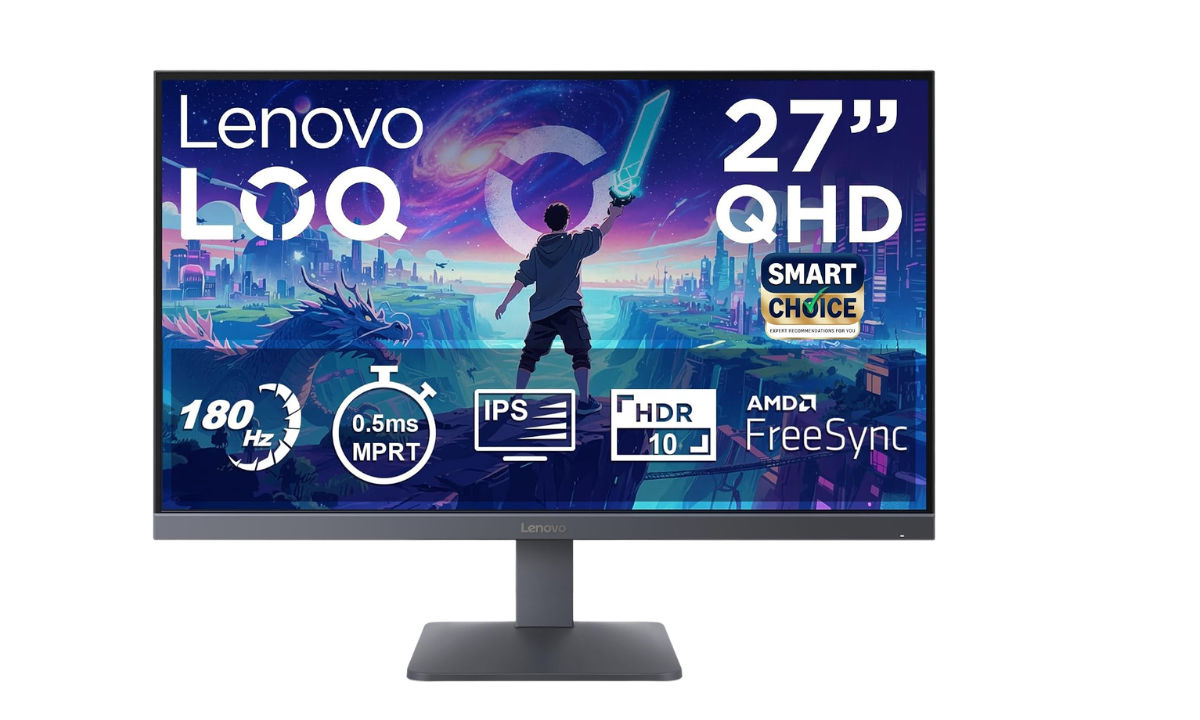
If spending even Rs 17,000 on a monitor feels excessive, Lenovo’s LOQ 27Q-10 brings the entry price down further. Listed at around Rs 13,499, it offers a 27-inch QHD IPS panel with a 180Hz refresh rate.
That combination is important because budget gaming monitors often make buyers choose between resolution and refresh rate. The LOQ 27Q-10 manages to offer both without pushing the price too high.
It also supports AMD FreeSync and NVIDIA G-SYNC compatibility, which can help reduce screen tearing when frame rates fluctuate. Lenovo claims 99% sRGB colour coverage and HDR10 support, although buyers shouldn’t expect the kind of HDR performance offered by more expensive OLED displays.
The claimed 0.5ms MPRT response time is worth mentioning, but it is a motion-picture response-time measurement and shouldn’t be directly compared with the grey-to-grey figures quoted by other manufacturers.
The LOQ 27Q-10 is not trying to compete with premium gaming monitors. Its appeal is much simpler: you get a large QHD screen and a 180Hz refresh rate without spending a substantial amount. For someone moving up from an older Full HD monitor, that alone could be a meaningful upgrade.
Prices of the best gaming monitors under Rs 50000
| Gaming Monitor | Price |
| Samsung Odyssey OLED G6 G61SH | Rs 46,899 |
| Alienware AW2726DM | Rs 39,799 |
| BenQ EW270Q | Rs 18,749 |
| ASUS TUF Gaming VG27AQ5A | Rs 16,499 |
| Lenovo LOQ 27Q-10 | Rs 13,499 |
Note: Prices are indicative and may vary depending on the retailer and ongoing offers.
Which one should you buy?
The two QD-OLED monitors from Samsung and Alienware are clearly in a different category from the remaining three. If you want better contrast, deeper blacks and a high refresh rate, they are worth considering. Between the two, the Alienware AW2726DM has a lower listed price, while Samsung offers another option for buyers comfortable spending closer to Rs 50,000.
For everyone else, the decision is less complicated. The BenQ EW270Q is worth considering if USB-C connectivity and laptop charging matter alongside gaming. The ASUS TUF Gaming VG27AQ5A offers a higher refresh rate at a relatively low price, while the Lenovo LOQ 27Q-10 is the cheapest way to get QHD resolution and high-refresh-rate gaming in this selection.
You should also check whether your PC can actually take advantage of these refresh rates. A 200Hz or 240Hz monitor won’t automatically make games run at 200 or 240 FPS. Your graphics card, processor and the games you play will determine how much of that performance you can use.