Meta buys Manus to turn Llama into action-taking agents
Deal signals urgency: AI ecosystems matter more than models
Zuck isn’t panicking, but he’s racing to monetize
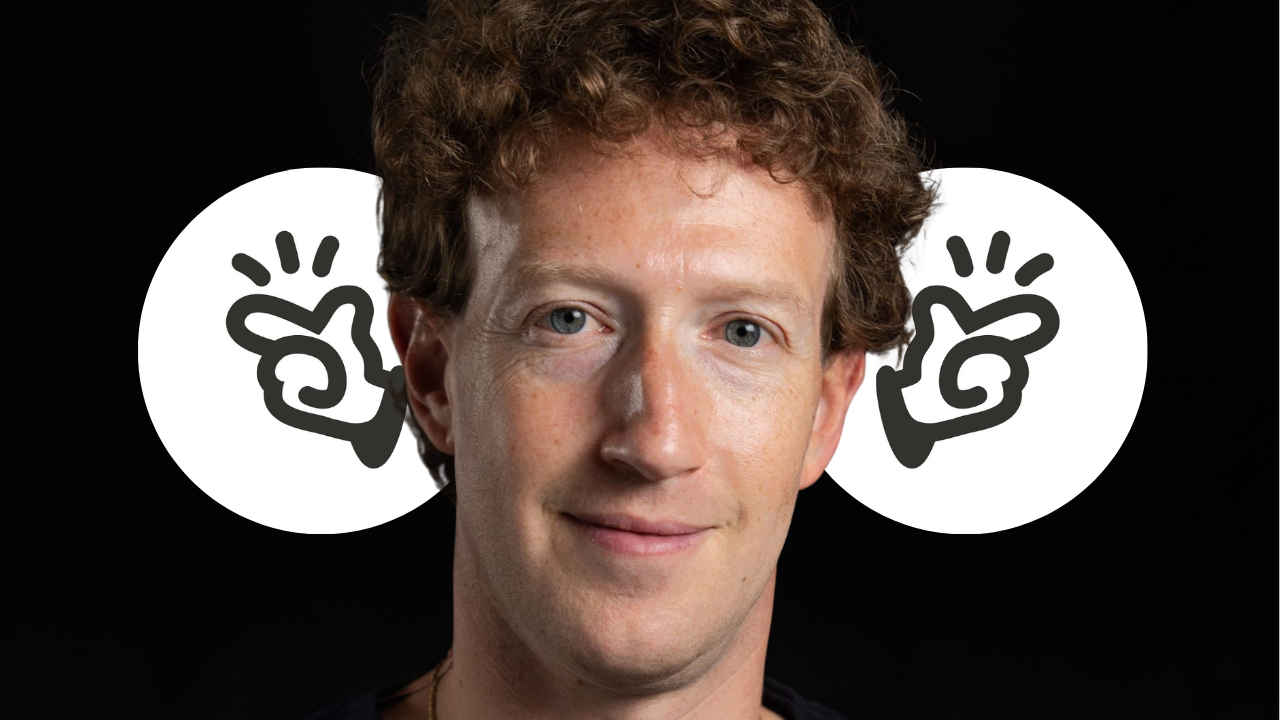
On the last lap of 2025, Mark Zuckerberg did the most Zuckerberg thing possible: he bought time.
 Survey
Meta’s reported $2B+ acquisition of Manus – a Singapore-based “general AI agent” platform – isn’t a victory lap for Llama. It’s a blunt admission that in the new AI race, models are the engine, but agents are the vehicle. And right now, Google and OpenAI have the shinier cars.


Manus is what Meta has been missing
Meta spent the year talking about intelligence – too much about super intelligence. It also spent the year paying for it, with ever-bigger AI infrastructure commitments. Zuckerberg’s ambition may be grand, but bills still need to be paid in the AI race that’s out there to be won.
Manus, by contrast, already sells itself. After DeepSeek’s disruption in January 2025, Manus AI made a lot of waves in early 2025, for those of you remember — precisely for showing some promising AI agent concepts. Reporting around the deal says Manus hit roughly $100M+ in annual recurring revenue within months, via a subscription service used for research, coding and business workflows. That’s not a lab demo, but an actual product with paying customers in the hundreds of millions.
Also read: Meta’s big AI play: What the Manus acquisition means for automation at scale
Meta’s public posture says it plans to use Manus to deliver “general-purpose agents” across consumer and business products, while keeping the Manus subscription service running. Translation: integrate it into Meta AI and the apps, but don’t kill the cash register.
Why Manus fits Llama like a glove
If Llama is Meta’s brain, Manus is the hands. Manus is built around orchestration: long-horizon task management, tool use, and the “virtual computer” idea – an agent operating inside a cloud machine so it can safely browse, run code, and complete multi-step jobs without you babysitting every click.
Manus itself has bragged about spinning up massive volumes of these virtual sessions, and third-party writeups explain how it relies on sandboxed cloud environments for exactly this kind of controlled execution.
That’s the gap Meta has looked weakest on. It doesn’t lack models, per se, as much as it lacks a battle-tested layer that turns a model into a reliable worker – the thing that remembers state, retries failures, compacts context, and finishes the job. Buying Manus is Meta buying that layer, already hardened by real users and real failure modes.
Is Zuck worried about Gemini and ChatGPT?

Not “panic” worried. “Interface” worried for sure, from the looks of it, I’d say. The Llama story has been strong in open-weight credibility. But the last quarter’s narrative has belonged to ecosystems: people don’t just want a smart model; they want a place where tasks get done.
That’s why so much coverage frames Manus as Meta “shoring up” its position in the AI agent race – a catch-up move at the product layer, not an existential model crisis.
Also read: Manus unveils Wide Research, lets AI agents handle over 100 tasks at once: Here’s how it works
There’s also the speed argument. It’s far quicker to acquire a shipped, commercially successful agent platform than to spend a year discovering all the painful details of “agents in production” the hard way.
Near term, Meta says Manus will keep operating as Manus from Singapore, even as it winds down remaining operations tied to China – a reminder that geopolitics now sits inside the product roadmap.
Longer term, the destination is everywhere Meta has intent-rich surfaces: WhatsApp for small businesses, Instagram for creators, Facebook for commerce, and Meta AI as the umbrella. Think agents that don’t just suggest a campaign, but build it. They don’t just draft replies, but chase invoices. They don’t just recommend a trip, but book the boring parts. That’s what Zuckerberg hopes will eventually be the key differentiator and defence against Google Gemini’s and OpenAI ChatGPT’s march toward AI greatness into 2026 and beyond.
 Follow Us
Jayesh Shinde
Executive Editor at Digit. Technology journalist since Jan 2008, with stints at Indiatimes.com and PCWorld.in. Enthusiastic dad, reluctant traveler, weekend gamer, LOTR nerd, pseudo bon vivant. View Full Profile


