
Meta and Mark Zuckerberg bet big on AI Superintelligence: Here’s how
 Follow Us
Mark Zuckerberg has announced creation of Meta Superintelligence Lab (MSL) within the company
MSL will aggressively innovate on the next big AI breakthroughs, as well as deploy it on scale within Meta
Mark Zuckerberg wants to democratize AI superintelligence for all


When news broke last week that Mark Zuckerberg had splashed “up to $100 million” signing bonuses on top AI talent (from the likes of OpenAI and others), little did the tech world realize something seismic was underway within Meta. No longer content with tinkering with our social media feeds or developing virtual reality headsets, Mark Zuckerberg isn’t just stopping at Llama for what he’s set his sights on in terms of AI. No sir!
 Survey
In a clear signal of intent, Mark Zuckerberg has formally launched Meta Superintelligence Labs (MSL), which the Meta CEO is calling as a centralized unit (with some of the most talented AI developers on the planet) aimed at delivering “personal superintelligence for everyone.” Here’s what Mark Zuckerberg is aiming to do, based on this announcement.
Meta wants to build AI superintelligence
In his internal company memo released on June 30, Mark Zuckerberg didn’t just move company personnel here and there, but he actually revealed how serious he is about gathering the best AI minds under one roof – under Meta Superintelligence Labs (MSL). Former Scale AI CEO Alexandr Wang now serves as Meta’s Chief AI Officer, co-heading MSL alongside Nat Friedman, GitHub’s ex-chief.
Behind them stands a veritable who’s who of AI luminaries – Trapit Bansal, Shuchao Bi, Huiwen Chang, Ji Lin, Jack Rae, and more – plucked straight from OpenAI, DeepMind, and Google Research with eye-watering sign-on packages. According to unconfirmed reports, several recent Meta arrivals commanded bonuses approaching nine figures – in US dollars, yes.
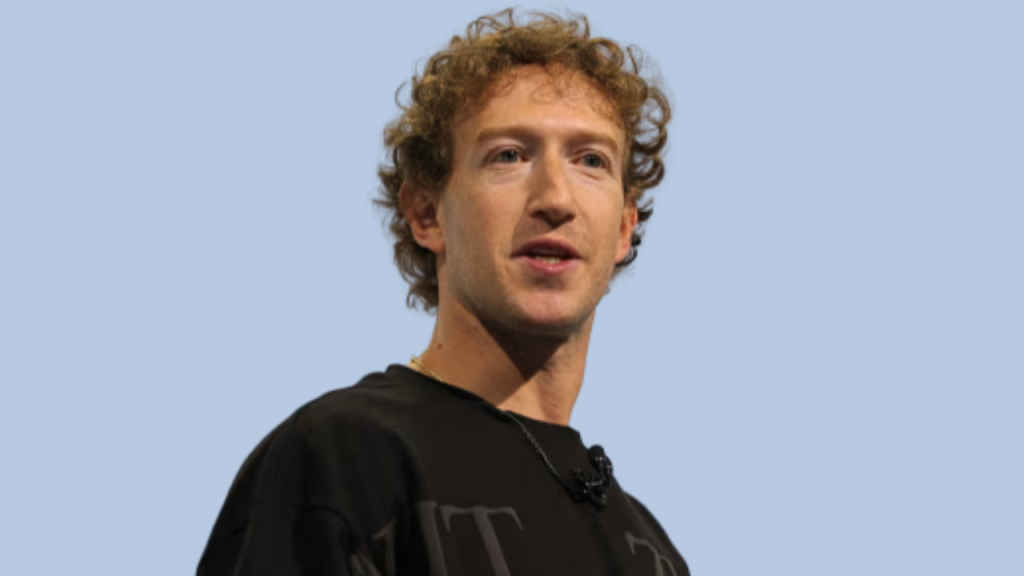
Also read: Mark Zuckerberg says AI will write most of Meta’s AI code by 2026
With all this spending, the message couldn’t be any clearer… that Mark Zuckerberg is channeling founder-mode zeal once again within Meta. And by unifying the erstwhile frontier AI research group within Meta, different product teams, with a new “talent-dense” frontier lab under MSL, Meta wants to remove internal silos and turbocharge both foundational AI research and its rapid productization.
Concurrently, Zuckerberg has also greenlit a parallel “small lab” to chase next-generation superintelligent architectures. This will directly leverage Meta’s huge AI compute war chest, touted at over $68 billion in planned AI spending, and not to mention their 49% stake in Scale AI.
Mark Zuckerberg’s betting that this twin approach of 1) optimizing today’s products while 2) sprinting toward tomorrow’s frontier, will ultimately help Meta outpace rivals who focus solely on one horizon or the other.
Cutting-edge AI into Meta products soon
While Mark Zuckerberg continues spending the big bucks on acquiring cutting-edge AI talent, Meta’s existing battleground lies in Llama 4.1 and 4.2, which are the foundational engines behind Meta AI’s billion-strong user base.
Thanks to the Meta Superintelligence Labs, be sure to expect iterative releases of the latest AI into Meta’s products. Where it continues to be tightly integrated into Messenger, WhatsApp, and immersive AI glasses, and improved multimodal capabilities across the board.

Also read: Mark Zuckerberg says Apple has not invented anything new since Steve Jobs unveiled first iPhone
In all of this, scale is Meta’s secret weapon. With more than a billion MAUs already touching Meta AI, each interaction generates data that fine-tunes model performance, user experience, and novel capabilities – whether its context-aware assistants in Instagram or real-time translation in WhatsApp calls. Mark Zuckerberg’s envisioning a world where your Meta glasses anticipate your needs before you even have to ask, where AI agents streamline every aspect of daily life from content creation to complex decision-making.
By weaving superintelligent threads into its massive social graph and ad engine, Meta plans to unleash the full power of AI, sidestepping the scarcity mindset of smaller labs and the “lean startup” constraints of OpenAI. For Meta and Zuckerberg, this is about embedding intelligence at an unprecedented scale – an “AI for all” ethos backed by computing infrastructure few can rival in the world.
Whether Mark Zuckerberg has overpaid for AI talent and will Meta Superintelligence Lab’s grand experiment truly outpace rivals remains to be seen. Just like their quest to turn AI superintelligence from an elusive sci-fi dream into an everyday Meta feature. Only time – and tens of billions in compute and talent investment – will tell if this is AI vision or insanity.
Also read: Meta wins AI copyright case filed by authors over book use


