

OpenAI quietly launches ChatGPT Translate to take on Google Translate: How it is different
 Follow Us
ChatGPT Translate supports over 50 languages and adds one-tap AI prompts to adjust tone, audience, and writing style.
Unlike traditional translators, it lets users refine outputs using generative AI instead of offering only direct translations.
The tool currently lacks support for documents, images, and live conversations, areas where Google Translate still leads.
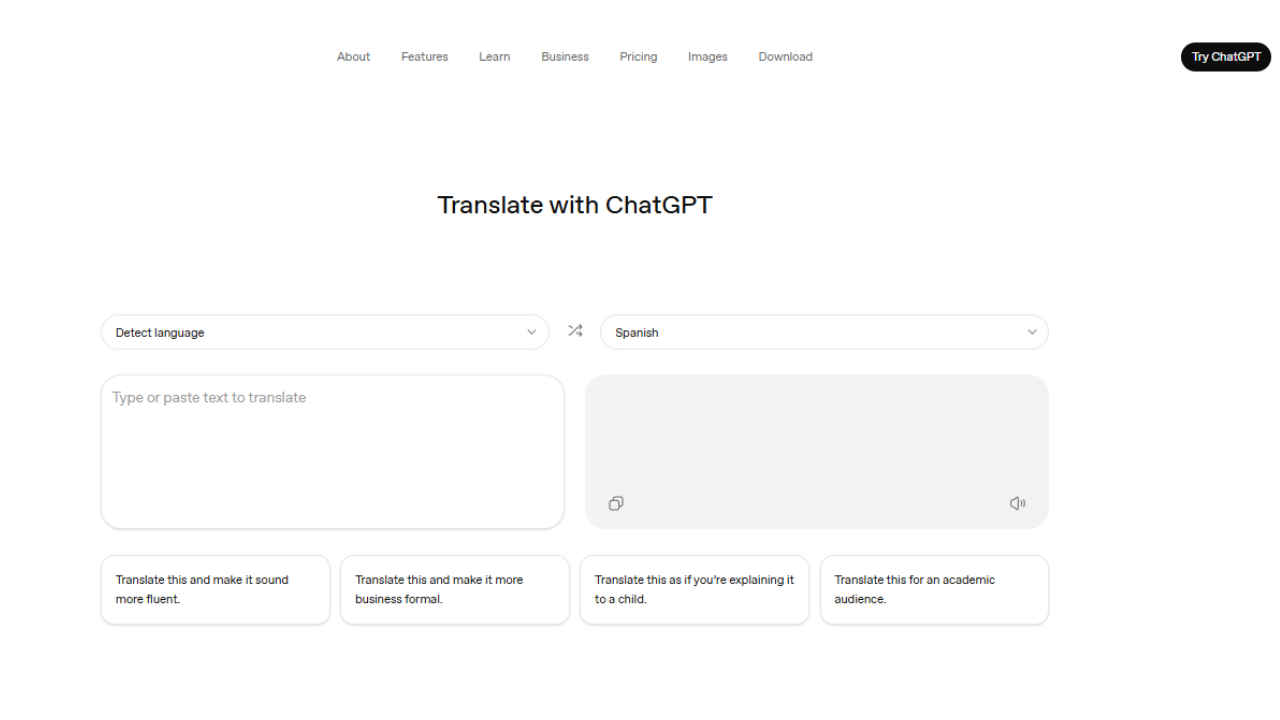

OpenAI has quietly introduced a new standalone translation service called ChatGPT Translate, rivalling Google Translate. While translation has long been part of ChatGPT’s capabilities, the new tool separates the function into a dedicated interface designed for quick, everyday use. When you open the site, the layout will feel familiar to users of existing translation platforms.
 Survey
ChatGPT Translate offers dual text boxes for input and output, automatic language detection, and support for translations across more than 50 languages. At a basic level, it delivers the core features users expect from a translation tool.
ChatGPT Translate vs rivals: How is it different?
However, OpenAI’s ChatGPT Translate is a little different compared to rivals. The interface includes one-tap options that allow users to instantly refine the translated text. These prompts can rewrite the output to sound more natural, adopt a formal business tone, simplify the language for children, or tailor it for academic use. When the user selects any of these options, it seamlessly shifts the user into the main ChatGPT experience, where the translation can be further adjusted using generative AI.
With the design, it seems the company wants to offer a flexible, context-aware process rather than a simple word-for-word conversion. And this AI first layer with focus on tone, audience and intent, makes it different from the rivals.
However, the new platform still has some shortcomings. Despite references to image-based translation, the current version only supports plain text input on desktop. Mobile browser users can access voice input, but there is no support yet for documents, handwriting, websites or live conversations. Language coverage is also narrower compared to Google’s offering.
On the other hand, Google is currently expanding its translation capabilities. The recent updates powered by Gemini have improved the handling of idioms, slang and regional expressions, along with tests of real-time speech translation using headphones.


