
iOS 27 will not kill Apple’s liquid glass design, says report
 Follow Us
Internal builds of iOS 27 and macOS 27 reportedly show no major changes to the Liquid Glass design.
Bloomberg’s Mark Gurman says Apple plans to improve the interface step by step rather than replace it.
Apple’s design chief Steve Lemay, who succeeded Alan Dye, is expected to lead the gradual evolution of the design.
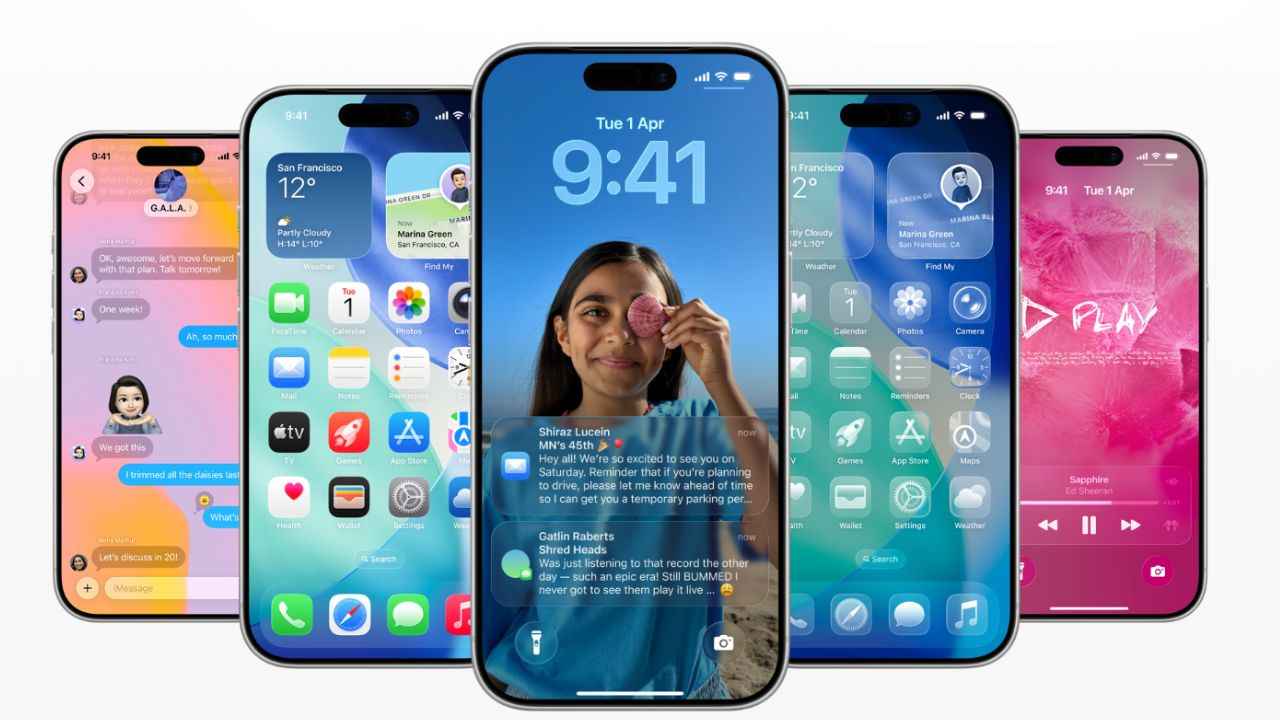

Apple’s Liquid Glass design has been making headlines since its introduction with iOS 26. While the user interface received mixed reactions, Apple appears to be sticking with it in future versions, as evidenced by consistent fixes. This follows a recent report that claimed the Liquid Glass design would be present with gradual improvements rather than major changes in the future.
 Survey
For those unfamiliar, the design focuses on translucent layers, smooth visual depth and glass-like UI elements throughout the system. According to Bloomberg’s Mark Gurman, Apple intends to gradually improve the user interface rather than replace it with a new one.
The report claimed that the internal builds of iOS 27 and macOS 27 currently show no major design changes for Liquid Glass. This suggests that the company is prioritising stability and incremental upgrades over introducing another major visual shift.
The report also mentioned Apple’s new software design chief, Steve Lemay, who is said to have contributed greatly to the development of the Liquid Glass interface. Lemay took over the position after former design head Alan Dye left the company for Meta last year.
While Apple has not provided an official confirmation, it appears that the Liquid Glass design will be handled in the same way that iOS 7 was. That update replaced skeuomorphic design elements with a flat interface, which Apple refined gradually over subsequent software versions.
The company has already added customisation options to the interface gradually. iOS 26.1 introduced a Tinted setting, which increases the opacity of Liquid Glass elements throughout the system. Following that, iOS 26.2 introduced a slider that allows users to customise the transparency of the Lock Screen clock.
Adding on, the company reportedly considered including a system-wide opacity slider for Liquid Glass in iOS 26. However, engineering challenges made it difficult to implement the feature throughout the operating system. However, the report suggested that Apple may reconsider the idea and possibly include a large control option in future updates.


